
Industrial Fastener · Anchors Series
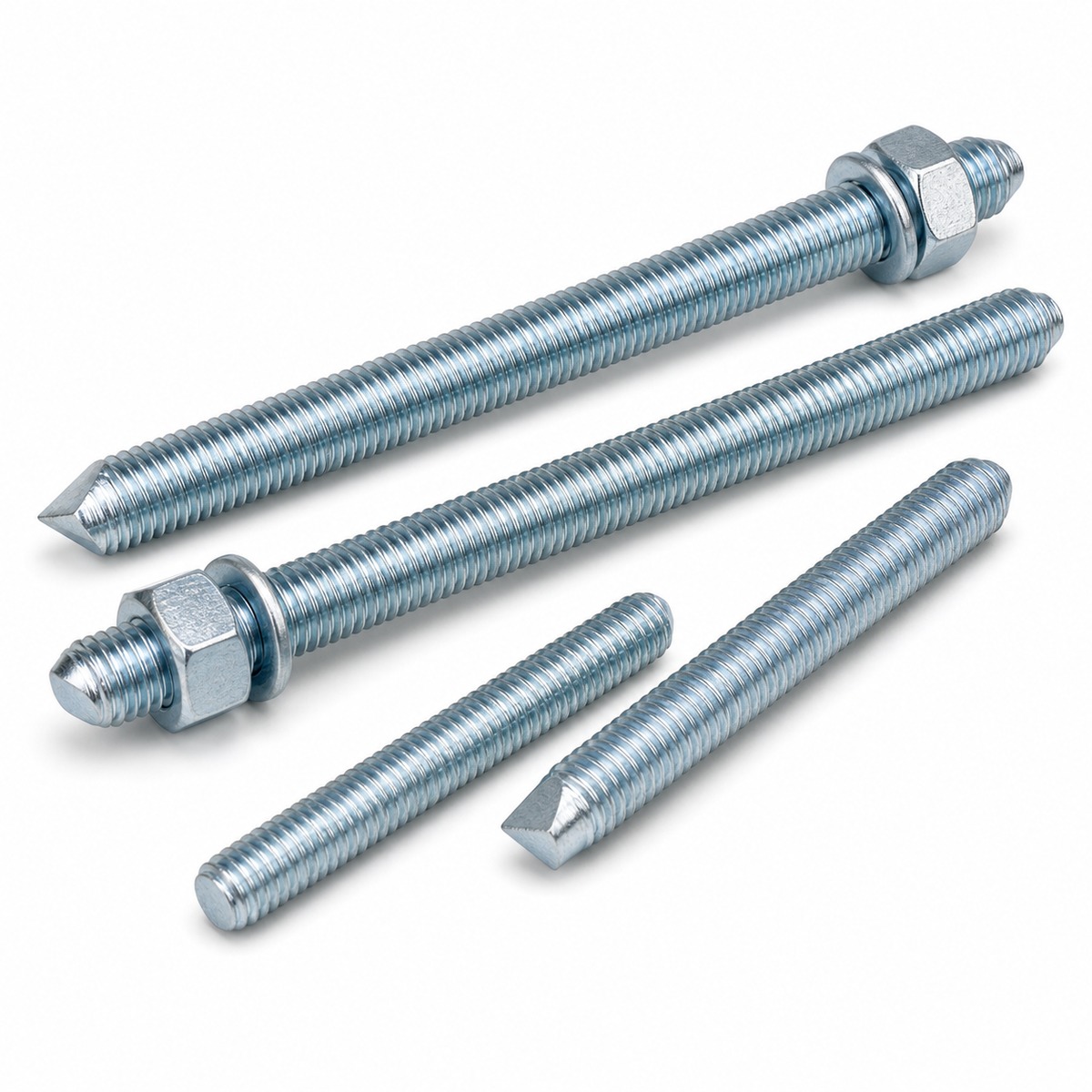
Chemical Anchor Stud
Chemical anchor systems use a two-component resin (typically epoxy or polyester) injected into a drilled hole, into which a threaded stud is inserted. The cured resin bonds the stud to the concrete. HDBOLT supplies the metal stud component — typically a threaded rod section with a chamfered tip...
Product Overview
Chemical Anchor Stud from HDBOLT
Chemical anchor systems use a two-component resin (typically epoxy or polyester) injected into a drilled hole, into which a threaded stud is inserted. The cured resin bonds the stud to the concrete. HDBOLT supplies the metal stud component — typically a threaded rod section with a chamfered tip and a chisel point on the embedded end for proper resin mixing.
Supplied by HDBOLT in Yongnian, China. Our production capacity and extensive fastener stock support repeat orders and mixed-product shipments. Contact us to confirm availability for your size, grade and finish.
DIN 976 / DIN 975 base, with proprietary tip geometry
5.8, 8.8, A4-70 stainless
Chemical anchor systems use a two-component resin (typically epoxy or polyester) injected into a drilled hole, into which a threaded stud is...
Inspection records, lot labels, certificate options, and destination-ready packing.
Technical Data
Specification range
Final dimensions, mechanical properties, finish, and packing are confirmed against the RFQ and applicable standard.
| Standards | DIN 976 / DIN 975 base, with proprietary tip geometry |
|---|---|
| Property Class | 5.8, 8.8, A4-70 stainless |
| Diameter Range | M8 – M30 |
| Surface Finish | Zinc plated, HDG, Stainless |
| Tip Geometry | Standard chamfered or chisel-pointed for resin mixing |
Common surface finishes
Select an option to review its finish details. Exact coating system, thickness, and corrosion requirement are confirmed with the order.
Quality Control
Quality Checks from Order to Shipment
Each order is matched to the specified standard and verified at practical control points before shipment.
RFQ confirmation
Standard, size, grade, pitch, finish, certificates, packing, and destination are locked before production.
Lot verification
Critical dimensions, thread fit, markings, finish appearance, and packing labels are sampled and recorded.
Shipment approval
Photos and required reports are prepared before packing, loading and export delivery.
Buyer Questions
Frequently asked questions
What is the advantage of chemical anchoring vs mechanical anchoring?
Chemical anchors typically achieve higher pull-out values, work in cracked concrete, and allow closer-to-edge installations. The trade-off: longer installation time (cure time before loading), sensitivity to hole cleaning, and temperature limits during cure.
Ready to quote Chemical Anchor Stud?
Send the standard, size, grade, finish, quantity, packing requirement, and destination. Availability and lead time are confirmed with the inquiry.