
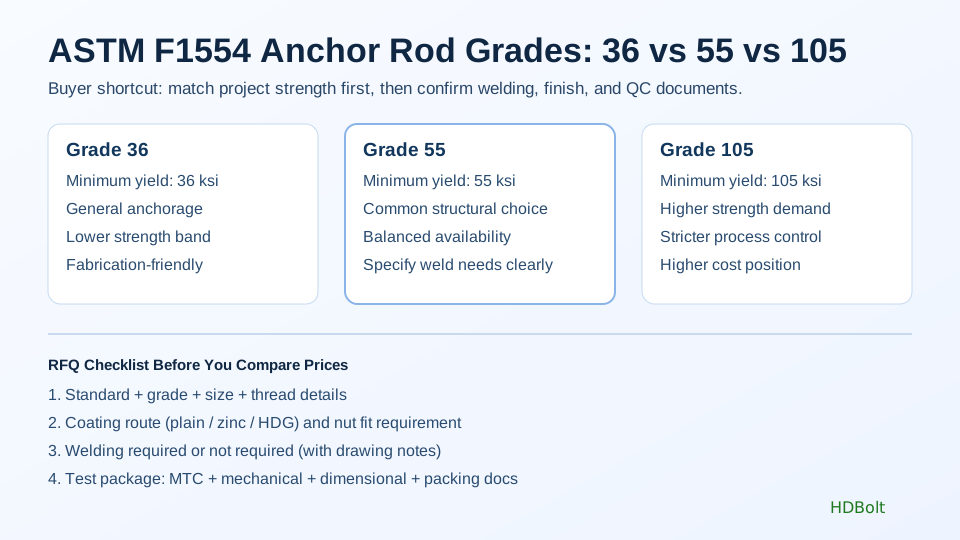
ASTM F1554 defines three anchor rod grades used to secure structural steel and equipment to concrete foundations. For sourcing, the main decision is not price first. It is matching the required strength level and fabrication needs, then locking the RFQ specification before production starts.
Direct answer
Grade 36 is commonly selected for lower-strength anchorage needs and fabrication flexibility. Grade 55 is the most common commercial balance between strength and cost for many building applications. Grade 105 is used where higher strength is required and is usually less forgiving in fabrication and process control.
If your drawings already call out a grade, follow the drawing exactly. If your team is still selecting a grade, align the choice with structural design requirements and confirm all fabrication steps with the supplier before placing the order.
| Selection item | Grade 36 | Grade 55 | Grade 105 |
|---|---|---|---|
| Typical buyer use case | General anchorage with lower required strength | Common structural anchorage balance | Higher-strength anchorage demand |
| Minimum yield strength | 36 ksi | 55 ksi | 105 ksi |
| Fabrication sensitivity | Lower | Medium | Higher process sensitivity |
| Weldability note | Project-dependent | Specify weldable chemistry when required | Welding generally restricted by project rules |
| Commercial position | Lower strength cost band | Mid-range, widely available | Higher strength cost band |
Do not buy anchor rods as a single line item
Anchor rod performance depends on the full assembly and details: rod grade, diameter, thread length, nut and washer matching, and surface finish. If the PO says only "F1554 anchor bolt M24" without grade and finish, suppliers will make different assumptions and quotes will not be truly comparable.
When possible, source anchor rods together with matching nuts and washers, such as ASTM F436 structural washers and project-specified nuts, so dimensional and mechanical compatibility is checked before shipment.
Grade 55 welding and supplementary requirements
Many buyers ask for Grade 55 because it fits common structural requirements, but welding assumptions often create confusion. If your project requires welded anchor assemblies, specify this clearly and request the supplementary chemistry requirement where applicable, rather than assuming any Grade 55 rod can be welded the same way.
In practical RFQ terms, add one sentence: "Welding required/not required for this line item; supply material and test documentation accordingly." This avoids late-stage rework when fabrication begins.
Coating and thread-fit checkpoints
- Plain finish: often used where corrosion protection is handled by system design or indoor service conditions.
- Zinc plating: common for general commercial corrosion resistance.
- Hot-dip galvanizing: typical for outdoor and infrastructure projects, but thread fit and nut tapping must be coordinated.
If you specify hot-dip galvanized rods, include nut fit confirmation and assembly check in the inspection plan. Pricing differences across suppliers are often caused by process scope differences, not only steel cost.
RFQ checklist for ASTM F1554 anchor rods
| RFQ field | What to send | Why it matters |
|---|---|---|
| Standard and grade | ASTM F1554 Grade 36, 55, or 105 | Prevents strength-level substitution |
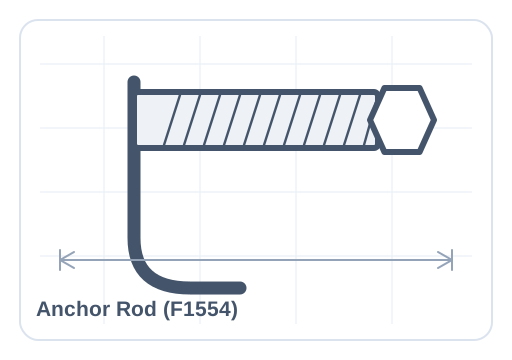
| Rod details | Diameter, total length, thread length, end style | Controls fabrication and fit-up |
| Assembly parts | Nuts, washers, quantity per rod | Ensures full-set compatibility |
| Finish | Plain, zinc plated, or HDG | Changes process route and lead time |
| Welding requirement | Required or not required, with project notes | Avoids chemistry/document mismatch |
| Documents | MTC, mechanical test report, dimensional report, packing list | Supports compliance and traceability |
What HDBOLT recommends for buyers
For most overseas buyers, the safest method is to align engineering, purchasing, and QC before RFQ release: finalize grade selection, attach a rod drawing, define coating, and define required documents. Then compare quotes on equal scope instead of only unit price.
HDBOLT supplies ASTM F1554 anchor rods and related fastener assemblies for export projects. To request a quote, send your drawing, grade, finish, packaging standard, and destination through our contact page. You can also review our HDBOLT supply and quality guide before issuing mixed-item RFQs.