
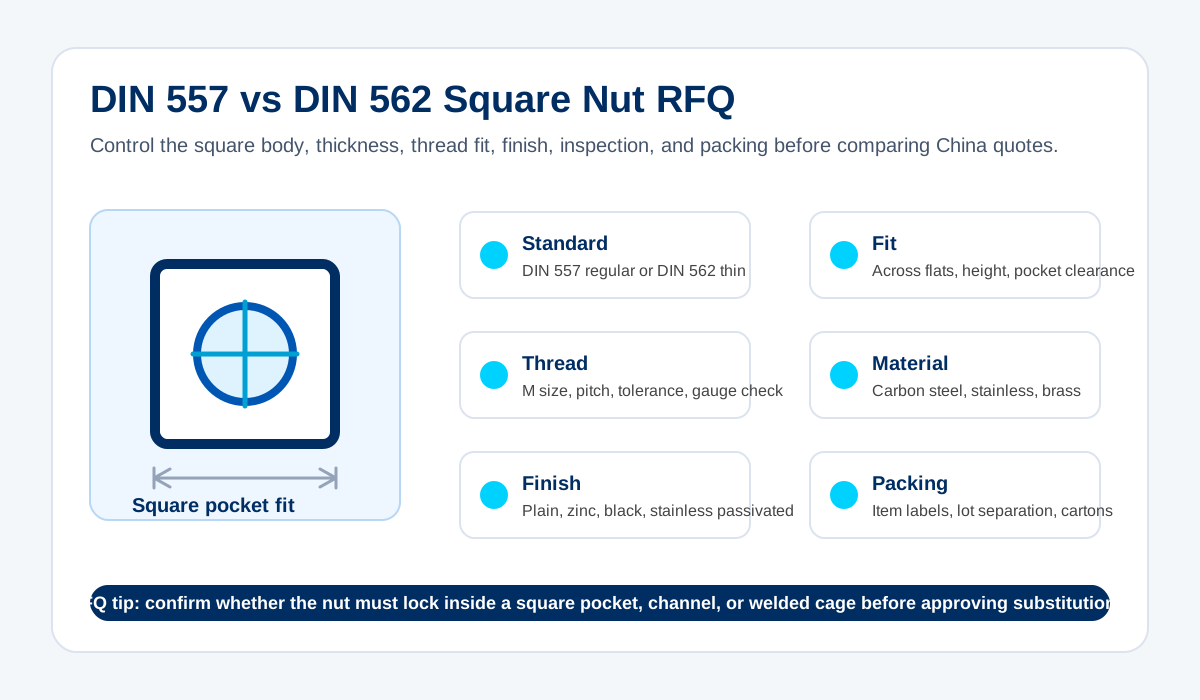
For DIN 557 vs DIN 562 square nut sourcing, the direct answer is: use DIN 557 for regular-height metric square nuts and DIN 562 when the drawing calls for a thin square nut. In both cases, specify the standard, size, pitch, across-flat dimension, height, pocket or channel fit, material, finish, inspection scope, labels, and export packing. Do not buy "square nut" by name alone, because a nut that looks correct may be too thick, too thin, or too loose for the assembly pocket.
Short answer for square nut buyers
A square nut has a four-sided body instead of a hex body. It is often selected because the nut can seat inside a square recess, rail, channel, cage, or wood pocket and resist rotation while the bolt is tightened. That makes the square shape a functional dimension, not just a visual difference from a hex nut.
DIN 557 is the common regular square nut standard. DIN 562 is the thin square nut standard. If the buyer's drawing, assembly pocket, or historical replacement part requires a specific thickness, the RFQ should name the standard and include the target height or drawing reference. A low quote that substitutes the wrong thickness can fail during assembly even when the thread size is correct.
| RFQ field | What to specify | Why it matters |
|---|---|---|
| Standard | DIN 557, DIN 562, buyer drawing, or sample match | Controls square body thickness and dimensional expectations |
| Thread | M size, pitch, thread tolerance if required, and right-hand or special thread | Prevents mismatch with bolts, studs, and threaded rods |
| Square fit | Across flats, height, corner radius, and pocket or channel clearance | The nut may need to lock in place without spinning |
| Material | Carbon steel, stainless steel, brass, or buyer-approved material | Material affects strength, corrosion resistance, machining, and cost |
| Finish | Plain, zinc plated, black, hot-dip galvanized if suitable, stainless, or brass | Finish changes corrosion resistance, appearance, and fit in tight pockets |
| Packing | Inner bags or boxes, master carton weight, item labels, and lot separation | Square nuts are easy to mix by size and thickness during export handling |
DIN 557 vs DIN 562: what changes in sourcing?
DIN 557 and DIN 562 are both metric square nut references, but they are not interchangeable when thickness matters. DIN 557 is usually chosen for regular square nuts. DIN 562 is used for thin square nuts where space is limited or where the mating pocket was designed for a lower profile.
| Buying point | DIN 557 square nut | DIN 562 thin square nut |
|---|---|---|
| Body height | Regular-height square nut | Thin square nut |
| Typical buying reason | General square-pocket, rail, woodworking, machinery, and repair use | Low-profile pockets, sheet-metal assemblies, or clearance-limited designs |
| Main RFQ risk | Supplier quotes a generic square nut without confirming dimensions | Supplier substitutes a regular nut that is too tall for the pocket |
| Best practice | State DIN 557 plus size, material, finish, and fit requirement | State DIN 562 and confirm the accepted thickness range |
When square nuts are better than hex nuts
Square nuts are not usually the default for general fastener purchasing. Hex nuts are easier to wrench from more angles and are more common in high-volume industrial assemblies. Square nuts make sense when the application needs a wider bearing face, a historical or architectural look, or an anti-rotation shape that seats inside a slot, channel, cage, or recess.
Common sourcing examples include woodworking hardware, electrical box mounting, furniture hardware, rail and channel assemblies, repair kits, and assemblies where the nut is held in position while the bolt is tightened from the other side. For these projects, the buyer should ask the supplier to verify the square nut against the actual mating pocket instead of checking only the thread.
Material and finish choices
Carbon steel square nuts are common for cost-sensitive industrial orders and can be supplied plain, zinc plated, black finished, or with another specified coating. Stainless square nuts are useful when corrosion resistance and clean appearance matter. Brass square nuts may be requested for decorative, electrical, or furniture hardware applications where the material is part of the finished assembly.
For tight-fitting square pockets, coating thickness deserves attention. A zinc plated nut that fits comfortably may behave differently from a heavier coating. If the part is used inside a channel, welded cage, or molded pocket, ask for sample approval or request that the supplier check the finished nut against the pocket dimensions before mass shipment.
Inspection checklist before shipment
| Checkpoint | What HDBOLT checks | Buyer benefit |
|---|---|---|
| Standard and dimensions | DIN 557 or DIN 562 reference, across flats, height, thread size, and corner condition | Confirms the square nut matches the assembly requirement |
| Thread fit | Go/no-go gauge or matching bolt assembly checks when required | Reduces claims caused by tight, damaged, or mixed-pitch threads |
| Pocket fit | Sample check against buyer dimensions, channel width, cage clearance, or supplied sample | Prevents spinning, jamming, and assembly rejection |
| Surface finish | Plating coverage, color consistency, rust, burrs, oil, and mixed finishes | Protects appearance and corrosion expectations |
| Documents | Material certificate, coating report, inspection photos, and packing list if required | Connects the shipment to the approved PO specification |
| Export packing | Inner bags, carton labels, buyer item numbers, size separation, and pallet protection | Prevents receiving problems when similar square nut sizes are consolidated |
Handan Yongnian sourcing notes
In the Handan Yongnian fastener market, square nuts are often sourced as part of a mixed nut or hardware order rather than as a single isolated container line. That can be useful for overseas buyers who need DIN 557 square nuts, DIN 562 thin square nuts, T-nuts, cage nuts, hex nuts, matching bolts, and washers under one purchase order.
The practical risk is item mixing. Similar M6, M8, and M10 square nuts, or regular and thin versions in the same finish, can look close in a carton. HDBOLT manages production planning, sample checks, item-number labels, carton photos, and mixed-item consolidation so the receiving warehouse can identify each line without resorting parts after arrival.
Common RFQ mistakes
| Mistake | Likely result | Better wording |
|---|---|---|
| Writing only "M8 square nut" | Quotes may mix DIN 557, DIN 562, nonstandard height, or sample-only parts | DIN 557 M8 square nut, carbon steel, zinc plated, with dimension confirmation |
| Ignoring the pocket or channel | The nut may spin, jam, or sit too high in the assembly | State pocket width, pocket depth, and required clearance |
| Approving a finish without fit review | Coating buildup can change tight pocket fit | Ask for finished-part sample approval or finished-dimension check |
| Mixing thin and regular nuts in labels | Receiving teams may install the wrong height | Use separate buyer item numbers and carton labels for DIN 557 and DIN 562 |
| No inspection photos | Dimension, finish, and packing problems are found only after arrival | Request sample photos, gauge checks, carton labels, and pallet photos before shipment |
RFQ wording buyers can copy
DIN 557 square nut, M8 coarse thread, carbon steel, zinc plated white, quantity 80,000 pcs. Confirm across flats, height, thread gauge result, finish appearance, packing by inner bag and export carton, carton labels with buyer item number, and pre-shipment photos.
DIN 562 thin square nut, M6, stainless steel A2, clean finish, quantity 30,000 pcs. Nut must fit a square pocket with buyer-supplied clearance dimensions. Confirm finished dimensions, thread fit, carton separation from regular square nuts, and material certificate availability.
What HDBOLT recommends
Buy square nuts as fit-controlled components, not as generic nuts with four sides. Define whether the order is DIN 557 or DIN 562, then lock the thread, height, across-flat size, material, finish, inspection scope, and export packing into the RFQ. For a quote, send the size list, standard, pocket or channel dimensions, target quantity, destination port, and packing preference through the HDBOLT contact page. For related products, review the nuts category, square nut product page, and HDBOLT supply and quality guide.