
For J-bolt vs L-bolt anchor bolt sourcing, the direct answer is: choose the embedment form from the project drawing, then quote the complete foundation anchor assembly. A correct RFQ should define J-bolt or L-bolt form, diameter, total length, embedded leg or hook dimensions, projection above concrete, thread length, material grade, finish, matching nuts and washers, inspection documents, packing labels, and destination. This prevents wrong bend geometry, short thread projection, missing accessories, coating mismatch, and mixed-size export cartons.
Short answer for foundation anchor bolt buyers
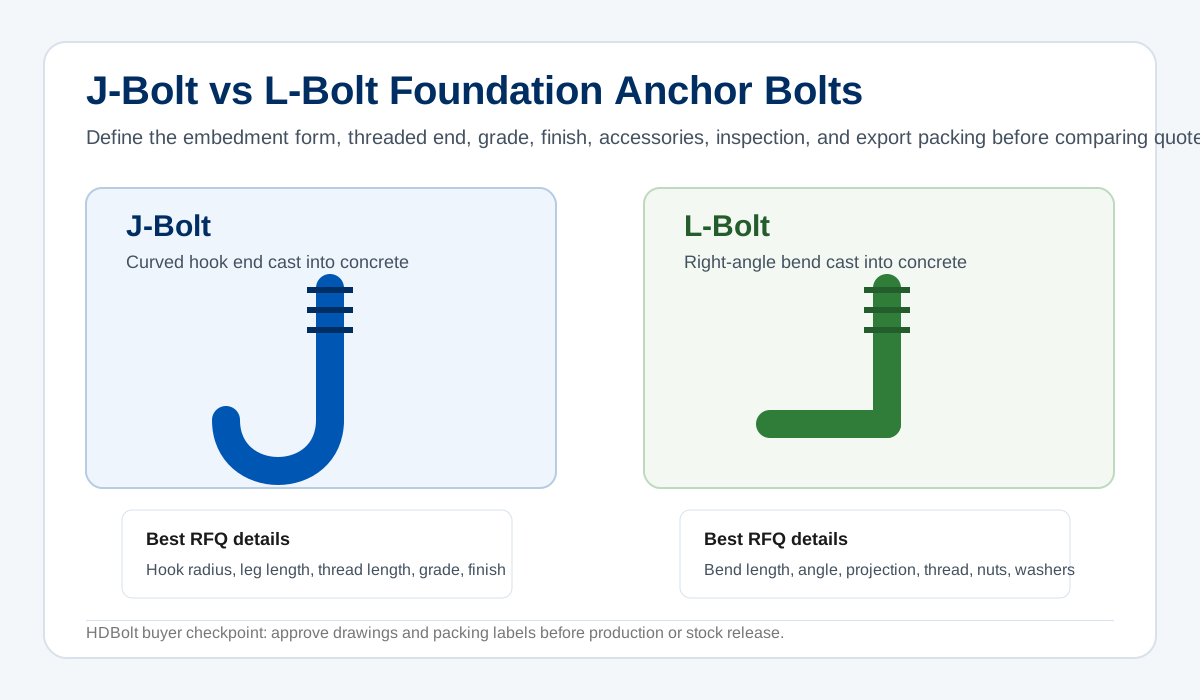
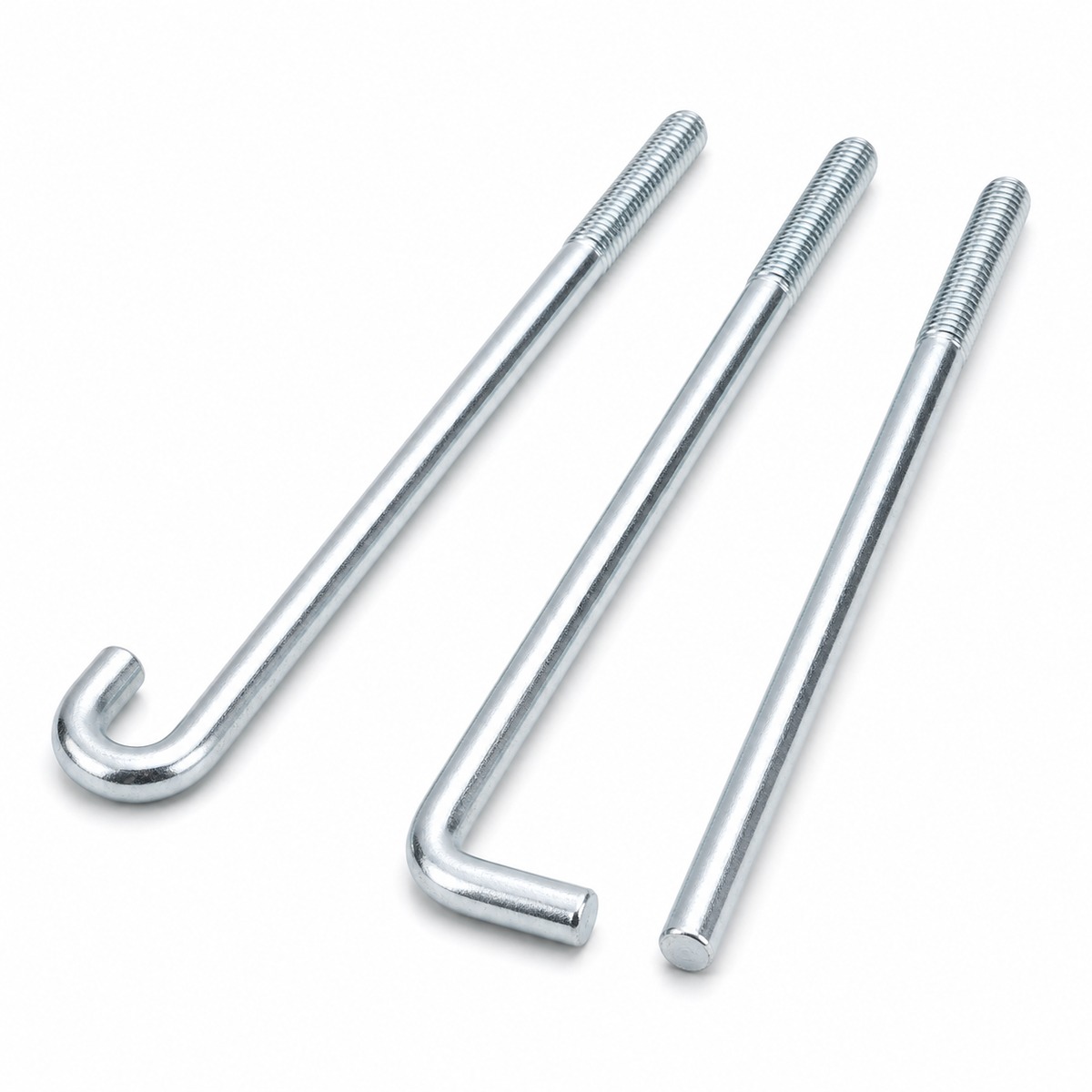
A foundation anchor bolt is cast into concrete so the threaded end can secure a column base plate, equipment skid, steel post, light pole, machine base, or bracket. J-bolts use a curved hook at the embedded end. L-bolts use a right-angle bend. Both are common, but they are not interchangeable unless the engineer or drawing allows substitution.
The buying problem is usually not identifying the name. It is controlling the geometry. Two suppliers may both quote "M20 x 600 L anchor bolt" while assuming different bend lengths, thread lengths, nut grades, washer sizes, coating, carton labels, and inspection scope. For export sourcing, those missing details can delay installation even when the nominal size looks correct.
J-bolt vs L-bolt comparison
| Buying point | J-bolt anchor bolt | L-bolt anchor bolt |
|---|---|---|
| Embedded form | Curved hook end cast into concrete | Right-angle bent leg cast into concrete |
| Typical use | Light to medium foundation work, posts, bases, older drawings, general construction hardware | Foundation bolts for steel posts, machinery bases, frames, brackets, and project drawings that specify a bent leg |
| RFQ geometry | Overall length, hook radius, hook opening, straight shank, projection, thread length | Overall length, embedded leg length, bend angle, bend radius, projection, thread length |
| Main risk | Hook shape made differently from drawing, causing embedment or template conflict | Wrong leg length or angle causing poor placement or insufficient concrete cover |
| Best sourcing input | Project drawing or sample photo with measured hook dimensions | Project drawing with bend leg, projection, and thread length clearly marked |
What to specify before comparing prices
Do not send only "anchor bolt M24 x 800". The supplier still needs to know the shape, grade, finish, thread length, and accessories. If the project is controlled by ASTM F1554, DIN 529, a local building standard, or an engineering drawing, that reference should be the first line of the RFQ.
| RFQ field | What buyers should write | Why it matters |
|---|---|---|
| Form | J-bolt, L-bolt, headed anchor bolt, plate-end anchor bolt, or drawing number | Controls embedded geometry and factory process |
| Size | Diameter, thread pitch, overall length, projection, thread length, bend leg or hook size | Prevents installation and base-plate fit problems |
| Grade | Property class, steel grade, ASTM F1554 grade, or drawing material | Controls strength, weldability expectations, marking, and documents |
| Finish | Plain with oil, zinc plated, hot-dip galvanized, or project coating | Finish affects corrosion protection, thread fit, appearance, and price |
| Accessories | One nut, two nuts, flat washer, plate washer, template, or no accessories | Missing nuts and washers can stop installation even if bolts are correct |
| Documents | Material certificate, inspection report, coating report, packing list, origin documents | Export and project acceptance may require traceability |
Grade and finish decisions
For U.S. structural foundation work, buyers often compare J-bolt or L-bolt shapes with ASTM F1554 anchor rods. F1554 grade selection is a separate decision from anchor shape. Grade 36, 55, and 105 are not interchangeable purchasing labels, and a bent anchor bolt should be quoted against the grade, chemical requirements, mechanical properties, and document expectations required by the project.
For finish, hot-dip galvanizing is common for outdoor foundations, utility hardware, and exposed steelwork, but it changes thread fit and surface appearance. Zinc plating may suit indoor or light-duty work. Plain finish with rust preventive oil may be used when the bolts will be embedded and protected quickly. For a broader coating comparison, see HDBOLT's zinc plated vs hot-dip galvanized fastener guide.
Handan Yongnian sourcing context
J-bolts and L-bolts fit the fabrication-and-consolidation side of the Handan Yongnian fastener cluster. Some orders are simple stock-like foundation bolts, while others require bending, longer lengths, hot-dip galvanizing, matching nuts, square plate washers, and palletized export packing. The practical value for overseas buyers is coordination: HDBOLT supplies the anchor bolts, hex nuts, plate washers, and related project fasteners as one shipment.
The risk is assuming every fastener supplier is equally suitable for bent anchor bolts. A good commodity bolt source may not be the right choice for long anchor rods, controlled bends, heavy pallets, or document-heavy project work. HDBOLT checks drawings, sample photos, bending dimensions, finish compatibility, labels, and packing before release so mixed anchor-bolt shipments are easier to receive and install.
Inspection checklist before shipment
| Inspection item | What to check | Evidence to request |
|---|---|---|
| Bend geometry | J hook radius or L leg length, bend angle, overall length, straightness | Sample photos with measuring tape or calipers |
| Threaded end | Thread length, pitch, clean start, gauge fit, usable projection above concrete | Thread gauge photos and dimension photos |
| Material and grade | Specified grade, heat or lot traceability, marking or color coding if required | Material certificate and inspection report |
| Finish | Coating coverage, rust, thread assembly fit, HDG appearance tolerance | Surface photos and nut assembly photos |
| Accessories | Nut grade, washer type, washer size, quantity per bolt, packing separation | Accessory count photos and carton label photos |
| Export packing | Bundle protection, carton or pallet strength, size separation, shipping marks | Pallet photos, labels, and packing list before shipment |
Common RFQ mistakes
- Writing only the diameter and total length without a drawing or bend dimensions.
- Approving a J-bolt when the base detail requires an L-bolt, headed anchor, or plate-end anchor.
- Forgetting projection above concrete, which controls whether nuts and washers can be installed.
- Ordering hot-dip galvanized bolts and ordinary nuts separately without checking thread fit.
- Leaving out matching nuts, plate washers, templates, carton labels, and pallet requirements.
- Accepting mixed-size cartons for M20, M22, and M24 bolts without clear labels.
RFQ wording buyers can copy
L-bolt anchor bolt, M24 x 800 mm overall length, metric coarse thread, 150 mm thread length, 150 mm bent leg, carbon steel grade per drawing, hot-dip galvanized, supplied with two matching nuts and one plate washer per bolt. Confirm bend dimensions, thread gauge fit after galvanizing, material certificate, inspection photos, carton or pallet labels, and export packing. Destination: [country and port].
J-bolt anchor bolt, 3/4 in. diameter x 24 in. overall length, hook dimensions per attached drawing, plain finish with rust preventive oil, supplied with nut and washer sets. Quote by drawing revision, material grade, inspection scope, packing method, pallet weight, and lead time. State any assumptions clearly before production.
What HDBOLT recommends
Start with the project drawing. Then define the anchor form, dimensions, projection, thread length, grade, finish, accessories, inspection evidence, documents, packing labels, and destination. For a quote, send your drawings, size list, quantity, finish, accessory requirement, and destination through the HDBOLT contact page. For broader purchasing process details, review the HDBOLT supply and quality guide and HDBOLT's bolt product range.