
Industrial Fastener · Nuts Series
Castle Nut
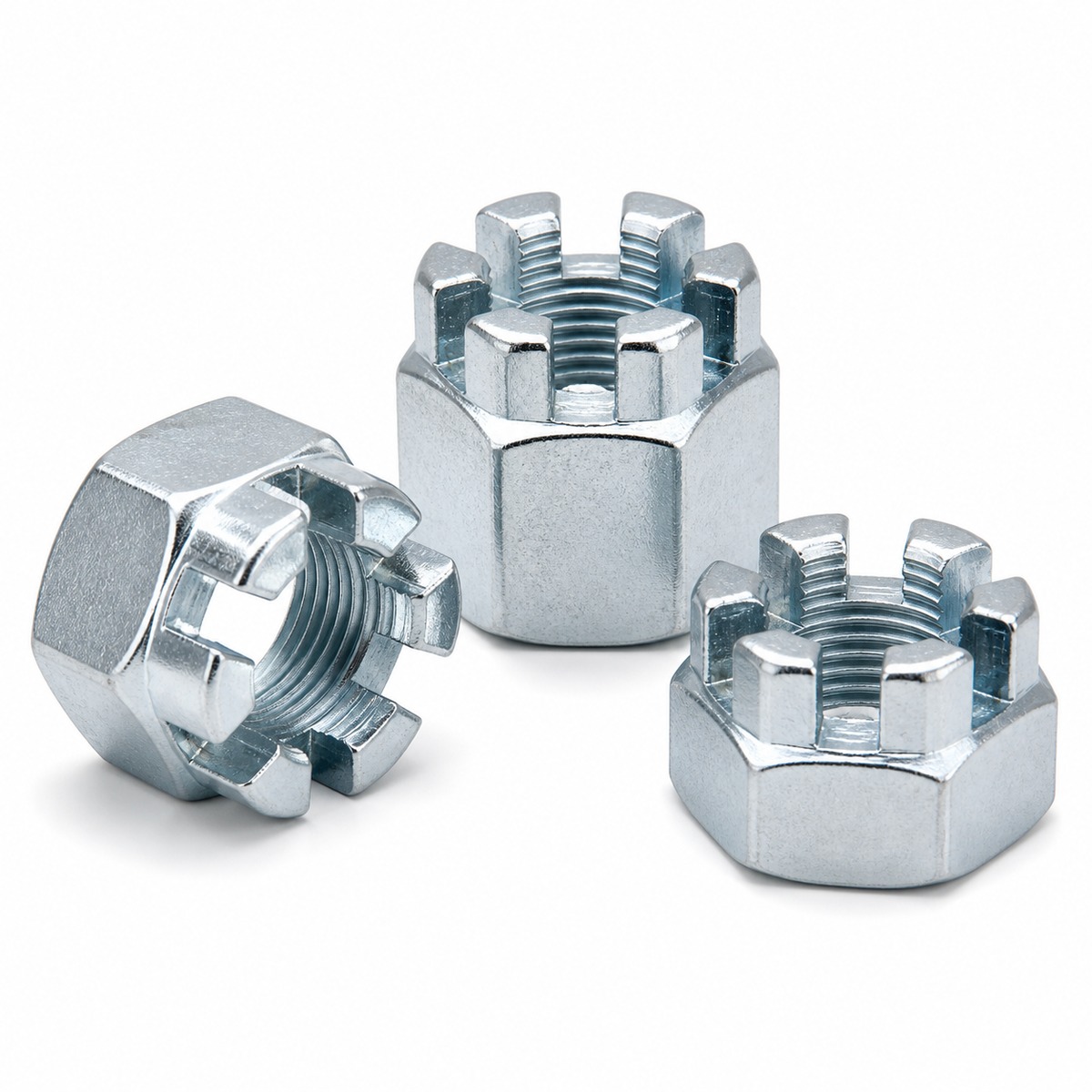
Castle nuts (also called slotted nuts) have radial slots cut across the top of the nut. After tightening, a cotter (split) pin is passed through a transverse hole in the bolt and through one of the nut slots, mechanically locking the nut in place. Standard for axle, kingpin, and steering tie rod...
Product Overview
Castle Nut from HDBOLT
Castle nuts (also called slotted nuts) have radial slots cut across the top of the nut. After tightening, a cotter (split) pin is passed through a transverse hole in the bolt and through one of the nut slots, mechanically locking the nut in place. Standard for axle, kingpin, and steering tie rod end applications.
Supplied by HDBOLT in Yongnian, China. Our production capacity and extensive fastener stock support repeat orders and mixed-product shipments. Contact us to confirm availability for your size, grade and finish.
DIN 935 (regular height), DIN 937 (thin), ISO 7036, ISO 7037
Carbon steel, Stainless
Vehicle axles, kingpins, tie rods, agricultural machinery
Inspection records, lot labels, certificate options, and destination-ready packing.
Technical Data
Specification range
Final dimensions, mechanical properties, finish, and packing are confirmed against the RFQ and applicable standard.
| Standards | DIN 935 (regular height), DIN 937 (thin), ISO 7036, ISO 7037 |
|---|---|
| Size Range | M5 – M48 |
| Material | Carbon steel, Stainless |
| Common Application | Vehicle axles, kingpins, tie rods, agricultural machinery |
Common surface finishes
Select an option to review its finish details. Exact coating system, thickness, and corrosion requirement are confirmed with the order.
Quality Control
Quality Checks from Order to Shipment
Each order is matched to the specified standard and verified at practical control points before shipment.
RFQ confirmation
Standard, size, grade, pitch, finish, certificates, packing, and destination are locked before production.
Lot verification
Critical dimensions, thread fit, markings, finish appearance, and packing labels are sampled and recorded.
Shipment approval
Photos and required reports are prepared before packing, loading and export delivery.
Buyer Questions
Frequently asked questions
How is a castle nut installed correctly?
Tighten the nut to the specified torque, then continue tightening (never loosen) until a slot in the nut aligns with the cotter pin hole in the bolt. If the next slot is not yet aligned, you may need to use a thinner washer or different nut height. Bend the cotter pin legs back over the nut to retain it.
Ready to quote Castle Nut?
Send the standard, size, grade, finish, quantity, packing requirement, and destination. Availability and lead time are confirmed with the inquiry.