
Industrial Fastener · Nuts Series
T-Nut
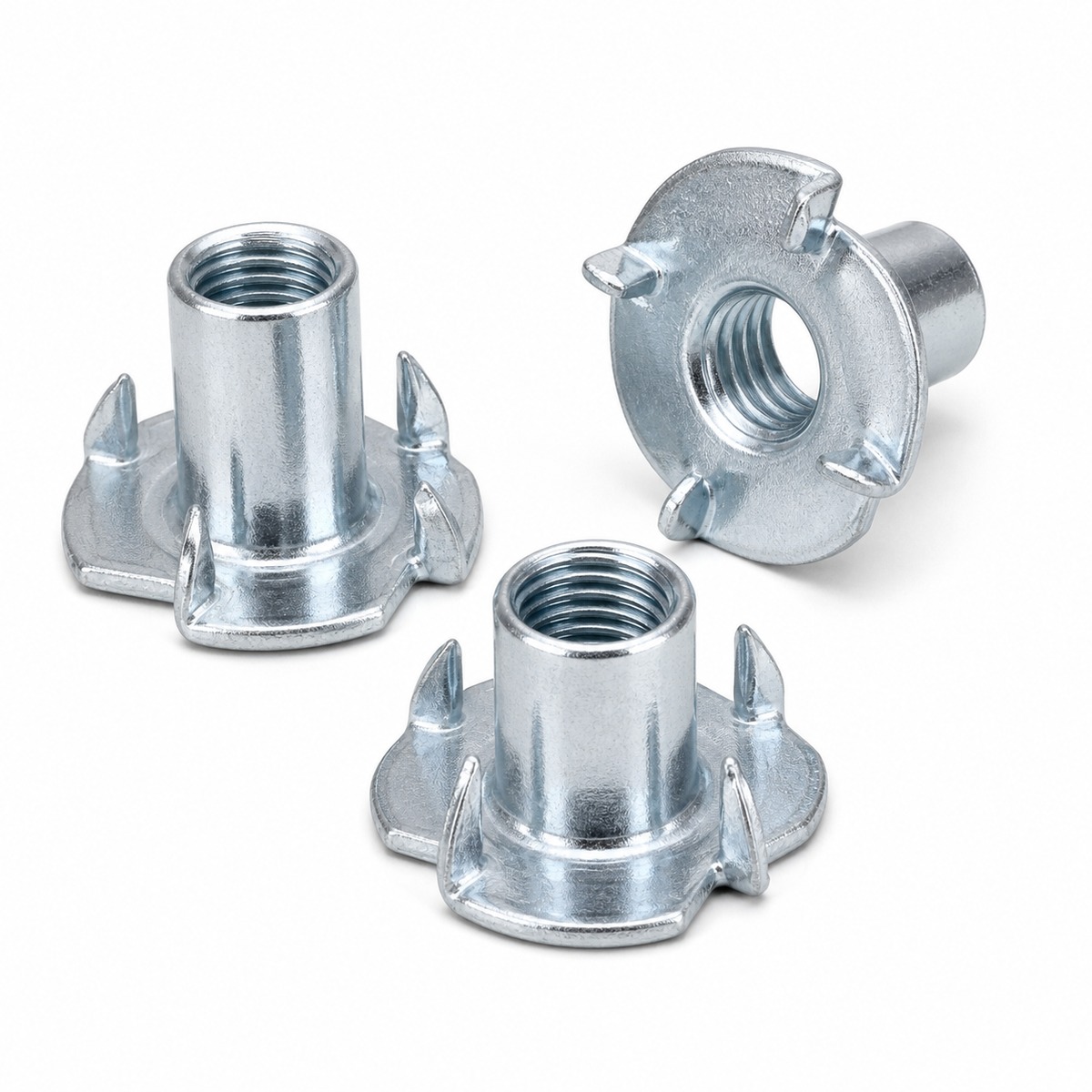
T-nuts have a flange with sharp prongs (or barbs) that anchor into wood when hammered in. Once installed, they provide a strong threaded insert in wood, plywood, or MDF. Standard hardware for climbing wall hold mounting, furniture leg connections, and turn-knob assemblies.
Product Overview
T-Nut from HDBOLT
T-nuts have a flange with sharp prongs (or barbs) that anchor into wood when hammered in. Once installed, they provide a strong threaded insert in wood, plywood, or MDF. Standard hardware for climbing wall hold mounting, furniture leg connections, and turn-knob assemblies.
Supplied by HDBOLT in Yongnian, China. Our production capacity and extensive fastener stock support repeat orders and mixed-product shipments. Contact us to confirm availability for your size, grade and finish.
Project or drawing specification
Carbon steel, Stainless
T-nuts have a flange with sharp prongs (or barbs) that anchor into wood when hammered in. Once installed, they provide a strong threaded insert in...
Inspection records, lot labels, certificate options, and destination-ready packing.
Technical Data
Specification range
Final dimensions, mechanical properties, finish, and packing are confirmed against the RFQ and applicable standard.
| Forms | 4-prong T-nut, 3-prong T-nut, hammer-in (pressure-fit) T-nut |
|---|---|
| Size Range | M4 – M12 (#8 – 1/2") |
| Material | Carbon steel, Stainless |
| Surface Finish | Zinc plated, Black, Stainless |
Common surface finishes
Select an option to review its finish details. Exact coating system, thickness, and corrosion requirement are confirmed with the order.
Quality Control
Quality Checks from Order to Shipment
Each order is matched to the specified standard and verified at practical control points before shipment.
RFQ confirmation
Standard, size, grade, pitch, finish, certificates, packing, and destination are locked before production.
Lot verification
Critical dimensions, thread fit, markings, finish appearance, and packing labels are sampled and recorded.
Shipment approval
Photos and required reports are prepared before packing, loading and export delivery.
Buyer Questions
Frequently asked questions
How do I install a pronged T-nut correctly?
Drill a clearance hole of the specified size (typically slightly larger than the bolt diameter). Position the T-nut on the back side of the workpiece with prongs against the wood, then hammer the flange flush. The prongs bite into the wood and prevent the T-nut from rotating when the bolt is tightened.
Ready to quote T-Nut?
Send the standard, size, grade, finish, quantity, packing requirement, and destination. Availability and lead time are confirmed with the inquiry.