
Stainless Steel Fasteners (A2-70 & A4-80) — Sourcing from China
Overview
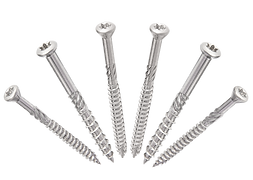
Stainless steel fasteners are produced by a different group of factories than carbon steel fasteners — the cold-forging lines, tooling, and metallurgical controls are specialized. HDBolt sources from factories that genuinely work with austenitic stainless material, not merely zinc-plated carbon steel passed off as stainless.
Specifications
| Material Grades | SS304 (A2-70), SS304L, SS316 (A4-80), SS316L, SS310, SS410 / 420 / 430 |
|---|---|
| Mechanical Property | A2-70 / A4-80 (cold-worked, 700 / 800 MPa tensile) |
| Magnetic Behavior | 304 and 316 are austenitic (nearly non-magnetic); 410/420/430 are martensitic/ferritic (magnetic) |
| Key Applications | Marine hardware, food processing, pharmaceutical, chemical plant, outdoor construction, solar mounting |
| Material Verification | PMI (Positive Material Identification) testing available on request |
| Typical Lead Time | Stock: 10–15 days. Custom production: 30–45 days. |
Frequently Asked Questions
What is the difference between 304 (A2) and 316 (A4) stainless steel?
Grade 316 contains 2–3% molybdenum, which 304 does not. This gives 316 significantly better resistance to chloride corrosion — seawater, coastal atmospheres, pool chemicals, and certain acids. Grade 304 (also labeled A2 in fastener specifications) is suitable for most general corrosion-resistant applications, while 316 (A4) is specified whenever chlorides are present. 316 is roughly 30–50% more expensive than 304.
How do I verify I am receiving real stainless steel and not plated carbon steel?
A few simple checks: a magnet will strongly attract plated carbon steel but only weakly attract (or not at all) austenitic 304/316. A drop of ferric chloride solution will rapidly rust plated carbon steel but leave stainless unchanged. For critical purchases, we can arrange third-party PMI (Positive Material Identification) testing and provide the Mill Test Certificate traceable to the heat number.
Are stainless steel fasteners completely non-corrosive?
No. Stainless steel is corrosion-resistant, not corrosion-proof. Under certain conditions — chloride exposure for 304, crevice conditions, high temperature, galvanic contact with other metals — stainless fasteners can still corrode. Proper material selection (304 vs 316 vs 316L vs duplex), insulation from dissimilar metals, and avoiding crevice conditions all matter.
Need a quote?
Send your item list by WhatsApp or email — we reply within one working day.
💬 Message on WhatsApp