
For ASTM A320 L7 stud bolt sourcing, the direct answer is: use A320 L7 when the project requires low-temperature bolting for flanges, valves, fittings, or pressure vessels, and specify the grade, size, thread series, length basis, finish, Charpy impact test requirement, matching ASTM A194 Grade 7 nuts, MTCs, lot traceability, inspection scope, and export packing in the same RFQ. Do not substitute ordinary ASTM A193 B7 studs unless the project engineer approves it.
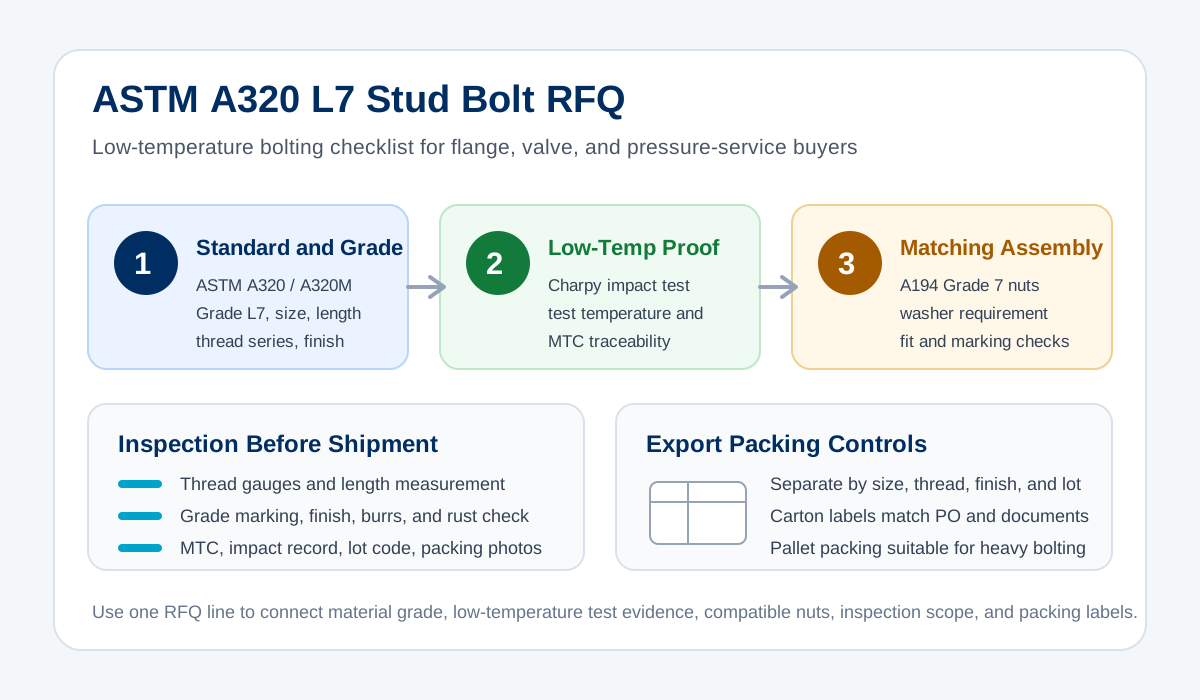
Short answer for low-temperature bolting buyers
ASTM A320 Grade L7 stud bolts are alloy steel bolting products for low-temperature service. They are commonly requested for flange, valve, fitting, pipeline, pressure-vessel, cold-climate, and process applications where the specification calls for A320 L7 instead of a general high-strength stud bolt.
The buying risk is that A320 L7 and ASTM A193 B7 stud bolts may look similar in a quotation table. A low-temperature order, however, is controlled by impact-test evidence, heat treatment, traceability, matching nuts, and document review. A quote that only says "L7 stud bolt" without test temperature, MTC, nut grade, and packing requirements is not ready for serious comparison.
| RFQ field | What to specify | Why it matters |
|---|---|---|
| Standard and grade | ASTM A320 / A320M Grade L7 | Separates low-temperature bolting from ordinary alloy stud bolts |
| Size and thread | Diameter, overall length, UNC, UNF, 8UN, or drawing-defined thread | Prevents confusion between flange bolting schedules and custom studs |
| Low-temperature requirement | Required Charpy impact test temperature and acceptance criteria from the project spec | Controls the main reason for choosing L7 instead of B7 |
| Matching nuts | ASTM A194 Grade 7 nuts, or the exact project-specified nut grade | The nut must match the low-temperature service requirement |
| Finish | Plain, black, hot-dip galvanized, PTFE, zinc, or project-approved coating | Coating affects thread fit, corrosion behavior, cost, and inspection |
| Documents | MTC, impact-test record, heat lot traceability, inspection report, packing list | Receiving teams need documents that connect to the packed lots |
A320 L7 vs A193 B7: the sourcing difference
ASTM A320/A320M is the low-temperature bolting specification. ASTM's public standard summary describes it as covering alloy and stainless steel bolting materials and bolting components for pressure vessels, valves, flanges, and fittings in low-temperature service. The same summary states that the material must meet impact energy absorption requirements and a recommended test temperature. In purchasing terms, that is the key difference buyers must protect in the RFQ.
A193 B7 is widely used for pressure and flange bolting, but it is usually selected for high-temperature or general pressure-service applications, not as the default low-temperature substitute. If the drawing, piping class, or project specification calls for A320 L7, the quote should be built around L7 documents and low-temperature verification.
| Comparison point | ASTM A320 L7 stud bolt | ASTM A193 B7 stud bolt |
|---|---|---|
| Typical buying context | Low-temperature flange, valve, fitting, and pressure-service bolting | High-temperature, pressure-service, and general flange bolting where specified |
| Impact testing | Central part of the L7 purchasing and document package | Not the normal buying reason for B7 unless extra project testing is specified |
| Matching nut | Often ASTM A194 Grade 7, subject to project specification | Often ASTM A194 Grade 2H, subject to project specification |
| Buyer risk | Receiving alloy studs without usable impact-test traceability | Substituting B7 into a low-temperature service order without approval |
| Best RFQ wording | A320 Grade L7, size, thread, length, finish, Charpy requirement, Grade 7 nuts, MTC | A193 Grade B7, size, thread, length, finish, 2H nuts, MTC |
What to check on the Mill Test Certificate
The MTC should do more than repeat the product name. For controlled L7 bolting, buyers should review whether the certificate identifies the standard, grade, heat or lot number, chemical composition, mechanical properties, hardness where required, heat treatment status, Charpy impact test information, size range, and quantity covered. The lot code on the MTC should connect to carton labels and pallet labels.
If the purchase order requires third-party inspection or witnessed testing, define that before production. Asking for extra evidence after goods are packed can delay shipment or expose that the packed lots were not separated carefully enough.
Matching nuts, washers, and coating
A320 L7 studs are often paired with ASTM A194 Grade 7 nuts, but the project specification should control the final nut grade. Do not assume that the common A194 2H heavy hex nut used with B7 studs is automatically acceptable for every L7 order. If washers are required, state the washer standard, material, finish, and whether they ship as a set with the studs and nuts.
Finish should also be explicit. Plain or black finish may be used for many pressure-service bolting orders. Hot-dip galvanizing, zinc plating, PTFE, or other coatings should be approved by the project specification and checked for thread fit after coating. For broader finish planning, review the zinc plated vs hot-dip galvanized fastener guide.
Inspection checklist before shipment
- Confirm the PO, inspection report, MTC, carton labels, and packing list use the same standard, grade, size, thread series, finish, lot code, and buyer item number.
- Measure overall stud length, thread length where relevant, diameter, thread pitch or series, chamfers, and sample weight if the buyer uses weight control.
- Use thread gauges and sample assembly checks with the matching Grade 7 nuts from the same order.
- Check grade marking, finish coverage, rust, dents, burrs, mixed sizes, and oil or coating contamination.
- Review Charpy impact-test records and make sure they connect to the shipped heat or lot.
- Photograph representative studs, nuts, gauges, labels, inner packing, cartons, pallets, and loaded goods before release.
Common RFQ mistakes
| Mistake | Likely result | Better wording |
|---|---|---|
| Writing only "L7 stud bolt" | Supplier may quote without clear test temperature, nut grade, or traceability | ASTM A320 Grade L7 stud bolt with required impact-test evidence and MTC |
| Comparing L7 only against B7 unit price | The cheaper offer may omit low-temperature testing and matching nuts | Compare complete bolting sets with the same documents and inspection scope |
| Leaving thread series unclear | UNC, UNF, 8UN, or project thread assumptions may differ between suppliers | State diameter, overall length, thread series, and applicable drawing or standard |
| Separating nuts from the stud order | Assembly fit, finish, or document mismatch appears during receiving | Quote studs with matching A194 Grade 7 nuts unless the buyer provides another approved nut grade |
RFQ wording buyers can copy
ASTM A320 / A320M Grade L7 stud bolt, 3/4 in x 6 in overall length, UNC thread, plain finish, supplied with two ASTM A194 Grade 7 heavy hex nuts per stud, Charpy impact-test record and MTC required, heat lot traceability required, dimensions and thread fit inspected, packed by size and lot in labeled export cartons on pallets, carton labels to show standard, grade, size, thread, finish, quantity, lot code, and buyer item number.
For a coated assembly: ASTM A320 Grade L7 stud bolt, 1 in x 8 in, 8UN thread, project-approved coating, two matching ASTM A194 Grade 7 nuts per stud, thread fit after coating to be checked by sample assembly, MTC and impact-test documents required, inspection photos and export pallet packing required, destination port included in the quotation.
What HDBOLT recommends
Source A320 L7 studs as a controlled low-temperature bolting set, not as a commodity threaded rod. Start from the project specification, define the impact-test and document requirements, match the nuts, confirm thread and coating assumptions, and inspect the packed lots before shipment. To request a quote, send your size list, thread series, nut requirement, finish, document scope, packing method, and destination through the HDBOLT contact page. For broader procurement planning, review the HDBOLT supply and quality guide and the threaded rods and stud bolts category.