
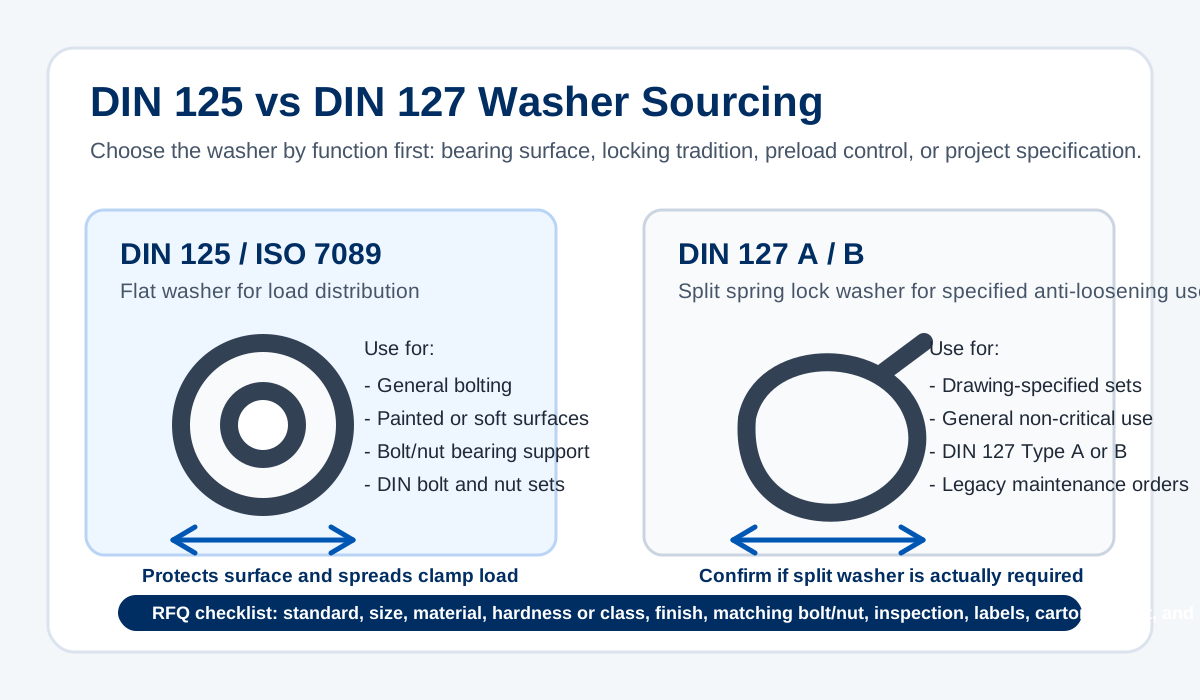
For DIN 125 flat washer vs DIN 127 spring lock washer sourcing, the direct answer is: use DIN 125 or ISO 7089 flat washers when the buyer needs load distribution and surface protection; use DIN 127 spring lock washers only when the drawing, maintenance standard, or customer specification requires a split washer. In the RFQ, specify washer standard, size, material, finish, matching bolt and nut, inspection scope, and export packing instead of writing only "washer".
Direct answer for import buyers
DIN 125 flat washers are general-purpose washers used under a bolt head or nut to spread clamp load, protect the mating surface, and improve bearing contact. DIN 127 spring lock washers, also called split lock washers, are split washers that compress under tightening and are still widely requested in legacy machinery, maintenance kits, and general hardware assemblies.
A quote-ready line should read like this: DIN 125 A flat washer, M12, carbon steel, zinc plated white, matched with class 8.8 hex bolts and class 8 hex nuts, dimensional and coating inspection required, packed by size in labeled cartons on pallets. For a spring washer line, write DIN 127 B spring lock washer, M12, carbon steel, zinc plated white, paired with the same bolt and nut set, cartons separated from flat washers with buyer item labels.
| Question | DIN 125 flat washer | DIN 127 spring lock washer |
|---|---|---|
| Main function | Distributes load and protects the bearing surface | Provides a traditional split washer where specified |
| Common standards | DIN 125 A/B, ISO 7089 | DIN 127 A/B |
| Best RFQ use | General bolt, nut, threaded rod, and anchor assemblies | Customer drawings, maintenance kits, and legacy anti-loosening specifications |
| Buyer risk | Leaving OD, thickness, finish, or standard unclear | Assuming it is enough for critical vibration control without engineering approval |
| Common pairing | Hex bolts, hex nuts, threaded rods, anchors | Hex bolts and nuts in general hardware sets |
When should you source DIN 125 flat washers?
Source DIN 125 flat washers when the assembly needs a controlled bearing surface under a bolt head or nut. They are common in machinery, steel hardware, brackets, furniture fittings, anchor assemblies, and distribution stock. Buyers should state whether DIN 125 A, DIN 125 B, ISO 7089, or the customer drawing is required, because outside diameter and thickness expectations must match the receiving specification.
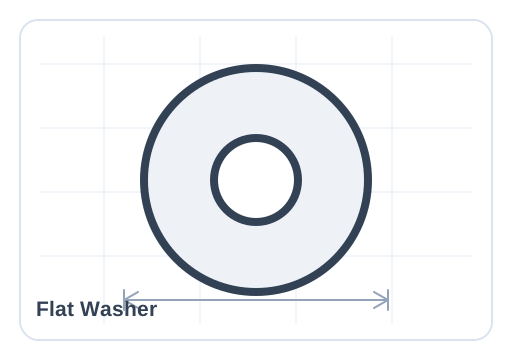
Flat washers are often purchased with full-thread hex bolts, partial-thread hex bolts, hex nuts, DIN 975 threaded rods, and anchors. If the washer is part of a kit, the packing list should show the full assembly count, not only the washer quantity.
When should you source DIN 127 spring lock washers?
Source DIN 127 spring lock washers when the buyer drawing or customer standard specifically calls for split lock washers. DIN 127 B, with square cross-section, is a common purchasing request, but buyers should not assume Type A and Type B are the same. The type, size, material, hardness expectation, and finish should be written on the RFQ.
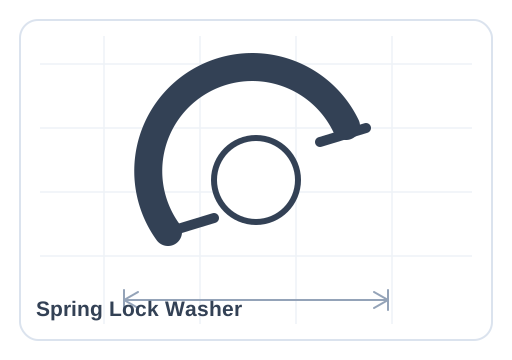
For critical vibration, rotating equipment, or safety-related bolting, do not rely on a split washer simply because it is familiar. Ask the engineer whether the assembly should use a prevailing torque nut, all-metal lock nut, wedge-lock washer, thread-locking compound, or another approved method. HDBOLT can quote DIN 127 washers, but the buyer's technical specification should decide the locking method.
Material and finish choices
| Material or finish | Typical use | RFQ caution |
|---|---|---|
| Carbon steel, zinc plated | General hardware, machinery, distribution stock | State white zinc, yellow zinc, or buyer-approved plating color if appearance matters |
| Plain or black finish | Industrial assemblies, protected environments, further processing | Define rust-prevention oil and carton protection for export transit |
| Hot-dip galvanized | Outdoor bolting, timber, construction hardware | Confirm washer thickness, coating appearance, and matching bolt/nut finish |
| Stainless steel A2 or A4 | Corrosion-sensitive applications | Match stainless washers with the bolt, nut, and service environment |
| Hardened or structural washer | High-strength structural bolting where specified | Use the correct product standard such as ASTM F436 instead of generic DIN 125 |
Inspection checklist before shipment
- Confirm every line item shows DIN 125, ISO 7089, DIN 127 A, DIN 127 B, or the approved drawing number.
- Measure inside diameter, outside diameter, thickness, and visible washer form on sample pieces.
- Check material, finish color, coating appearance, rust, burrs, dents, and sharp edges.
- For spring lock washers, confirm the split form and type are consistent across the lot.
- For assemblies, test fit the washer with the matching bolt, nut, threaded rod, or anchor.
- Keep flat washers and spring lock washers in separate cartons unless the buyer requests pre-packed kits.
- Label cartons with standard, size, material, finish, quantity, lot code, buyer item number, and carton number.
Common sourcing mistakes
| Mistake | Why it causes problems | Better RFQ wording |
|---|---|---|
| Writing only "M12 washer" | Supplier may quote flat washer, spring washer, fender washer, or another type | DIN 125 A flat washer, M12, carbon steel, zinc plated |
| Mixing DIN 125 and DIN 127 in one unclear line | Receiving teams cannot verify quantities by type | Separate line items for flat washer and spring lock washer |
| Ignoring assembly pairing | Washer size or finish may not match bolts, nuts, rods, or anchors | Quote washers matched with M12 class 8.8 bolts and class 8 nuts |
| Using split washers for critical vibration by habit | The selected anti-loosening method may not meet engineering intent | DIN 127 only if specified; otherwise ask for approved locking solution |
Yongnian and Handan sourcing context for washer orders
Washer orders from the Yongnian and Handan fastener supply base are often consolidated with bolts, nuts, threaded rods, anchors, and screws. For overseas buyers, the practical value is mixed-item coordination: HDBOLT can help keep similar M8, M10, M12, and M16 washer cartons separated by standard, finish, and buyer item number so receiving teams do not have to sort mixed hardware after arrival.
This matters most when one shipment includes several washer types, such as DIN 125 flat washers, DIN 127 spring lock washers, DIN 9021 fender washers, and ASTM F436 structural washers. Clear carton labels and lot separation are as important as the unit price because small washers are easy to mix during packing.
RFQ wording buyers can copy
DIN 125 A flat washer, M12, carbon steel, zinc plated white, quantity 100,000 pcs, matched with class 8.8 M12 hex bolts and class 8 hex nuts, dimensional and coating inspection required, export cartons under agreed gross weight, labels showing standard, size, material, finish, quantity, lot code, buyer item number, and carton number.
DIN 127 B spring lock washer, M12, carbon steel, zinc plated white, quantity 100,000 pcs, supplied as separate cartons or pre-packed with bolt and nut sets as specified, inspection photos before shipment, cartons on pallets with line-item labels and packing list separation.
What HDBOLT recommends
Do not compare washer quotes by size alone. State the washer type, exact standard, material, finish, matching assembly, inspection requirement, and packing method. For mixed washer and bolt orders, send your size list through the HDBOLT contact page and include any drawing, sample photo, buyer item number, or carton label requirement. For broader planning, see the HDBOLT washer category and the HDBOLT supply and quality guide.