
Industrial Fastener · Bolts Series
Hex Bolt, Partial Thread
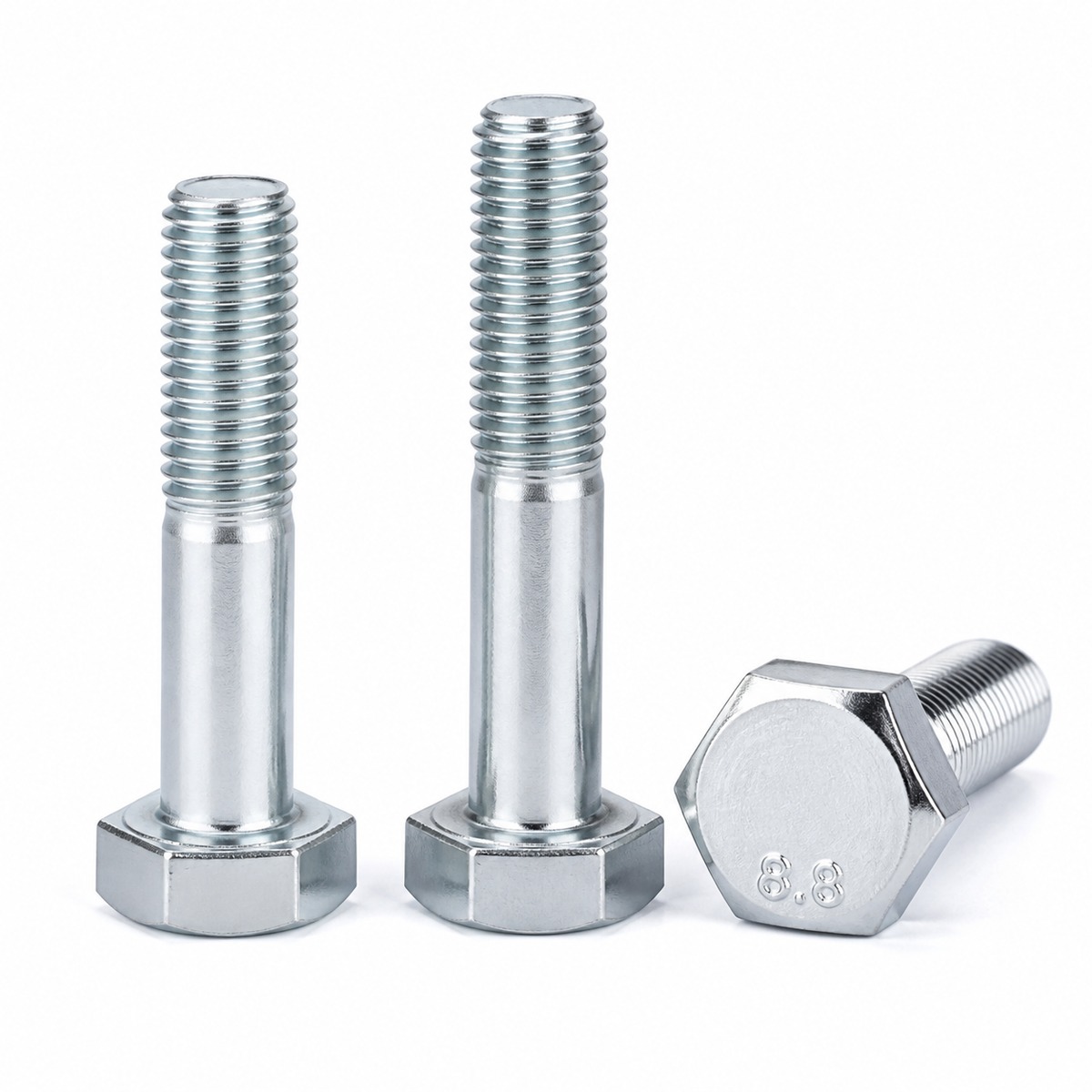
A partially threaded hex bolt has a smooth (unthreaded) shank under the head, with threads only on the lower portion. DIN 931 and ISO 4014 are the two most common specifications. The smooth shank provides higher shear capacity than threaded shank, which is why partial-thread bolts are specified...
Product Overview
Hex Bolt, Partial Thread from HDBOLT
A partially threaded hex bolt has a smooth (unthreaded) shank under the head, with threads only on the lower portion. DIN 931 and ISO 4014 are the two most common specifications. The smooth shank provides higher shear capacity than threaded shank, which is why partial-thread bolts are specified for connections subject to lateral load.
Supplied by HDBOLT in Yongnian, China. Our production capacity and extensive fastener stock support repeat orders and mixed-product shipments. Contact us to confirm availability for your size, grade and finish.
DIN 931, ISO 4014, ANSI/ASME B18.2.1, JIS B 1180
Carbon steel, Alloy steel (35CrMo, 42CrMo for 10.9/12.9)
A partially threaded hex bolt has a smooth (unthreaded) shank under the head, with threads only on the lower portion. DIN 931 and ISO 4014 are the...
Inspection records, lot labels, certificate options, and destination-ready packing.
Technical Data
Specification range
Final dimensions, mechanical properties, finish, and packing are confirmed against the RFQ and applicable standard.
| Standards | DIN 931, ISO 4014, ANSI/ASME B18.2.1, JIS B 1180 |
|---|---|
| Property Class | 4.8, 5.8, 8.8, 10.9, 12.9 |
| Diameter Range | M6 – M64 (1/4" – 2-1/2") |
| Length Range | 20 mm – 300 mm (longer on request) |
| Thread Length | Per standard formula (varies with diameter and length) |
| Material | Carbon steel, Alloy steel (35CrMo, 42CrMo for 10.9/12.9) |
| Surface Finish | Plain, Zinc plated, HDG, Black oxide, Dacromet |
Common surface finishes
Select an option to review its finish details. Exact coating system, thickness, and corrosion requirement are confirmed with the order.
Quality Control
Quality Checks from Order to Shipment
Each order is matched to the specified standard and verified at practical control points before shipment.
RFQ confirmation
Standard, size, grade, pitch, finish, certificates, packing, and destination are locked before production.
Lot verification
Critical dimensions, thread fit, markings, finish appearance, and packing labels are sampled and recorded.
Shipment approval
Photos and required reports are prepared before packing, loading and export delivery.
Buyer Questions
Frequently asked questions
Why does a partial-thread bolt provide higher shear capacity?
The smooth shank of a partial-thread bolt has a larger cross-sectional area than the same nominal diameter at the thread root. When the bolt is loaded in shear (e.g., across a joint that wants to slide), the shear plane should ideally pass through the smooth shank rather than through the threads — the smooth shank can carry meaningfully higher shear load before yielding.
How long should the smooth shank be?
For DIN 931 and ISO 4014, the standards define a thread length formula based on bolt diameter and total length. For most general engineering, the smooth shank should be at least equal to the thickness of the unthreaded plate the bolt passes through, plus enough thread to engage a full nut. If you need a specific shank-to-thread ratio, specify the bolt as a custom length.
Ready to quote Hex Bolt, Partial Thread?
Send the standard, size, grade, finish, quantity, packing requirement, and destination. Availability and lead time are confirmed with the inquiry.