
Industrial Fastener · Screws Series
Self-Drilling (Tek) Screw
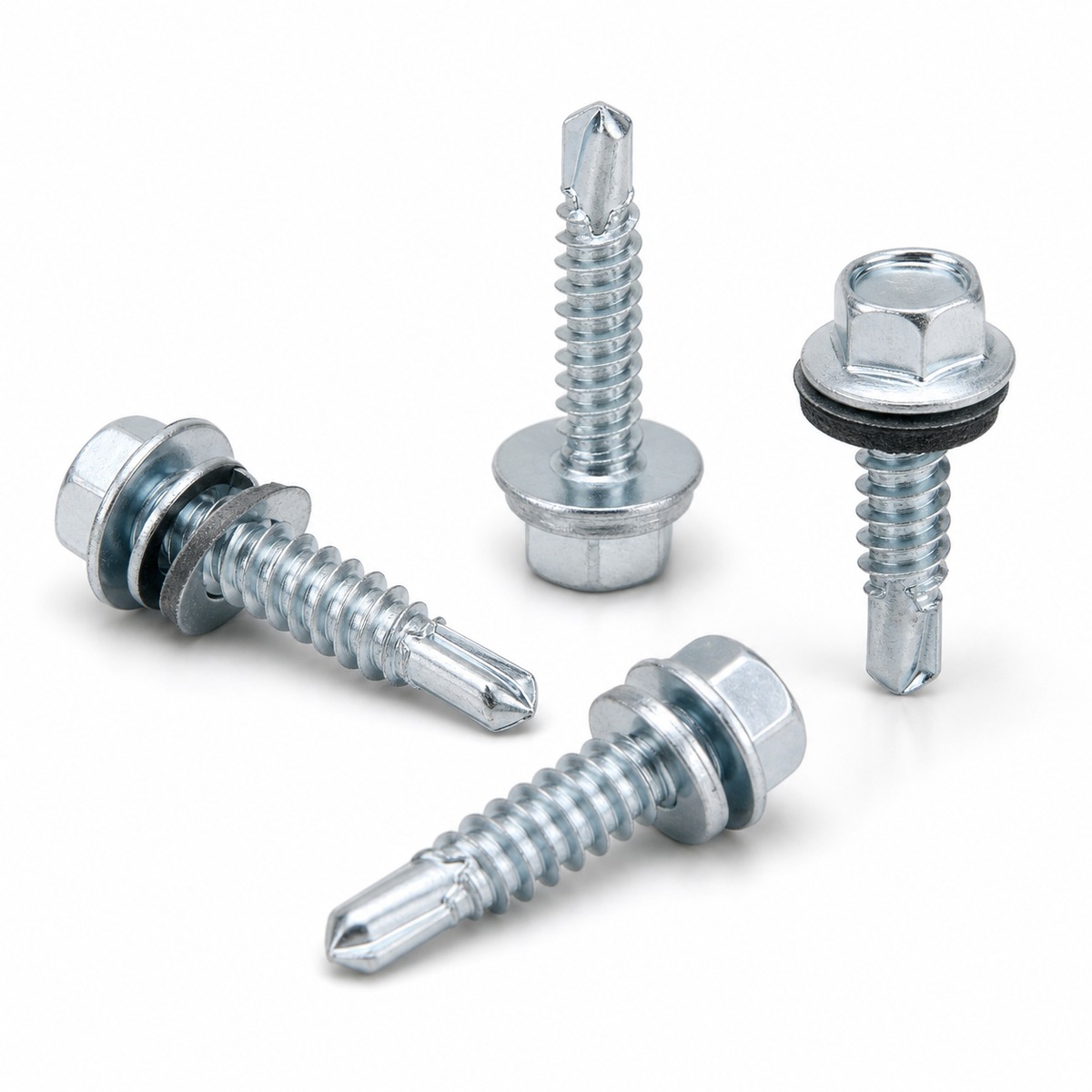
Self-drilling screws (universally called 'Tek screws') drill their own pilot hole in metal as they are driven, eliminating the pilot drilling step. Standard for metal roofing and cladding installation onto steel framing. The point number indicates maximum drilling capacity — #2 drills up to 3...
Product Overview
Self-Drilling (Tek) Screw from HDBOLT
Self-drilling screws (universally called 'Tek screws') drill their own pilot hole in metal as they are driven, eliminating the pilot drilling step. Standard for metal roofing and cladding installation onto steel framing. The point number indicates maximum drilling capacity — #2 drills up to 3 mm, #3 up to 4.5 mm, #5 up to 12 mm of steel.
Supplied by HDBOLT in Yongnian, China. Our production capacity and extensive fastener stock support repeat orders and mixed-product shipments. Contact us to confirm availability for your size, grade and finish.
Project or drawing specification
Material per requirement
Self-drilling screws (universally called 'Tek screws') drill their own pilot hole in metal as they are driven, eliminating the pilot drilling...
Inspection records, lot labels, certificate options, and destination-ready packing.
Technical Data
Specification range
Final dimensions, mechanical properties, finish, and packing are confirmed against the RFQ and applicable standard.
| Point Sizes | #1, #2, #3, #4, #5 (each handles specific maximum steel thickness) |
|---|---|
| Head Types | Hex washer (most common, for roofing), Pancake, Wafer, Pan |
| Drill Capacity | Up to ~12 mm steel for #5 point |
| Surface Finish | Zinc, Ruspert (roofing standard, ~1000 hr salt spray), Bi-metal (carbon steel point + stainless 304/316 body), Dacromet |
| Sealing Washer | EPDM bonded seal for roofing applications |
| RAL Colors | Painted heads in standard RAL colors for matching roof/cladding |
Common surface finishes
Select an option to review its finish details. Exact coating system, thickness, and corrosion requirement are confirmed with the order.
Quality Control
Quality Checks from Order to Shipment
Each order is matched to the specified standard and verified at practical control points before shipment.
RFQ confirmation
Standard, size, grade, pitch, finish, certificates, packing, and destination are locked before production.
Lot verification
Critical dimensions, thread fit, markings, finish appearance, and packing labels are sampled and recorded.
Shipment approval
Photos and required reports are prepared before packing, loading and export delivery.
Buyer Questions
Frequently asked questions
What is a bi-metal Tek screw?
A bi-metal Tek screw has a hardened carbon-steel drill point (so it can drill steel) welded to a stainless steel body (so it provides long-term corrosion resistance). They cost more than standard Tek screws but are essential in coastal or aggressive environments where standard zinc or Ruspert won't last.
How do I choose the right point size?
Match the point to the total steel thickness being drilled (multiple layers added together). Always check the manufacturer's specification — a #2 point in a 4 mm steel beam will burn out before completing the hole. When in doubt, choose one size up.
Ready to quote Self-Drilling (Tek) Screw?
Send the standard, size, grade, finish, quantity, packing requirement, and destination. Availability and lead time are confirmed with the inquiry.