
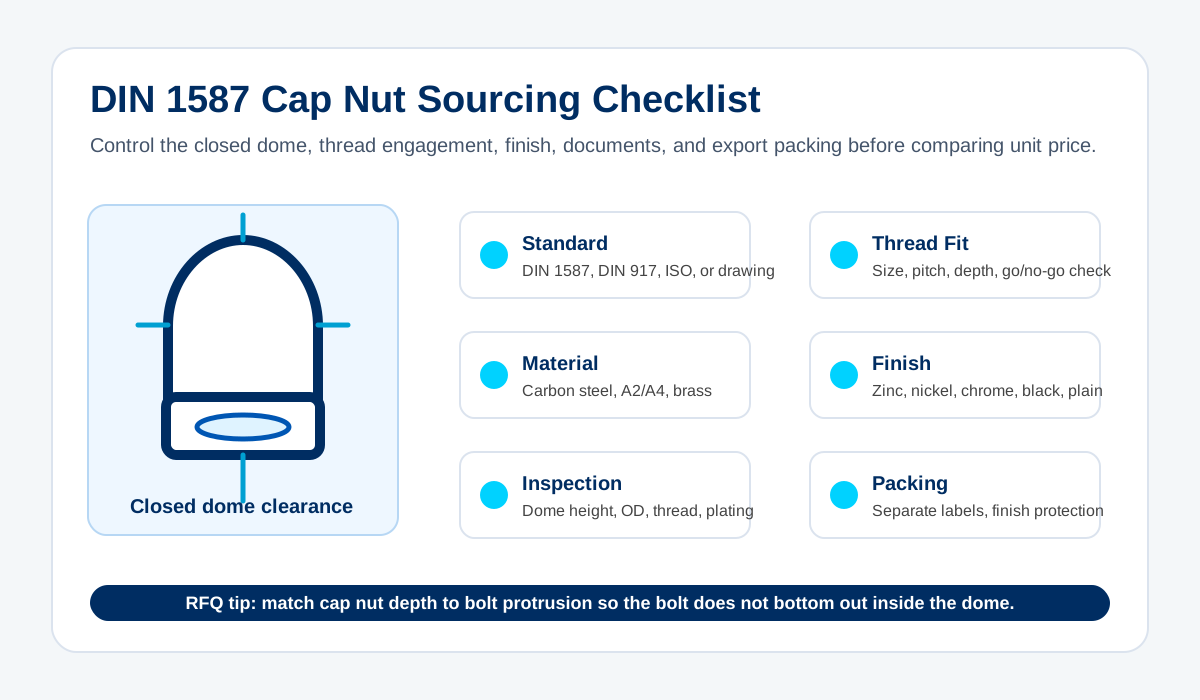
For DIN 1587 cap nut sourcing, the direct answer is: specify the standard, thread size and pitch, cap height or dome style, usable internal thread depth, material, finish, matching bolt length, inspection scope, documents, and export packing in the same RFQ. Do not buy "acorn nut" by appearance alone, because a closed-end nut can bottom out before clamping if the bolt protrusion and dome clearance are not checked.
Short answer for cap nut buyers
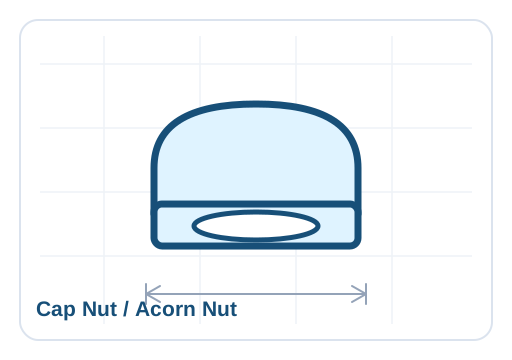
A cap nut, also called an acorn nut or dome nut, is a hex nut with a closed top. It protects the exposed bolt end, improves appearance, and reduces contact with sharp threads. DIN 1587 is the common high-crown metric cap nut reference, while DIN 917 is often used for low-crown cap nuts. The sourcing decision should start with the drawing or end-customer standard, not only the product name.
The key buying risk is assembly depth. A normal hex nut can pass over extra thread, but a cap nut cannot. If the bolt, stud, or threaded rod protrudes too far, it can hit the inside of the dome before the nut clamps the joint. That is why a cap nut RFQ should define both the visible dimensions and the usable internal thread depth.
| RFQ field | What to specify | Why it matters |
|---|---|---|
| Standard and style | DIN 1587 high crown, DIN 917 low crown, ISO reference, or buyer drawing | Controls dome height, hex dimensions, and market expectation |
| Thread | M size, pitch, tolerance if required, and right-hand or special thread | Prevents mismatch with bolts, studs, and threaded rods |
| Dome clearance | Cap height, internal depth, and maximum bolt protrusion after assembly | A closed nut can bottom out before the joint is tight |
| Material | Carbon steel, stainless A2/A4, brass, or buyer-approved material | Material affects strength, corrosion resistance, appearance, and cost |
| Finish | Zinc, nickel, chrome, black, polished stainless, brass, or plain | Cap nuts are often visible, so finish consistency matters |
| Packing | Small box, master carton, protective bag, label content, and lot separation | Decorative finishes are easy to scratch or mix during export handling |
DIN 1587 vs DIN 917: which cap nut should you quote?
Use DIN 1587 when the buyer needs the familiar high-crown dome nut. Use DIN 917 when the project calls for a lower crown profile. In many purchasing conversations, both may be called "cap nuts" or "acorn nuts," so the RFQ should name the standard and include a drawing or sample photo when appearance is important.
| Buying point | DIN 1587 high crown | DIN 917 low crown |
|---|---|---|
| Typical appearance | Taller dome with more visible closed cap | Lower closed profile |
| Common use | Decorative exposed assemblies, protective bolt-end covers, furniture, railing, machinery covers | Lower-profile assemblies where a closed end is needed but height is limited |
| Main RFQ caution | Confirm internal depth and bolt protrusion because the dome is closed | Confirm lower cap height still provides enough clearance for the bolt end |
| Best practice | Quote by DIN 1587 plus size, material, finish, and inspection scope | Quote by DIN 917 plus drawing if the low-profile geometry is critical |
Material and finish choices
Carbon steel cap nuts are often used for general industrial and furniture hardware, then finished with zinc plating, nickel, chrome, black coating, or another appearance-driven surface. When corrosion resistance is more important, stainless steel A2 or A4 can be a better direction. For decorative electrical, furniture, or specialty hardware, brass cap nuts may be requested.
Cap nuts are often visible after installation, so finish wording needs more detail than "silver" or "black." A zinc plated part, nickel plated part, polished stainless part, and chrome plated part can all look bright in a photo but perform and cost differently. If the buyer cares about appearance, request pre-production samples or clear sample photos under consistent lighting before mass shipment.
Thread depth and bolt protrusion check
The safest way to buy cap nuts is to treat the nut and bolt as an assembly. Ask how much thread will protrude above the mating surface after tightening. Then confirm the cap nut has enough usable internal depth so the bolt does not hit the closed dome too early.
- Confirm the bolt or stud diameter, pitch, and expected protruding length after assembly.
- Confirm the cap nut thread depth and available dome clearance from the supplier or drawing.
- Check that tightening torque and washer thickness do not change the final protrusion beyond the safe clearance.
- For repeated orders, keep an approved sample or assembly photo as a receiving reference.
Inspection checklist before shipment
| Checkpoint | What HDBOLT checks | Buyer benefit |
|---|---|---|
| Dimensions | Across flats, height, dome form, thread size, and thread depth samples | Confirms the cap nut matches the drawing or standard |
| Thread fit | Go/no-go gauge or matching bolt assembly checks when required | Reduces claims caused by tight, shallow, or damaged threads |
| Dome condition | Closed top shape, cracks, dents, burrs, and visible forming defects | Protects appearance and avoids weak or sharp cap areas |
| Finish | Color consistency, plating coverage, stains, rust, scratches, and mixed lots | Important for visible decorative assemblies |
| Documents | Material certificate, coating report, inspection photos, and packing list if required | Connects the shipment to the approved PO specification |
| Export packing | Inner bags or boxes, carton weight, labels, pallet protection, and item separation | Prevents scratched finishes and mixed-size receiving problems |
Handan Yongnian sourcing notes for cap nuts
In the Handan Yongnian fastener supply base, cap nuts are usually sourced alongside other nut, bolt, washer, screw, and decorative hardware lines. The practical value for overseas buyers is mixed-item coordination: one order may include DIN 1587 cap nuts, hex nuts, nylon insert lock nuts, hex bolts, and flat washers with different finishes and carton labels.
For visible fasteners, finish quality and packing control matter as much as price. HDBOLT can separate decorative-finish items from bulk industrial hardware, request practical inspection photos, and consolidate cartons by buyer item number so the receiving warehouse does not have to sort similar M6, M8, and M10 cap nuts after arrival.
Common RFQ mistakes
| Mistake | Likely result | Better wording |
|---|---|---|
| Writing only "M8 acorn nut" | Quotes may mix DIN 1587, DIN 917, decorative-only parts, and different finishes | DIN 1587 M8 cap nut, carbon steel, zinc plated, with thread-depth check |
| Ignoring bolt protrusion | The bolt can bottom out inside the dome before clamping | State matching bolt length or required internal clearance |
| Using finish color only | "Bright" or "black" quotes may not match the buyer's appearance or corrosion requirement | State zinc, nickel, chrome, black zinc, black oxide, stainless, brass, or sample-matched finish |
| Combining sizes under one carton label | Similar cap nuts are easy to mix during receiving | Require item-number labels by size, standard, finish, and quantity |
| No packing protection | Polished or plated caps may arrive scratched | Request inner bags, small boxes, carton weight limits, and pallet photos |
RFQ wording buyers can copy
DIN 1587 cap nut, M8 coarse thread, carbon steel, zinc plated white, quantity 50,000 pcs. Confirm across flats, total height, usable internal thread depth, finish appearance, thread gauge result, packing by inner box and export carton, carton labels with buyer item number, and pre-shipment photos.
For stainless orders: DIN 1587 cap nut, M6, A4 stainless, clean polished appearance, no sharp burrs, packed in labeled cartons with size and lot separated. Confirm material certificate availability and provide sample photos before bulk shipment.
What HDBOLT recommends
Buy cap nuts as closed-end assembly components, not as ordinary hex nuts with a dome. Define the standard, cap style, thread, internal depth, material, finish, inspection scope, and export packing before comparing prices. For a quote, send the size list, finish requirement, matching bolt or stud information, target quantity, destination port, and packing preference through the HDBOLT contact page. For related products, review the nuts category, cap nut product page, and HDBOLT supply and quality guide.