
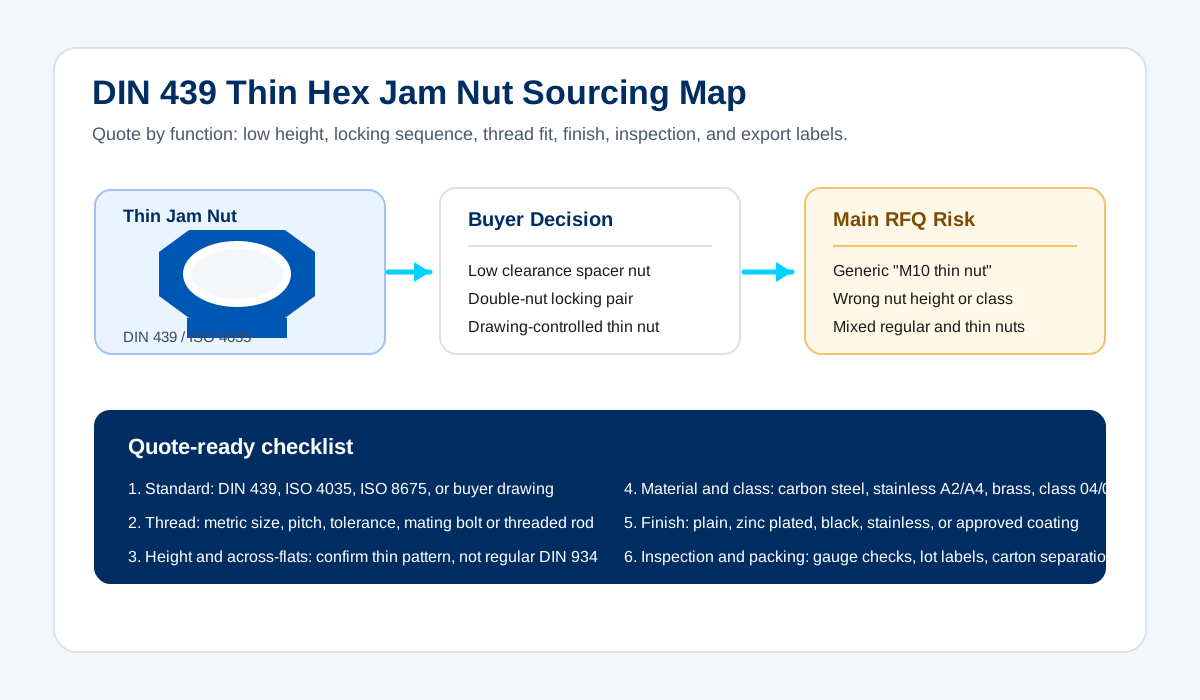
For DIN 439 thin hex jam nut sourcing, the direct answer is: specify the exact thin nut standard, size, pitch, height, across-flats dimension, material or property class, finish, mating bolt or threaded rod, locking sequence if used as a jam nut, inspection evidence, and export packing. Do not buy "thin nut" or "jam nut" by name alone, because suppliers may quote a different low-height pattern, a regular hex nut, or a nut that fits the thread but does not fit the assembly clearance.
Short answer for jam nut buyers
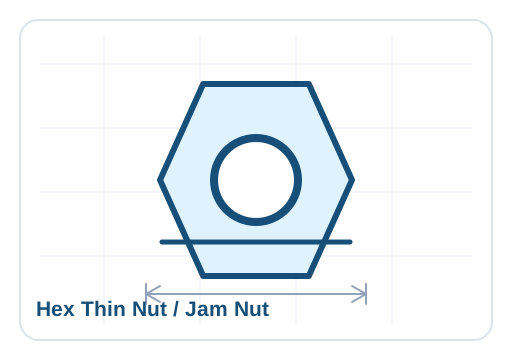
A hex thin nut or jam nut is lower than a standard hex nut. It is commonly used where vertical clearance is limited, where a secondary nut locks against a primary nut, or where a drawing calls for a low-height nut pattern. DIN 439 is a familiar metric thin hex nut reference, while ISO 4035 and ISO 8675 may also appear in buyer drawings and supplier cross-reference sheets.
The sourcing risk is not only thread size. Two nuts can both be M10 and still differ in body height, across flats, chamfer, property class, coating, and thread pitch. If the nut is used as a lock nut, the assembly method matters too: the buyer should confirm whether the thin nut is used alone, against a full-height nut, or as part of a double-nut locking pair.
| RFQ field | What to specify | Why it matters |
|---|---|---|
| Standard | DIN 439, ISO 4035, ISO 8675, buyer drawing, or sample match | Controls the thin nut pattern and avoids substitution by generic name |
| Thread | M size, coarse or fine pitch, tolerance if required, and right-hand or special thread | Prevents mismatch with bolts, studs, and threaded rods |
| Height and across flats | Nominal size plus accepted height range and wrench size requirement | A low-height nut is often chosen because clearance is limited |
| Material or class | Carbon steel class 04/05 where suitable, stainless A2/A4, brass, or drawing material | Thin nuts have different strength expectations from full-height nuts |
| Finish | Plain, zinc plated, black, stainless, brass, or buyer-approved coating | Coating affects corrosion resistance, appearance, and thread fit |
| Function | Spacer, low-clearance retaining nut, or double-nut locking application | The inspection and packing plan should match how the nut is used |
DIN 439 vs full-height hex nuts
A DIN 439 thin hex nut should not be treated as a cheaper substitute for a full-height DIN 934 or ISO 4032 nut. The lower height reduces thread engagement, so the application engineer should decide whether the thin nut is acceptable for the joint load and service condition. In many assemblies, the thin nut is used for locking or positioning rather than as the only load-carrying nut.
| Buying point | DIN 439 thin hex jam nut | Full-height hex nut |
|---|---|---|
| Body height | Low profile for clearance or locking use | Regular nut height for general bolting |
| Typical use | Double-nut locking, adjustment, low-clearance locations, threaded rod positioning | General clamping with normal thread engagement |
| Main sourcing risk | Wrong height, wrong pitch, mixed with regular nuts, or unapproved substitution | Wrong standard, property class, finish, or thread pitch |
| RFQ wording | Name DIN 439 or drawing, then confirm height and assembly function | Name DIN 934, ISO 4032, ASTM, ASME, or drawing standard |
When to use thin jam nuts
Thin jam nuts are useful when the assembly cannot accept a regular-height nut, when a threaded component needs a low-profile retaining nut, or when a second nut is tightened against the first nut to resist loosening. Typical sourcing examples include machine adjustment points, equipment guards, furniture hardware, electrical and mechanical assemblies, threaded rod positioning, and maintenance replacement kits.
If the order includes matching hex bolts, DIN 975 threaded rods, or washers, source the assembly together where possible. A thin nut that gauges correctly in isolation can still create field problems if the mating bolt pitch, coating thickness, or thread tolerance does not match the approved assembly.
Double-nut locking: what buyers should clarify
In a jam nut arrangement, two nuts are tightened against each other so their thread contact resists loosening. The method can be useful, but it depends on correct installation sequence and engineering approval. The RFQ should not promise vibration performance by product name alone. Instead, the buyer should tell the supplier whether the nut is being used as a jam nut, whether it pairs with a full-height nut or another thin nut, and whether the end customer requires any assembly test or installation instruction.
| Assembly question | Buyer should provide | Supplier should confirm |
|---|---|---|
| Which nut is thin? | Thin plus full nut, two thin nuts, or drawing-specific pair | Separate line items and carton labels if both styles ship together |
| What is the mating thread? | Bolt, stud, or threaded rod standard, grade, finish, and pitch | Thread gauge result and assembly fit check when requested |
| Is locking performance specified? | Drawing note, test requirement, or installation instruction | Whether the factory can support the requested evidence |
| Is the joint safety-critical? | Engineer-approved locking method | No substitution with nylon insert, all-metal lock nut, or washer without approval |
Material and finish choices
Carbon steel thin jam nuts are common for industrial and hardware orders, usually supplied plain, zinc plated, black, or with another specified coating. Stainless A2 or A4 may be selected for corrosion resistance or clean appearance. Brass thin nuts may be used in decorative, electrical, or specialty hardware applications.
Finish should be chosen with the mating part in mind. Zinc plating is common for indoor and general hardware use. Hot-dip galvanizing is not automatically suitable for every thin nut application because coating buildup can affect thread fit and dimensions. For broader coating decisions, compare the zinc plated vs hot-dip galvanized fastener guide before approving the finish.
Inspection checklist before shipment
| Checkpoint | What HDBOLT checks | Buyer benefit |
|---|---|---|
| Standard and dimensions | DIN 439 or drawing reference, height, across flats, chamfer, and thread size | Confirms the nut is truly the low-height pattern required |
| Thread fit | Go/no-go gauge, mating bolt or rod check when required, and pitch confirmation | Reduces claims from mixed coarse/fine pitch or tight coated threads |
| Material and finish | Material class, stainless grade if applicable, plating coverage, burrs, rust, and color | Aligns the shipment with the approved PO and sample |
| Assembly function | Fit with paired nuts, bolts, studs, or threaded rods when supplied as a set | Catches problems before the buyer tries to assemble mixed parts |
| Labels and packing | Separate labels for size, pitch, standard, finish, item number, and lot | Prevents receiving teams from mixing thin nuts with regular nuts |
| Documents | Inspection photos, packing list, material certificate, or coating report if required | Creates traceable evidence before shipment leaves China |
Handan Yongnian sourcing notes
In the Handan Yongnian fastener market, thin jam nuts are often sourced with other nut lines rather than as a single isolated item. A typical overseas distributor order may combine DIN 439 thin nuts, DIN 934 hex nuts, nylon insert lock nuts, all-metal lock nuts, matching bolts, washers, and threaded rods under one shipment.
The practical advantage is consolidation, but the practical risk is mixing. M6, M8, and M10 thin nuts can be confused with regular nuts or with fine-pitch versions if labels are weak. HDBOLT can coordinate item separation, carton labels, sample photos, and mixed-order consolidation so import buyers receive quote-ready product lines instead of unsorted hardware.
Common RFQ mistakes
| Mistake | Likely result | Better wording |
|---|---|---|
| Writing only "M10 jam nut" | Supplier may quote an undefined thin nut or a local stock pattern | DIN 439 M10 thin hex jam nut, coarse pitch, class 04, zinc plated |
| Ignoring height | The nut may not fit the clearance envelope or may not match the old part | State standard plus required height range or attach drawing |
| Mixing pitch variants | Fine-pitch and coarse-pitch nuts may be packed together by mistake | Use separate item numbers and labels for each pitch |
| Assuming locking performance | The assembly may loosen if the method is not engineered or installed correctly | State the locking method and ask for assembly fit checks, not vague promises |
| No packing detail | Thin nuts and regular nuts can be confused during receiving | Require inner bags, carton labels, item numbers, and pallet photos |
RFQ wording buyers can copy
DIN 439 thin hex jam nut, M10 coarse thread, carbon steel class 04, zinc plated white, quantity 100,000 pcs. Confirm finished height, across flats, thread gauge result, plating appearance, packing by inner bag and export carton, carton labels with buyer item number, and pre-shipment photos.
DIN 439 thin hex jam nut, M12 x 1.25 fine pitch, stainless steel A2, quantity 20,000 pcs. Used as a locking nut with matching stainless threaded rod. Confirm pitch, height, material certificate availability, assembly fit with supplied rod sample dimensions, and separate labels from coarse-pitch M12 nuts.
What HDBOLT recommends
Buy DIN 439 thin jam nuts as controlled low-height components, not as generic nuts. Define the standard, thread pitch, height, material, finish, mating part, locking function, inspection scope, and export packing before comparing prices. For a quote, send the size list, standard, function, target quantity, destination port, and packing preference through the HDBOLT contact page. For related products, review the hex thin nut / jam nut page, the full nuts category, and the HDBOLT supply and quality guide.