
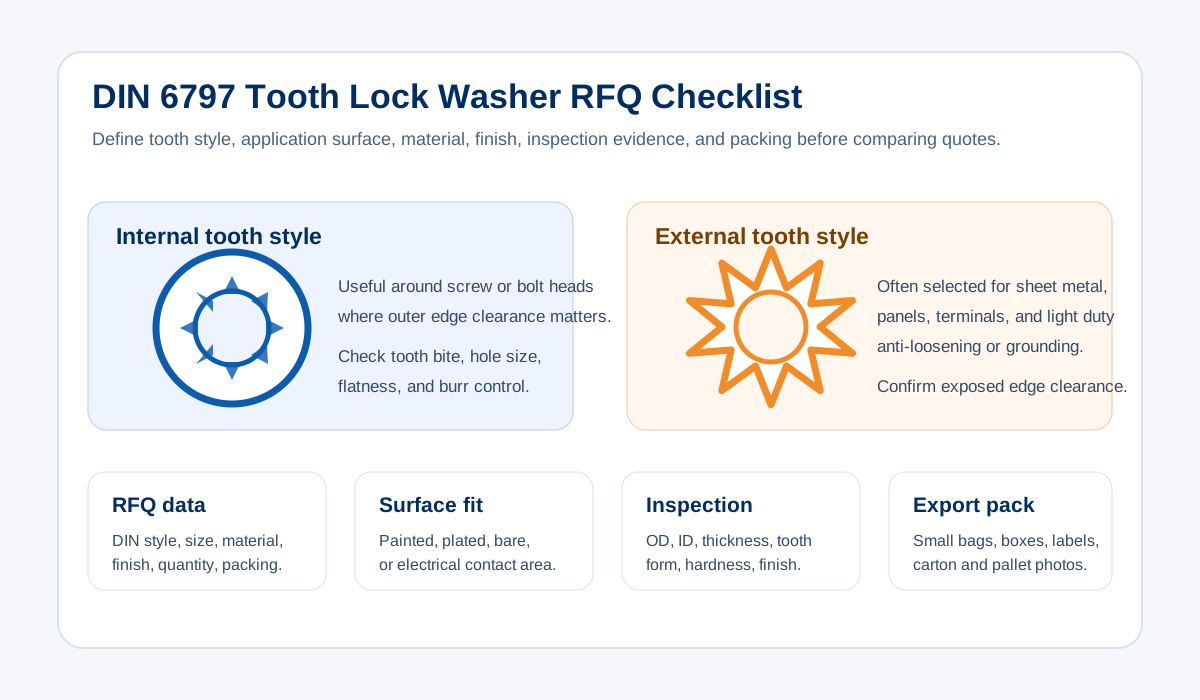
For DIN 6797 tooth lock washer sourcing, the direct answer is: specify the tooth style and the contact surface before comparing prices. A correct RFQ should define internal tooth or external tooth style, metric size, outside diameter, inside diameter, thickness, material, hardness if controlled, finish, electrical grounding or anti-loosening use, inspection evidence, packing labels, and destination. This prevents wrong washer form, poor tooth bite, damaged visible surfaces, coating mismatch, and mixed-size export cartons.
Short answer for tooth lock washer buyers
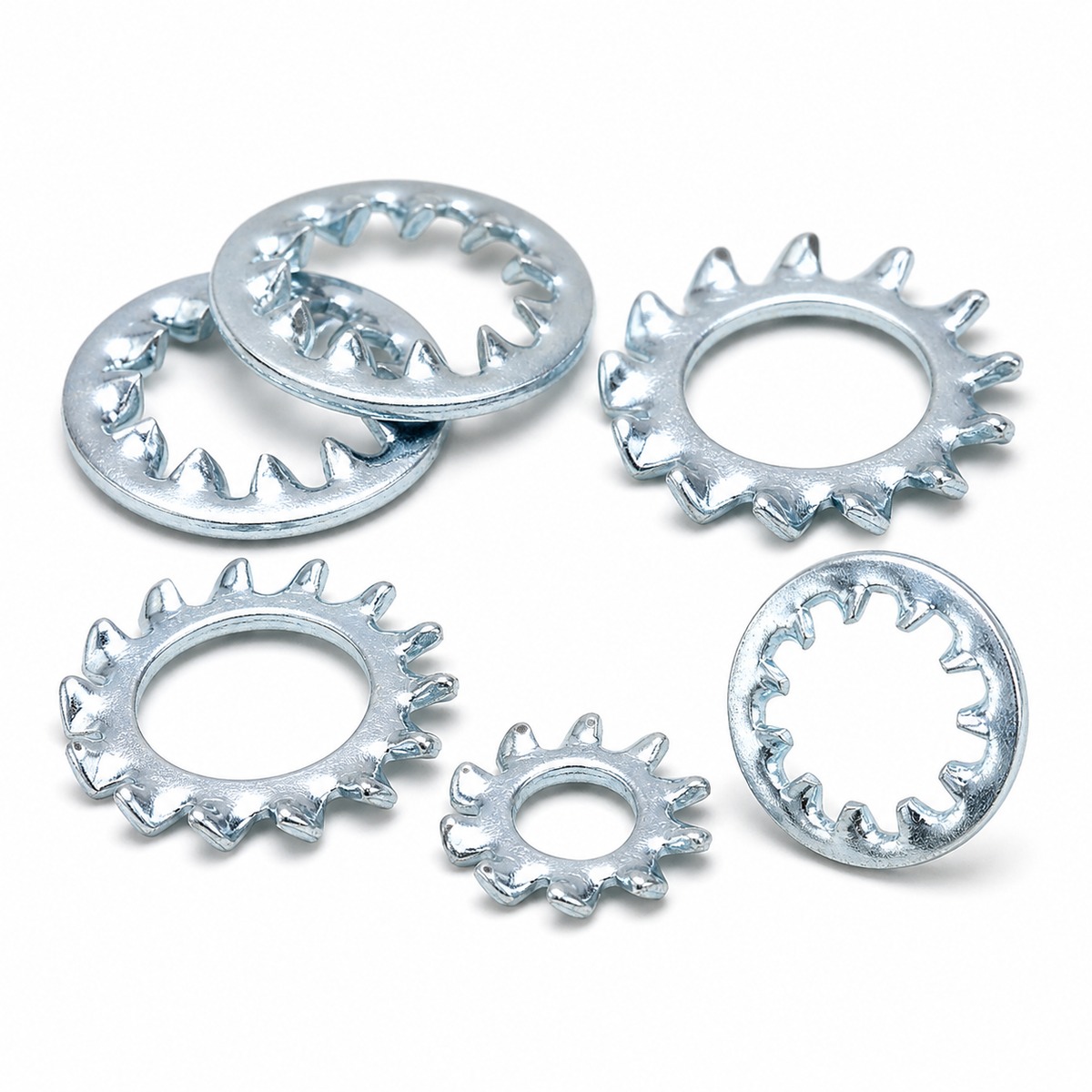
A tooth lock washer, also called a star washer or serrated lock washer, uses radial teeth to bite into the mating surface. It is often selected for light-duty anti-loosening, electrical bonding, grounding terminals, sheet metal panels, enclosures, instrument hardware, and small machinery assemblies.
DIN 6797 purchasing problems usually start when the RFQ says only "M6 star washer" or "DIN 6797 washer." That wording does not define whether the teeth are internal or external, whether the washer must avoid visible surface damage, whether electrical contact is required, or whether the finish must match the screw, bolt, terminal, or panel. Buyers should confirm the exact form code against their drawing, catalog, or project standard because internal and external tooth styles are not interchangeable.
| Buying question | What to define | Why it matters |
|---|---|---|
| Tooth style | Internal tooth, external tooth, countersunk tooth, or drawing match | Controls where the teeth bite and whether the washer clears the assembly |
| Application | Grounding terminal, panel fastener, sheet metal screw, instrument housing, or light machinery | Helps choose tooth direction, material, finish, and inspection scope |
| Size basis | Metric nominal size plus OD, ID, thickness, and standard reference | Prevents confusion between similar washer series and catalog tables |
| Material | Spring steel, carbon steel, stainless steel, or buyer-approved material | Controls spring action, corrosion resistance, and contact behavior |
| Finish | Zinc plated, black, phosphated, plain, stainless self-finish, or project coating | Finish affects corrosion resistance, appearance, conductivity, and tooth bite |
| Packing | Small bags, inner boxes, bulk cartons, mixed-size labels, pallet separation | Small washers are easy to mix if cartons and bags are not clearly labeled |
Internal tooth vs external tooth lock washers
Internal tooth washers place the teeth around the hole. They are often useful when the outer edge should stay neater, when clearance around the washer outside diameter is limited, or when the buyer wants the biting action concentrated closer to the screw or bolt shank. External tooth washers place the teeth around the outside edge, giving a larger biting diameter and a more visible serrated outline.
Neither style should be treated as a universal lock washer. The correct choice depends on the joint surface, washer visibility, electrical contact path, clamp load, coating, and whether the teeth are allowed to mark the mating parts.
| Feature | Internal tooth washer | External tooth washer |
|---|---|---|
| Tooth location | Teeth point inward around the hole | Teeth point outward around the washer edge |
| Typical use | Screw heads, terminals, light enclosures, compact assemblies | Sheet metal, panels, grounding lugs, light-duty equipment hardware |
| Appearance | Outer edge can look cleaner after assembly | Tooth edge is more visible around the fastener |
| Main sourcing risk | Wrong hole size or weak tooth form gives poor bite near the shank | Outer teeth may interfere with recesses or mark visible surfaces |
| Best RFQ input | Fastener size, OD limit, surface material, and drawing if available | Washer OD, exposed surface limit, electrical contact need, and finish |
Electrical grounding and surface contact
Many buyers source tooth lock washers for grounding or electrical bonding. In that use, the washer is expected to break through light paint, oxide, or coating and create metal-to-metal contact. The RFQ should say this clearly because a decorative finish, thick coating, or wrong material choice can work against the electrical purpose.
For grounding hardware, buyers should tell HDBOLT the mating material, whether the surface is painted or plated, the fastener type, and whether the customer requires a conductivity test, sample approval, or application photo. If the washer is used only for light anti-loosening, state that too. The inspection focus changes when electrical contact is the main reason for the washer.
Material and finish selection
Spring steel is common when the buyer needs stronger tooth bite and elastic behavior. Stainless steel may be selected for corrosion resistance or clean appearance, but the buyer should still confirm whether the stainless grade and hardness are appropriate for the application. For stainless washer programs, compare the environment with HDBOLT's stainless steel A2 vs A4 fastener guide.
Common finish choices include zinc plating, black finish, phosphate, plain with rust prevention, and stainless self-finish. If the washer is expected to bite through a coating for grounding, do not approve a finish only by color. Define the functional surface requirement and ask for sample photos or test evidence where needed. For broader finish planning, see the zinc plated vs hot-dip galvanized fastener guide.
| Finish or material | Typical use | Buyer note |
|---|---|---|
| Zinc plated spring steel | General hardware, panels, distributor stock | Confirm plating color, rust prevention, and whether conductivity matters |
| Black or phosphated | Machinery, dark assemblies, oil-protected hardware | Define oiling, appearance, and storage protection |
| Stainless steel | Clean appearance, light corrosion exposure, stainless assemblies | Define grade and check whether tooth bite is enough for the surface |
| Plain or custom finish | Special assemblies or coating after installation | Clarify corrosion protection during transport and storage |
Handan Yongnian sourcing context
Tooth lock washers fit the practical side of Handan Yongnian fastener sourcing because they are often purchased together with screws, hex bolts, sheet metal fasteners, terminals, plain washers, spring washers, and small carton hardware. For overseas buyers, the useful part of the local cluster is not only washer production. It is the ability to consolidate small washers with related washer products, screws, and bolts into one export shipment.
The risk is that small washers can be mixed easily when many similar sizes and finishes move through one order. HDBOLT's role is to confirm the item code, DIN reference, tooth style, sample photos, bag labels, inner box labels, carton labels, and pallet separation before export. This is especially useful for importers and distributors buying mixed metric sizes rather than one single bulk SKU.
Inspection points before shipment
A tooth lock washer inspection should confirm dimensions and tooth quality. Buyers should check outside diameter, inside diameter, thickness, tooth count or tooth form where controlled, burrs, flatness, finish coverage, corrosion, hardness if specified, and packing accuracy. For electrical bonding use, ask whether sample assembly photos or buyer-specified tests are required before shipment.
| Inspection item | What to check | Evidence to request |
|---|---|---|
| Dimensions | OD, ID, thickness, and standard or drawing match | Caliper photos and size sampling table |
| Tooth form | Internal or external style, sharpness, burrs, deformation, flatness | Close-up photos from several samples |
| Material | Spring steel, carbon steel, stainless, or buyer-approved material | Material confirmation and test report when specified |
| Finish | Color, coverage, rust prevention, surface defects, function impact | Surface photos and finish confirmation |
| Packing | Bag count, box count, carton label, mixed-size separation, pallet plan | Label photos, carton photos, pallet photos |
Common RFQ mistakes
- Writing "star washer" without saying internal tooth or external tooth.
- Assuming all DIN 6797 catalog forms are interchangeable in the assembly.
- Leaving out OD, ID, and thickness when the buyer's drawing controls the washer.
- Specifying a finish by appearance only when electrical contact is required.
- Ignoring burrs, tooth deformation, or flatness because the washer is low cost.
- Packing similar M4, M5, and M6 washers in unmarked bags or plain cartons.
RFQ wording buyers can copy
DIN 6797 external tooth lock washer, M6, spring steel, zinc plated white, dimensions to DIN standard unless drawing differs, used for sheet metal panel fastening, quantity 200,000 pieces. Pack 1,000 pieces per labeled bag, 10 bags per inner carton, export carton with item code, size, finish, and quantity. Provide OD, ID, thickness, tooth form close-up photos, finish photos, and packing photos before shipment.
DIN 6797 internal tooth lock washer, M5, stainless steel, for electrical grounding terminal assembly. Confirm material grade, washer OD limit, tooth form, burr control, sample approval, and whether teeth bite through the plated mating surface. Pack by size and lot with clear carton labels and pallet separation.
What HDBOLT recommends
Start with the assembly surface and the tooth direction, then define the washer size, material, finish, inspection, and packing. For a quote, send the DIN reference, tooth style, metric size list, quantity per size, finish, application, drawing or photo if available, packing requirement, and destination through the HDBOLT contact page. For broader buying process details, review the HDBOLT supply and quality guide and the HDBOLT tooth lock washer product page.