
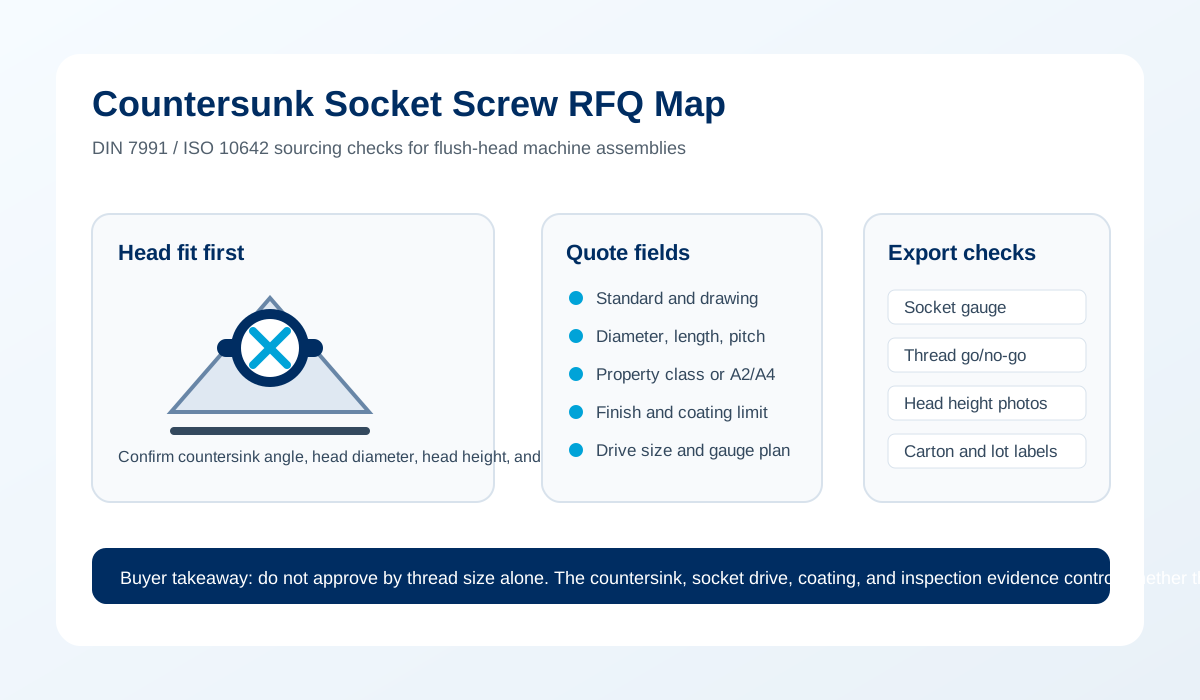
For DIN 7991 vs ISO 10642 countersunk socket screw sourcing, the direct answer is: treat them as closely related metric flat-head socket screw standards, but do not approve a quote by thread size alone. The buyer should confirm the active standard, mating countersink, head diameter, head height, 90-degree seat, hex socket size, thread, property class, surface finish, inspection evidence, packing labels, and destination before production.
Short answer for buyers
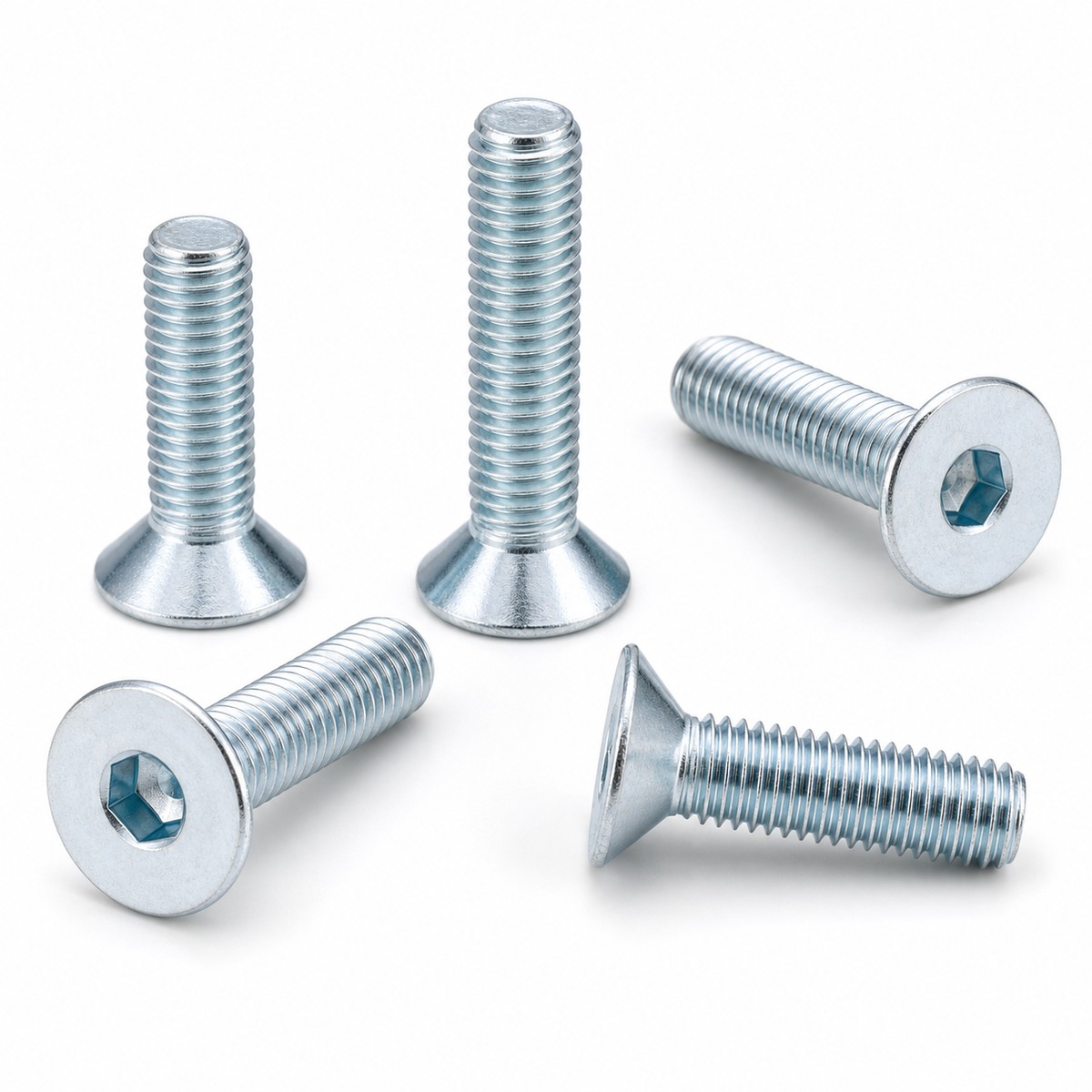
A countersunk socket screw is selected when the head must sit flush with a machined countersink. DIN 7991 and ISO 10642 both describe metric hex-socket flat countersunk screws used in machinery, panels, fixtures, tooling, furniture hardware, and equipment covers. They are often discussed together in export RFQs, but the buyer should still state which standard, drawing, or approved sample controls the order.
The main sourcing risk is practical: a screw can have the correct M6 x 20 thread but still fail assembly because the head does not seat flush, the socket is shallow or damaged, the coating changes fit, or the buyer's countersink was made for a different head profile. For replacement parts, measure the old screw and the mating countersink. For new designs, freeze the standard before tooling or machining.
DIN 7991 vs ISO 10642 sourcing comparison
| Buying point | DIN 7991 | ISO 10642 |
|---|---|---|
| Typical RFQ wording | DIN 7991 countersunk socket screw, size and finish | ISO 10642 countersunk socket screw, size and finish |
| Head interface | Flat countersunk head for flush seating in a prepared countersink | Flat countersunk head for flush seating in a prepared countersink |
| Head angle | Normally specified as a 90-degree metric countersunk head | Normally specified as a 90-degree metric countersunk head |
| Common strength request | Often quoted in alloy steel property class 10.9, plus stainless options where required | Often quoted in alloy steel property class 10.9, plus stainless options where required |
| Main buyer action | Use when the drawing, customer spec, or legacy part calls for DIN 7991 | Use when the project or market requires the ISO designation |
| Interchangeability | Do not assume full interchangeability without checking head dimensions, drive size, property class, coating, and countersink fit against the actual assembly. | |
When countersunk socket screws are the right choice
Choose countersunk socket screws when a protruding head would interfere with sliding parts, covers, machine guards, fixtures, or appearance-sensitive panels. The internal hex drive also allows installation where an external wrench cannot reach the head. Common applications include automation equipment, tooling plates, machine slides, access panels, furniture metalwork, electronics housings, and compact equipment assemblies.
Use a different screw when the joint needs higher tightening torque, larger bearing area, or no machined countersink. For example, a DIN 912 / ISO 4762 socket head cap screw is usually better for high clamp load in a counterbored hole. A button head socket screw is useful where a low rounded head is acceptable. A DIN 7984 low head socket cap screw helps when head height is restricted but the part should not be countersunk.
RFQ fields buyers should define
A weak inquiry says "countersunk Allen screw M8 zinc". A quote-ready inquiry defines the standard, head fit, material, finish, and inspection. If the assembly is already designed, attach the drawing or a measured sample photo. If the screw is being matched to a purchased component, send the countersink diameter and depth as well as the screw size.
| RFQ field | What to write | Why it matters |
|---|---|---|
| Standard | DIN 7991, ISO 10642, ASME B18.3 inch-series, or buyer drawing | Controls dimensions, head shape, drive geometry, and market acceptance |
| Size | Diameter, pitch, length, full or partial thread, and quantity per size | Prevents mixed metric pitches, wrong lengths, or incomplete size lists |
| Head fit | Head diameter, head height, countersink angle, and required flushness | Controls whether the head sits below, flush with, or above the surface |
| Drive | Internal hex socket size and gauge requirement | Shallow, rounded, plated-over, or off-center sockets cause installation failures |
| Material and grade | Alloy steel class 10.9, stainless A2-70/A4-70, or drawing material | Strength, corrosion behavior, magnetic response, and certificate scope depend on this |
| Finish | Black oxide, plain oiled, zinc plated, nickel plated, stainless/passivated, or project coating | Coating affects appearance, corrosion resistance, thread fit, and socket fit |
| Packing | Pieces per bag or carton, customer SKU, lot label, barcode, and pallet mark | Small socket screws are easy to mix by size, finish, or drive if labels are weak |
Inspection checklist before shipment
For countersunk socket screws, thread inspection is necessary but incomplete. The buyer should also control the head because a flush-head screw is only useful if it seats correctly in the mating countersink and can be driven without socket damage.
- Confirm the standard or drawing shown on the supplier quotation.
- Measure diameter, length, pitch, thread length, head diameter, and head height.
- Check countersink fit with the buyer's component, sample plate, or approved gauge where available.
- Inspect the hex socket for depth, cleanliness, plating buildup, burrs, and rounding.
- Use go/no-go thread gauges after coating or passivation.
- Check surface finish consistency, corrosion-protection requirement, and oil level for storage.
- Request grade marking or certificates when required by the project specification.
- Verify inner labels, carton labels, pallet marks, packing list, and shipment photos before release.
Finish selection and assembly risks
Black oxide is common for alloy steel socket screws used in machinery, but it is mainly a light-duty appearance and storage finish unless combined with oil. Zinc plating gives brighter corrosion protection for indoor and general hardware applications. Nickel plating may be requested for appearance or specific equipment programs. Stainless A2 or A4 helps when corrosion resistance is more important than high alloy-steel strength.
The finish should not be chosen only by catalog appearance. Plating buildup can affect the hex socket, threads, and head seating. If the screw must sit exactly flush, buyers should approve samples after final finish, not only before coating. For critical assemblies, ask for photos or a short video showing the screw seated in the mating countersink.
Handan Yongnian sourcing context
Countersunk socket screws require control of the socket drive, head forming, heat treatment and size sorting. HDBOLT confirms the DIN 7991 or ISO 10642 specification, head angle, drive fit and inspection requirements before production or stock allocation.
For overseas buyers, the practical advantage of the local fastener cluster is mixed-item coordination. A project may need countersunk socket screws together with socket head cap screws, flat washers, hex nuts, anchors, and packaging labels. HDBOLT can separate similar SKUs, plan stock allocation or production for each line item, consolidate export packing, and keep inspection photos tied to the buyer's purchase order. Lead time and availability should still be confirmed during the RFQ because size range, finish, heat treatment, sample approval, and packaging can change the schedule.
RFQ wording buyers can copy
DIN 7991 / ISO 10642 countersunk socket screw, size M[diameter] x [length], pitch [coarse/fine], material and grade [10.9 / A2-70 / A4-70 / drawing material], finish [black oxide / zinc plated / stainless / other], quantity [pieces], head must seat flush in 90-degree countersink, socket gauge required, thread go/no-go gauge required after finish, packing [pieces per bag/carton], labels with size, standard, grade, finish, lot, and customer SKU, shipment destination [country/port]. Please confirm drawing, sample availability, inspection photos, certificates if required, carton labels, pallet marks, and export documents.
What HDBOLT recommends
Start with the mating countersink, then select the screw standard. The safest purchasing sequence is application, standard or drawing, countersink fit, screw size, material and grade, finish, drive inspection, sample approval, packing label, and export documents. To build a complete inquiry, review the HDBOLT countersunk socket screw page, the bolt category, and the HDBOLT supply and quality guide. For a quote, send your drawings, size list, finish requirement, packing rule, and destination through the HDBOLT contact page.