
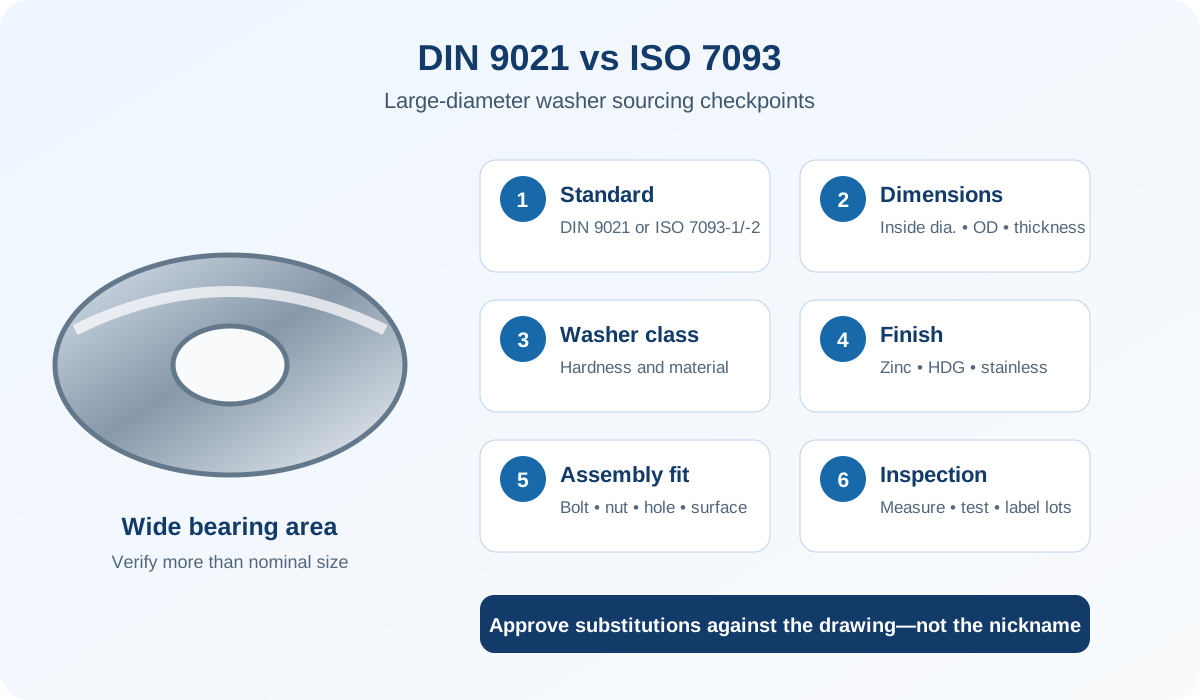
For DIN 9021 vs ISO 7093 large-diameter washer sourcing, the direct answer is: both standards cover wide outside-diameter flat washers, but they should not be treated as automatically interchangeable. State DIN 9021, ISO 7093-1, ISO 7093-2, or the drawing requirement; then confirm inside diameter, outside diameter, thickness, hardness or property class, material, finish, and the bolt assembly before approving a quote.
Direct answer for purchasing teams
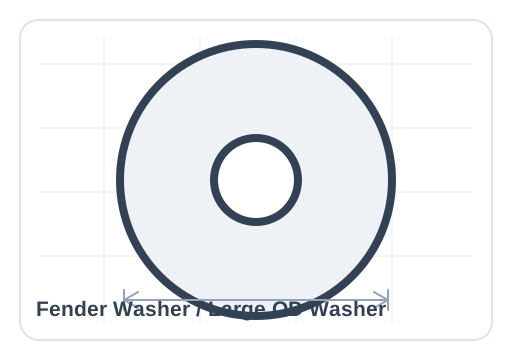
DIN 9021 washers, often called fender washers or large OD flat washers, provide a broader bearing area than general-purpose DIN 125 or ISO 7089 washers. ISO 7093 is the corresponding international family for large-series plain washers. The larger outside diameter helps distribute clamp load over sheet metal, timber, plastics, slotted holes, insulation systems, and other surfaces where a standard washer may provide too little support.
The critical buying detail is the suffix. ISO 7093-1 and ISO 7093-2 address different washer classes and applications, so an RFQ that says only “ISO 7093 washer” is incomplete. A quote-ready line is: ISO 7093-1 large-series plain washer, M10, 200 HV, carbon steel, zinc plated white, for class 8.8 bolts, dimensions and hardness inspected, packed in labeled cartons on export pallets.
| Buying question | DIN 9021 | ISO 7093 |
|---|---|---|
| Product type | Large outside-diameter flat washer | Large-series plain washer family |
| Common RFQ wording | DIN 9021 plus nominal size | ISO 7093-1 or ISO 7093-2 plus nominal size |
| Main buyer benefit | Familiar DIN callout for broad load distribution | ISO-aligned specification with defined washer class |
| Substitution rule | Compare the required edition or drawing dimensions and mechanical requirements before approval | |
| Common sourcing risk | Receiving a generic thin fender washer that matches nominal diameter but not OD, thickness, hardness, or finish | |
DIN 9021 vs ISO 7093: are they interchangeable?
They may be commercially cross-referenced, but purchasing approval should depend on the actual specification rather than a catalog equivalence claim. Standards can differ by edition, tolerance treatment, washer class, marking expectations, and the way suppliers describe legacy DIN stock. If the customer drawing says DIN 9021, quote that standard unless the buyer has documented approval for an ISO alternative.
For a substitution review, place the supplier drawing or inspection sheet beside the buyer requirement and compare:
- nominal bolt size and actual inside-diameter range;
- outside diameter and its tolerance;
- washer thickness and tolerance;
- flatness, edge condition, and surface quality;
- washer class, hardness, or material requirement;
- coating system and coating thickness requirement; and
- fit with the specified bolt head, nut, hole, and bearing surface.
ISO 7093-1 vs ISO 7093-2
Do not omit the part number when purchasing ISO washers. ISO 7093-1 is commonly specified for higher-hardness large-series plain washers, while ISO 7093-2 covers a lower washer class for different bolt and screw applications. The correct choice depends on the fastener property class and the joint design. Buyers should use the engineering drawing or approved bill of materials rather than selecting a washer class from price alone.
| RFQ field | What the buyer should state | Why it matters |
|---|---|---|
| Standard | DIN 9021, ISO 7093-1, ISO 7093-2, or drawing number | Defines the intended washer family and class |
| Size | Nominal metric size plus ID, OD, and thickness when drawing-controlled | Prevents a generic fender washer substitution |
| Mechanical requirement | Washer class, hardness range, material, or approved specification | Supports the bolt property class and bearing load |
| Finish | Plain, zinc plated, hot-dip galvanized, flake coating, or stainless | Controls corrosion protection, appearance, and assembly fit |
| Matching assembly | Bolt or screw standard, size, class, nut, and service material | Allows fit and finish compatibility checks |
Where large-diameter washers are used
Large-series washers are useful where the joint needs more bearing area, but they do not replace engineering validation. Common purchasing applications include sheet-metal enclosures, timber connections, solar mounting hardware, fencing, roofing accessories, furniture, slotted brackets, repair kits, and plastic components. They are also stocked as general hardware under the name “fender washer.”
If the joint is structural, high-strength, or safety-critical, confirm whether a hardened structural washer is required instead. An ASTM F436 structural washer is not a generic replacement for DIN 9021, and DIN 9021 should not replace F436 merely because its outside diameter looks suitable.
Material and finish selection
| Option | Typical sourcing use | Buyer checkpoint |
|---|---|---|
| Carbon steel, zinc plated | Indoor machinery, brackets, distribution hardware | Specify plating color, coating requirement, and salt-spray test only when contractually needed |
| Carbon steel, hot-dip galvanized | Outdoor, timber, utility, and construction hardware | Check coating buildup, washer dimensions, appearance acceptance, and matching fastener finish |
| Stainless steel A2 | General corrosion resistance and clean appearance | State A2 grade and confirm compatibility with the bolt, nut, and environment |
| Stainless steel A4 | More demanding outdoor, coastal, or chemical exposure | Do not accept A2 as an unapproved cost-saving substitution |
| Special coating or material | OEM drawings and application-specific assemblies | Provide the coating specification, color, test method, and approved material designation |
For stainless projects, see the A2 vs A4 fastener ordering guide. For coated carbon steel assemblies, compare the washer finish with the bolt and nut finish; mixed coatings can create appearance, thread-fit, or corrosion-control problems.
Incoming and pre-shipment inspection checklist
- Verify the purchase order, carton label, and inspection report show the same complete standard designation.
- Measure inside diameter, outside diameter, and thickness with calibrated equipment against the applicable standard or approved drawing.
- Check hardness or material documentation when the washer class is part of the order.
- Inspect flatness, burrs, sharp edges, cracks, stamping defects, rust, and coating coverage.
- Test fit samples with the actual bolt or screw and confirm the washer covers the intended hole or slot.
- Keep similar-looking sizes and standards separated by lot and buyer item number.
- Photograph product, labels, inner packing, cartons, and pallets before shipment.
Common RFQ mistakes
| Mistake | Purchasing consequence | Better wording |
|---|---|---|
| Writing only “M10 fender washer” | OD, thickness, material, and hardness remain supplier-defined | DIN 9021 M10, carbon steel, zinc plated, dimensions per specified edition |
| Writing only “ISO 7093” | The ISO part and washer class are unclear | ISO 7093-1 M10, 200 HV, zinc plated white |
| Approving by outside diameter alone | A thin washer may deform or fail the joint requirement | Approve ID, OD, thickness, material class, and finish together |
| Mixing sizes in bulk cartons | Similar washers are difficult to separate at receiving | Separate cartons with size, standard, lot, quantity, and item labels |
RFQ wording buyers can copy
ISO 7093-1 large-series plain washer, M10, 200 HV, carbon steel, zinc plated white, quantity 50,000 pcs, for M10 class 8.8 hex bolt assemblies, dimensions and hardness inspected to the specified standard edition, coating inspection required, packed by lot in labeled cartons on export pallets.
DIN 9021 fender washer, M8, stainless steel A4, quantity 20,000 pcs, ID/OD/thickness per buyer-approved drawing, burr-free edges and clean surface required, packed in moisture-protected cartons with standard, size, material, quantity, lot code, buyer item number, and carton number on every label.
What HDBOLT recommends
Buy large-diameter washers by full specification, not by nickname. Confirm the accepted standard, ISO part, dimensions, washer class, material, finish, matching fastener, inspection scope, and packing labels before comparing quotations. Review the HDBOLT fender washer page, browse the washer range, or send the size list and drawings through the HDBOLT contact page. For a mixed fastener order, the HDBOLT supply and quality guide explains the information needed for an accurate quote.