
For machine screw sourcing, the direct answer is: do not quote only "M4 screw" or "small screw zinc". A controlled RFQ should define the machine screw standard, head style, drive type, diameter, pitch, length, material, finish, recess quality, thread inspection, packing labels, and destination. The head and drive decide assembly access, surface fit, installation speed, and receiving accuracy.
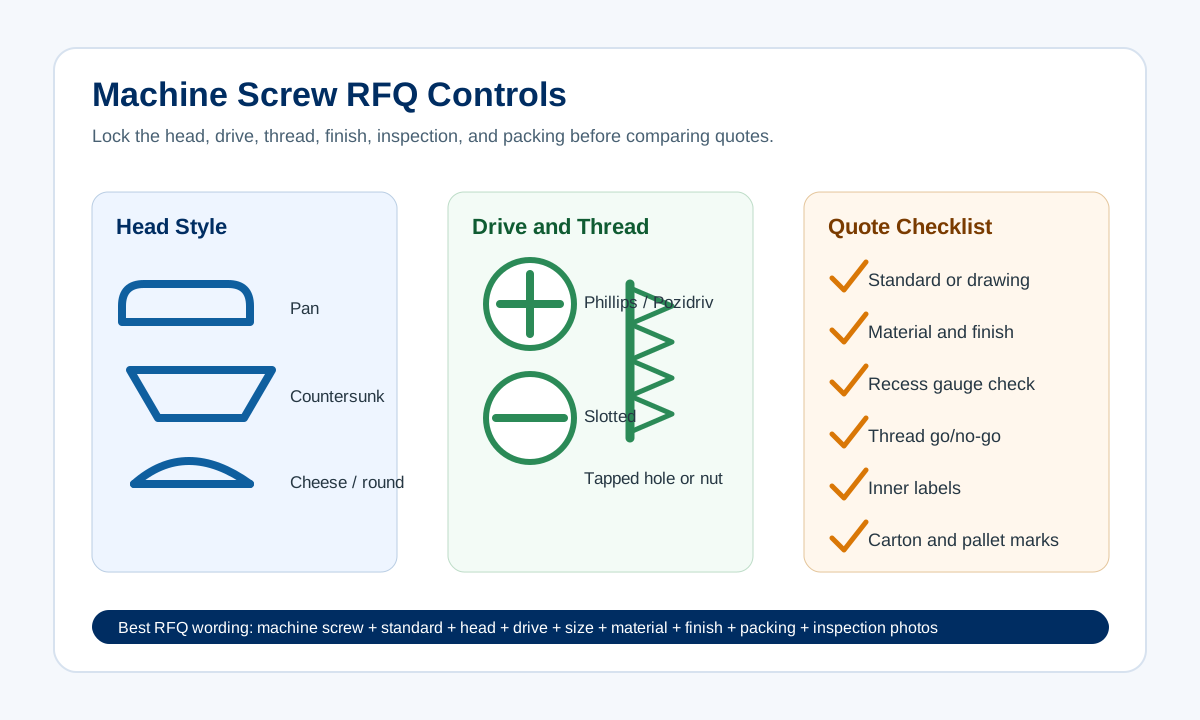
Short answer for buyers
A machine screw is a small, uniform-thread fastener used with a tapped hole, threaded insert, clinch nut, weld nut, or separate nut. It is common in electrical panels, machinery covers, enclosures, appliance hardware, brackets, furniture hardware, instruments, and light assemblies. Because many head and drive combinations look similar in supplier listings, the RFQ should name the standard or drawing instead of relying on a catalog photo.
The highest-risk details are head form and recess form. A pan head Phillips screw, countersunk slotted screw, cheese head slotted screw, and raised countersunk Pozidriv screw can share the same M4 x 12 thread but solve different assembly problems. If the buyer changes the drive after sampling, tooling, stock selection, and packing labels may also change.
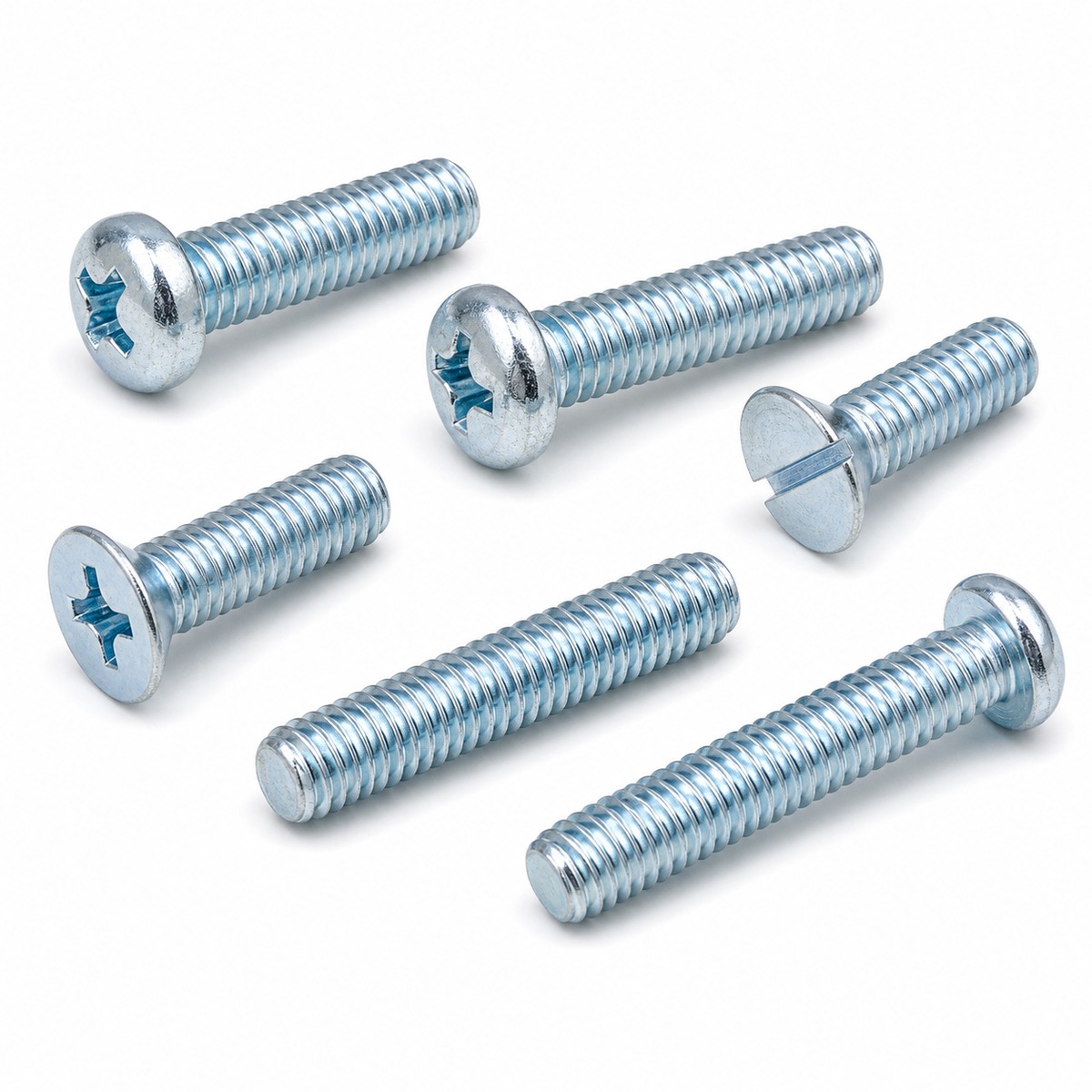
Common machine screw standards and buying use
| Reference | Typical form | When buyers use it | RFQ caution |
|---|---|---|---|
| DIN 84 | Slotted cheese head machine screw | Electrical hardware, instruments, terminal blocks, and legacy European drawings | Confirm head height, slot width, and visible finish if appearance matters |
| DIN 85 | Slotted pan head machine screw | General light assembly where a rounded head can sit above the surface | Do not mix with Phillips pan head unless the buyer approves the drive change |
| DIN 963 | Slotted countersunk machine screw | Flush mounting into a prepared countersink | Check head angle, head diameter, and whether the screw seats flush after finish |
| DIN 7985 | Phillips pan head machine screw | Faster screwdriver assembly, appliance hardware, cabinets, and light machinery | Confirm Phillips vs Pozidriv because bits and recess geometry are not the same |
| Buyer drawing | Any head, drive, or custom length | OEM parts, kits, private-label fastener packs, and replacement hardware | The drawing should override catalog assumptions on dimensions and tolerance |
Head style selection
Choose the head by the mating surface and assembly access. Pan head and round head machine screws sit above the surface and are useful when the head can remain visible. Cheese head screws give a cylindrical profile often used in older equipment and electrical applications. Countersunk screws need a prepared countersink and are selected when the head must sit flush with the panel.
For flush assemblies, do not approve a countersunk screw only from the thread size. Ask the supplier to confirm head diameter, head height, countersink angle, and sample fit after plating or passivation. A zinc layer, burr, or slightly different head profile can keep the screw proud of the surface even when the thread is correct.
Drive type comparison
| Drive | Best use | Buyer control point |
|---|---|---|
| Slotted | Simple legacy parts, electrical terminals, appearance-matched replacements, and low-speed assembly | Slot width, slot depth, burrs, plating buildup, and screwdriver fit |
| Phillips | General machine screw programs where cross-recess driving is expected | Recess size, cam-out behavior, bit fit, and whether the drawing calls for H-type cross recess |
| Pozidriv | Furniture hardware, European assembly programs, and applications needing better drive engagement than Phillips | Do not substitute Phillips; label the drive clearly on cartons and small boxes |
| Hex socket or Torx | Higher drive engagement, compact access, or buyer-specific assembly tools | Confirm the product is still a machine screw line item or should move to a socket screw category |
Material and finish choices
Carbon steel machine screws are commonly supplied in property class 4.8 or 8.8 when the application allows it. Stainless A2 and A4 machine screws are useful for corrosion resistance, clean appearance, outdoor hardware, and equipment exposed to moisture. Brass machine screws are common in electrical terminals, instruments, decorative hardware, and non-sparking or non-magnetic applications where the engineering specification permits brass.
Finish selection should match the service environment and the receiving requirement. Zinc plated machine screws are common for general hardware and distribution. Black finish can suit machinery or indoor assemblies. Nickel plating may be used for appearance-sensitive or electrical hardware programs. Stainless and brass parts may require clean finish, passivation, or anti-tarnish packing rather than ordinary zinc plating. For related material decisions, compare HDBOLT's stainless A2 vs A4 fastener guide and brass machine screw page.
RFQ fields buyers should define
| RFQ field | What to write | Why it matters |
|---|---|---|
| Standard | DIN 84, DIN 85, DIN 963, DIN 7985, ISO equivalent, ASME equivalent, or buyer drawing | Prevents suppliers from quoting a visually similar but dimensionally different screw |
| Head and drive | Pan, cheese, countersunk, raised countersunk, slotted, Phillips, Pozidriv, socket, or Torx | Controls assembly tool, visible profile, seating, and user acceptance |
| Size | Diameter, pitch, length, full thread, and quantity by line item | Small screws are easy to mix when only length or diameter differs |
| Material | Carbon steel 4.8/8.8, stainless A2/A4, brass, or drawing material | Controls strength, corrosion behavior, magnetism, and certificate scope |
| Finish | Zinc plated, black, nickel plated, stainless clean/passivated, brass natural, or custom finish | Finish affects appearance, corrosion resistance, recess fit, and storage protection |
| Inspection | Thread gauge, recess gauge or bit fit, head dimensions, finish photos, and sample approval | Machine screw failures often appear during installation, not during visual sorting |
| Packing | Pieces per bag or box, SKU label, barcode, lot code, carton mark, and pallet plan | Private-label and mixed-size orders depend on accurate inner labels |
Inspection checklist before shipment
- Confirm the quotation, proforma invoice, packing list, and carton label use the same standard and head-drive description.
- Measure diameter, pitch, length, head diameter, head height, and countersunk dimensions where applicable.
- Check recess size and bit fit for Phillips, Pozidriv, socket, or Torx drives.
- Inspect slotted drives for burrs, shallow slots, off-center slots, and plating buildup.
- Use go/no-go thread gauges after plating, passivation, or other final finish.
- Check surface finish consistency, oil or anti-rust protection, and visible head appearance.
- Verify that similar M3, M4, M5, and M6 screws are separated in labeled inner bags or boxes.
- Review export carton photos, pallet marks, and documents before shipment release.
Handan Yongnian sourcing notes
HDBOLT supplies machine screws as part of complete hardware orders, alongside self-tapping screws, sheet metal screws, hex nuts and flat washers. Head, drive, material and finish are confirmed for each item before stock allocation or production.
For small screws, HDBOLT focuses on keeping visually similar items separated, matching the head and drive to the buyer's sample or drawing, checking recess quality before export, and aligning inner labels with the buyer's receiving system. Availability and lead time should still be confirmed during the RFQ because material, finish, head-drive mix, sample approval, and packing format can change the supply schedule.
RFQ wording buyers can copy
Machine screw, standard [DIN 84 / DIN 85 / DIN 963 / DIN 7985 / drawing], size M[diameter] x [length], pitch [coarse/fine], head [pan / cheese / countersunk / raised countersunk], drive [slotted / Phillips / Pozidriv / socket / Torx], material [carbon steel 4.8 / 8.8 / stainless A2 / A4 / brass], finish [zinc plated / black / nickel / passivated / natural brass], quantity [pieces], packed [pieces per bag or small box] with customer SKU and barcode labels. Please confirm sample availability, head dimensions, recess or bit-fit inspection, thread go/no-go gauge after finish, carton labels, pallet marks, export documents, and destination [country/port].
What HDBOLT recommends
Start with the assembly surface and driver tool, then choose the standard. A clean purchasing sequence is application, standard or drawing, head style, drive type, size, material, finish, inspection, packing labels, and export documents. For related products, review the HDBOLT machine screw page, screw category, brass machine screws, and the HDBOLT supply and quality guide. To request a quote, send the size list, head-drive requirement, material, finish, packing rule, and destination through the HDBOLT contact page.