
For metric hex bolt sourcing, the direct answer is: use property class 4.8 for low-load general fastening, 8.8 for common high-tensile machinery and fabrication work, 10.9 for higher-strength controlled joints, and 12.9 only when the drawing or engineer specifies it. Your RFQ should state the standard, size, thread, property class, finish, matching nut and washer, certificate requirements, inspection scope, packing, and destination.
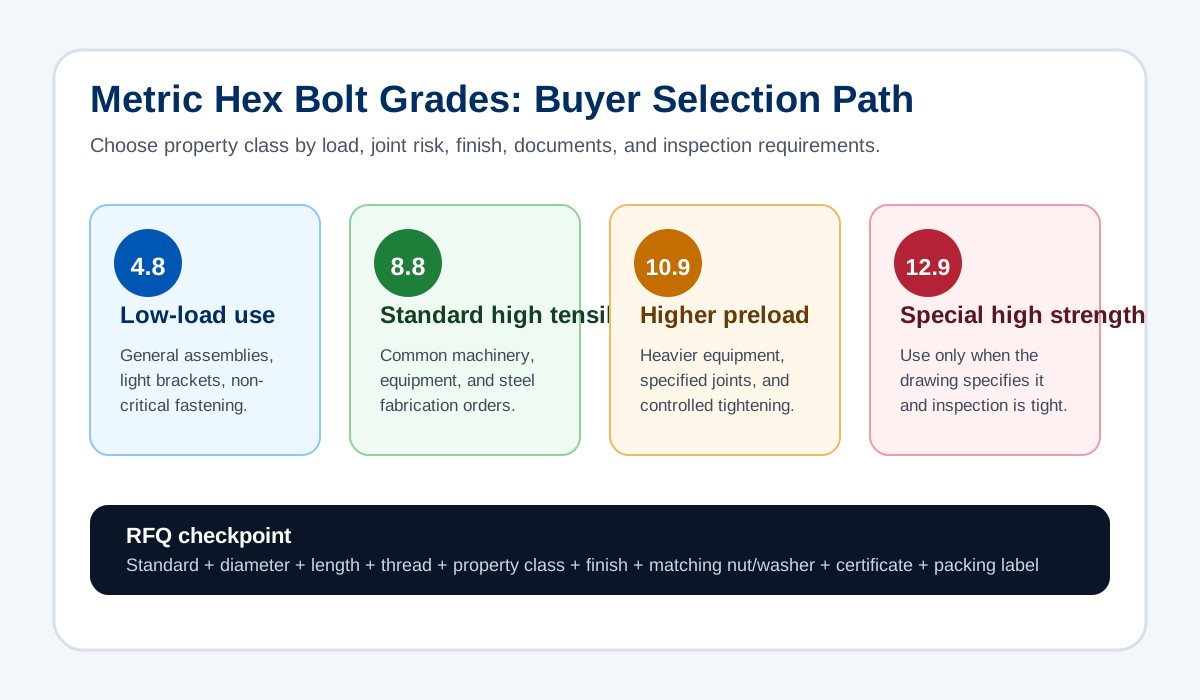
Direct answer for metric hex bolt buyers
Metric hex bolt property classes describe mechanical performance. They are not just price levels. A bolt marked 8.8, 10.9, or 12.9 has different strength expectations, production routes, heat treatment controls, and inspection risk than a grade 4.8 commodity bolt.
A quote-ready RFQ line should read like this: DIN 933 or ISO 4017 full thread hex bolt, M12 x 50, property class 8.8, zinc plated, metric coarse thread, matching class 8 hex nut and flat washer if required, MTC required, export cartons on pallets with line-item labels, destination port included.
| Property class | Typical buyer use | Sourcing caution |
|---|---|---|
| 4.8 | Light-duty brackets, general hardware, non-critical assemblies | Do not substitute into high-tensile drawings |
| 8.8 | Common high-tensile metric hex bolts for equipment, machinery, and fabrication | Confirm heat treatment, marking, thread fit, and certificate needs |
| 10.9 | Higher-strength joints where preload and assembly control matter | Require clearer inspection and matching nut class |
| 12.9 | Special high-strength applications specified by drawing or engineer | Avoid casual substitution; control material, finish, and hydrogen embrittlement risk carefully |
How the property class number works
For metric bolts, the property class gives a compact strength signal. The first number relates to nominal tensile strength, and the second number relates to the yield ratio. In purchasing practice, buyers do not need to calculate every value in the RFQ, but they do need to preserve the exact property class from the drawing, bill of materials, or engineer approval.
If the drawing says class 8.8, quote class 8.8. Do not accept a supplier's casual upgrade to 10.9 or 12.9 without engineering approval. Higher strength is not automatically safer because the joint design, nut class, washer, surface finish, tightening method, and application environment all matter.
Grade 4.8 vs 8.8 vs 10.9 vs 12.9 in sourcing terms
| Buying factor | 4.8 | 8.8 | 10.9 / 12.9 |
|---|---|---|---|
| Common product type | General carbon steel hex bolts | High-tensile hex bolts | Controlled high-strength hex bolts |
| Typical standards | DIN 933, ISO 4017, DIN 931, ISO 4014 when specified | DIN 933, ISO 4017, DIN 931, ISO 4014 | Often drawing-controlled DIN or ISO hex bolt orders |
| Documents | Basic inspection may be enough for commodity orders | MTC is commonly requested for export and project orders | MTC, lot traceability, and stricter inspection are recommended |
| Matching nuts | Lower class nuts where permitted by design | Commonly paired with class 8 nuts | Confirm compatible nut class before RFQ |
| Finish risk | Usually lower risk | Confirm plating, HDG, or black finish requirements | Coating and embrittlement control need more attention |
Full thread or partial thread?
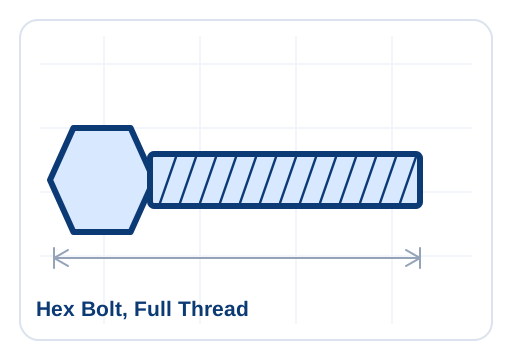
Property class is only one part of the order. Buyers also need to choose the bolt standard and thread style. DIN 933 and ISO 4017 full thread hex bolts are common when the full shank length needs thread engagement, such as tapped holes or thinner assemblies. DIN 931 and ISO 4014 partial thread hex bolts are common where the smooth shank should carry shear through the joint.
RFQ checklist for import buyers
A strong RFQ reduces the chance that suppliers quote different assumptions. For metric hex bolts, include these fields before comparing prices:
- Standard: DIN 933, ISO 4017, DIN 931, ISO 4014, or buyer drawing.
- Size: diameter, length, thread pitch if not standard coarse thread, and thread tolerance if specified.
- Property class: 4.8, 8.8, 10.9, 12.9, or drawing-controlled requirement.
- Finish: plain, black oxide, zinc plated, hot-dip galvanized, Geomet, Dacromet-style coating, or other approved finish.
- Assembly scope: bolt only, or bolt with matching hex nuts and flat washers.
- Documents: mill test certificate, material certificate, coating report, inspection report, and packing list.
- Packing: carton weight, pallet type, moisture protection, label fields, and buyer item number.
Inspection points before shipment
| Checkpoint | What to inspect | Why buyers care |
|---|---|---|
| Marking | Property class marking on bolt head where applicable | Supports receiving checks and traceability |
| Dimensions | Diameter, length, thread length, across flats, head height, chamfer | Confirms fit with drawings and mating parts |
| Thread fit | Go/no-go gauge or nut run-on test as required | Reduces installation delays |
| Mechanical documents | MTC values matching the ordered property class | Supports project approval and buyer records |
| Surface finish | Coating type, appearance, thickness where required, rust, handling damage | Prevents receiving disputes |
| Packing and labels | Size, class, finish, quantity, lot, buyer item number, gross weight | Prevents mixed-size and mixed-grade problems |
Surface finish and high-strength risk
Finish choice should be settled before quotation. Zinc plated class 8.8 bolts are common in many commercial applications, but high-strength grades need more careful process control. For class 10.9 and especially 12.9, buyers should be cautious with electroplating and should follow the drawing, project specification, and engineer-approved coating route.
Hot-dip galvanizing also affects thread fit and assembly planning. If the bolt is galvanized, confirm whether oversized nuts are needed and whether the matching nut and washer finish are included in the same quote. Do not compare a plain class 8.8 quote against a galvanized class 8.8 quote as if they are the same scope.
Practical Yongnian and Handan sourcing context
In the Yongnian and Handan fastener cluster, metric hex bolts are widely available, but the best route depends on grade, size range, finish, packing, and document requirements. A commodity 4.8 or 8.8 stock order may follow a different sourcing path than a controlled 10.9 or 12.9 order that needs clearer material traceability, heat treatment checks, and coating control.
For overseas buyers, the useful advantage is coordinated selection. HDBOLT supplies metric hex bolts with matching nuts and washers, checks the agreed specifications, and consolidate mixed sizes or mixed product categories under one export packing list. This is especially helpful when a buyer needs bolts, nuts, washers, and threaded rods in one shipment.
RFQ template buyers can copy
DIN 933 / ISO 4017 full thread hex bolt, M12 x 50, property class 8.8, metric coarse thread, zinc plated white, matching class 8 DIN 934 or ISO 4032 hex nut and flat washer if quoted as assembly, MTC and pre-shipment inspection report required, cartons on export pallets, carton label to show standard, size, property class, finish, quantity, lot code, and buyer item number, destination port included.
What HDBOLT recommends
Do not choose metric bolt grades by price alone. Start from the drawing and application, preserve the required property class, and make the standard, finish, matching assembly, certificates, inspection, and packing explicit in the RFQ. If a supplier proposes a grade change, get engineering approval before purchasing.
To request a quote, send your metric hex bolt size list, property class, finish, quantity, certificate needs, packing requirement, and destination through the HDBOLT contact page. For broader procurement planning, review our HDBOLT supply and quality guide and the bolt product category.