
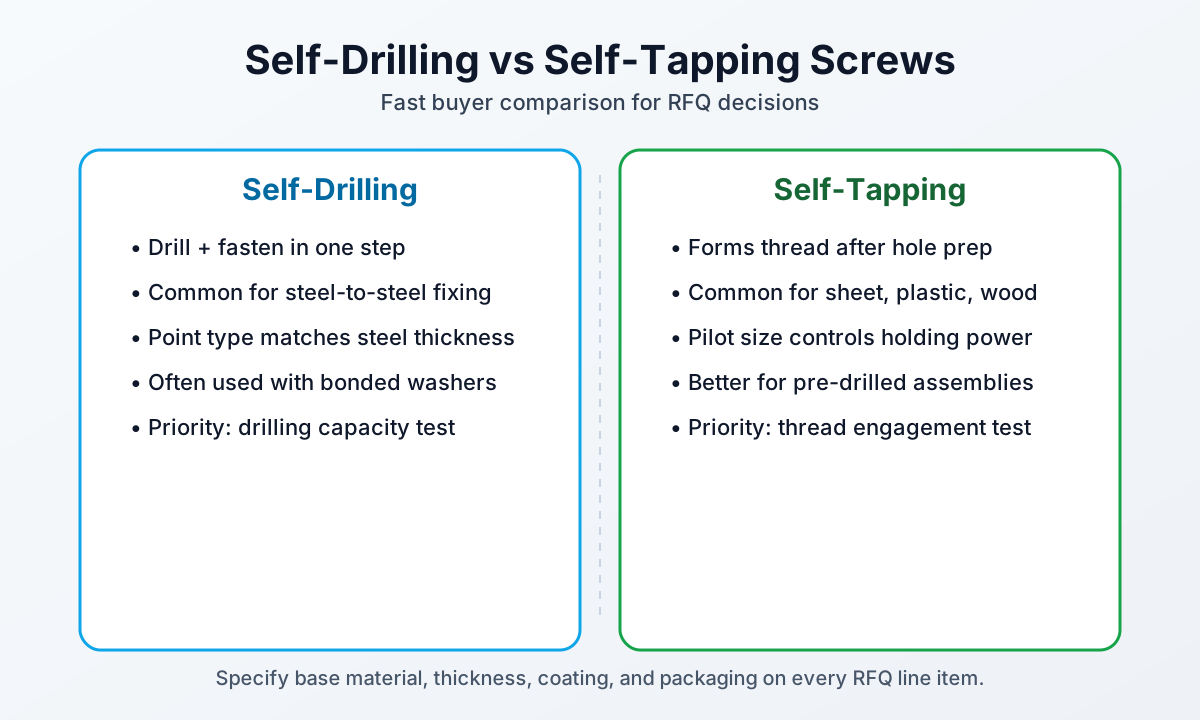
Self-drilling screws and self-tapping screws are both used for fast installation, but they are designed for different base materials and process steps. The short answer is simple: choose self-drilling screws when you want to drill and fasten in one operation on thin-to-medium steel sections, and choose self-tapping screws when the hole is pre-drilled or when threading in softer base materials is the main requirement.
Direct answer for buyers
If your line item is for metal-to-metal fixing and installation speed matters, start with self-drilling TEK screws. If your line item is for pre-drilled sheet, plastic, or wood-based assemblies where thread-forming performance is the priority, start with self-tapping screws.
| Selection factor | Self-drilling screw | Self-tapping screw |
|---|---|---|
| Pilot hole requirement | Usually no pilot hole in thin steel applications | Usually requires pilot hole (or soft substrate) |
| Primary function | Drill point plus thread-forming in one step | Thread-forming/cutting after hole preparation |
| Typical use case | Roofing sheets, steel framing, cladding | Sheet metal parts, equipment housings, plastic/wood assemblies |
| Key performance risk | Wrong drill point for steel thickness | Wrong pilot size causing stripping or cracking |
| Buyer RFQ priority | Point type, drilling capacity, washer, coating | Thread type, point style, pilot-hole guidance, coating |
Why substitution causes warranty claims
Many RFQs still use generic wording like "self tapping screw for steel roof." That phrase can trigger wrong substitutions. A self-tapping screw without a true drill point may fail in thicker steel members, overheat during installation, or cause inconsistent pull-over performance. On the other hand, choosing a self-drilling screw for a pre-drilled precision panel can add unnecessary cost and may not match the thread engagement expected by the assembly design.
When sending mixed orders that include roofing screws, sheet metal screws, and deck screws, write each line by application instead of by appearance.
Specification checklist before RFQ
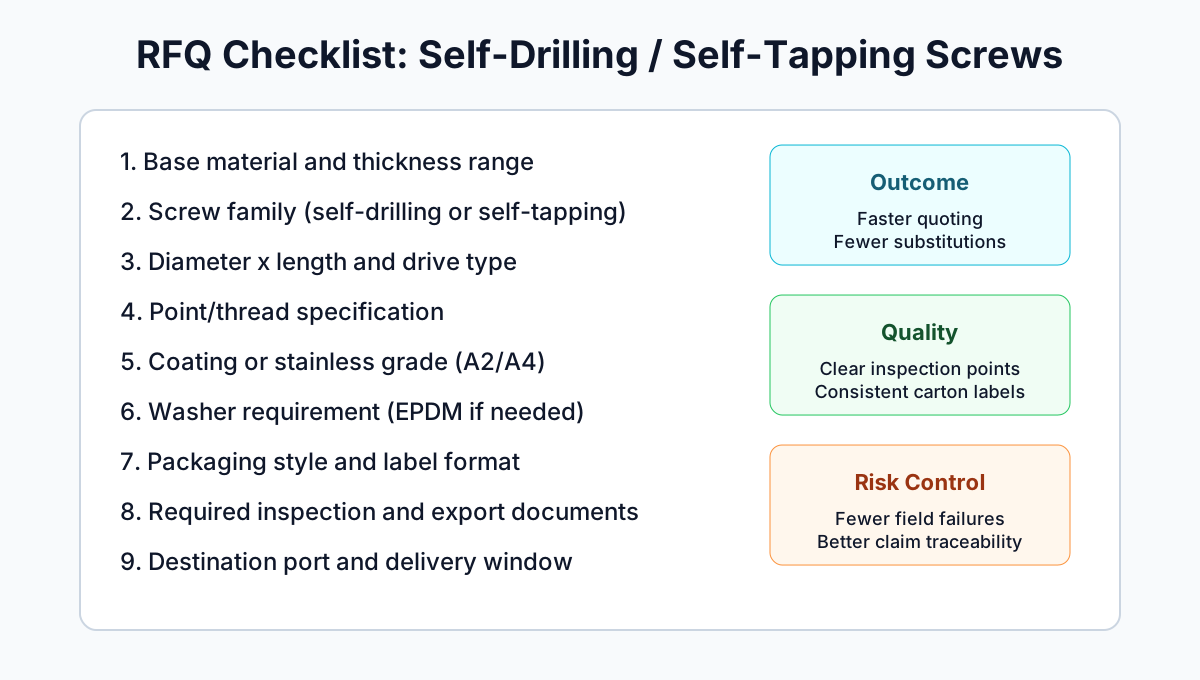
- Base material: steel thickness range, aluminum, plastic, timber, or mixed substrate.
- Screw family: self-drilling or self-tapping.
- Drive type: hex washer head, Phillips, Torx, or project-specific drive.
- Point/thread details: drill point number or tapping thread style.
- Dimensions: diameter and length (for example #12 x 25 mm).
- Coating/material: zinc plated, Ruspert-style coating, stainless A2/A4, or other approved finish.
- Washer requirement: EPDM bonded washer yes/no and washer specification.
- Packaging: bulk cartons, small retail boxes, private label, pallet method.
- Documents: inspection report, coating test result, packing list, origin documents if needed.
Inspection points import buyers should require
| Checkpoint | What to verify | Why it matters |
|---|---|---|
| Drill point geometry | Point shape consistency and penetration test on target thickness | Confirms installation speed and reduces bit burnout |
| Thread quality | Major/minor diameter and thread continuity | Avoids weak hold and stripping complaints |
| Coating coverage | Uniform finish on head, shank, and point | Protects against early corrosion at vulnerable zones |
| Washer bonding (if used) | EPDM seating and adhesion after tightening | Reduces leak risk in roofing and cladding applications |
| Carton labeling | Size, type, finish, lot code, and quantity | Supports traceability across mixed shipments |
What HDBOLT recommends
Treat "self-drilling" and "self-tapping" as different product families in your buying process. If the substrate varies by project, split the RFQ into separate application groups and request sample validation on actual base material thickness before mass production.
HDBOLT supports export buyers with screw selection, inspection alignment, and packaging coordination for mixed fastener orders. To get a quote, send your application, thickness range, screw type, finish, quantity, and destination via the contact page. You can also review our fastener ordering guide before submitting a multi-item RFQ.