
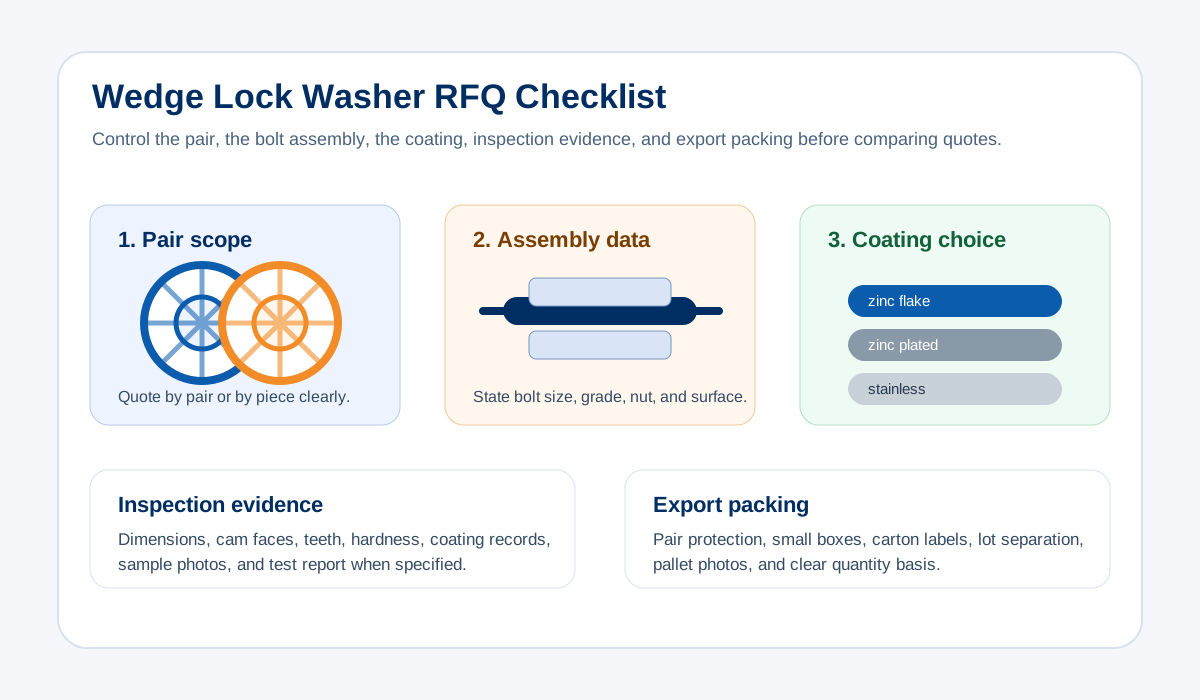
For wedge lock washer sourcing, the direct answer is: specify the washer pair, bolt size, material, hardness or performance requirement, coating, outside diameter type, mating surface, test or inspection scope, documents, and export packing in the same RFQ. Do not buy "Nord-Lock style washer" or "cam washer" by name alone, because generic wedge lock washer quality depends heavily on cam geometry, teeth bite, heat treatment, coating, and pair assembly.
Short answer for wedge lock washer buyers
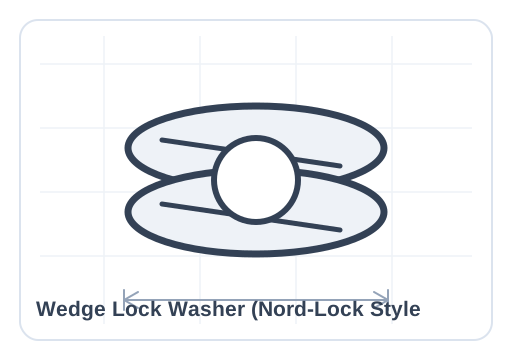
A wedge lock washer is normally supplied as a matched pair. The cam faces sit against each other, while teeth on the outside faces bite into the bolt head, nut, or mating surface. When vibration tries to loosen the bolt, the cam pair creates a wedge effect that resists rotation by increasing tension instead of relying only on friction.
The sourcing risk is that buyers often compare a branded wedge-locking washer, a generic cam washer pair, and an ordinary serrated lock washer as if they were the same part. They are not the same purchasing decision. A controlled RFQ should state the required performance level, the assembly conditions, and the inspection evidence before price comparison.
| RFQ field | What to specify | Why it matters |
|---|---|---|
| Washer scope | One pair per bolt, pre-assembled pair, glued pair, or loose pair | Prevents quoting one washer when the application needs a two-piece set |
| Bolt size | M size or inch size, bolt grade, nut type, and washer location | Controls inner diameter, outside diameter, and contact surface choice |
| Material | Hardened carbon steel, stainless steel, or project-specified alloy | Material affects strength, corrosion resistance, and cost |
| Coating | Zinc flake, zinc plated, black, stainless, or approved coating | Coating affects corrosion resistance, friction, appearance, and thread assembly |
| Performance evidence | Junker test report if required, sample approval, hardness check, or drawing inspection | Separates critical anti-loosening washers from appearance-only substitutes |
| Packing | Pair protection, small boxes, cartons, labels, lot separation, and pallets | Cam pairs are easy to mix or damage if packing is treated like ordinary flat washers |
Wedge lock washer vs spring lock washer vs tooth washer
Wedge lock washers are used when vibration loosening risk is higher than a basic washer can handle. A spring lock washer is a familiar split washer, but it should not be assumed suitable for severe vibration or safety-critical joints. A tooth lock washer bites into surfaces and may help in lighter assemblies, electrical grounding, or sheet-metal applications, but it does not work on the same cam principle.
| Washer type | How it works | Best sourcing use | RFQ caution |
|---|---|---|---|
| Wedge lock washer pair | Opposing cams create a wedge effect under bolt movement | Higher vibration assemblies, machinery, rail, wind, mining, pumps, heavy equipment | Confirm pair scope, cam geometry, material, coating, and test requirement |
| Spring lock washer | Split washer compresses under bolt preload | General hardware where the project specification allows it | Do not use as a direct substitute for a specified wedge lock washer |
| Tooth lock washer | Teeth bite into mating surfaces | Light assemblies, panels, electrical contact, sheet metal | May damage coatings or visible surfaces |
| Flat washer | Distributes load under the bolt head or nut | General bearing surface and spacing control | Provides no active anti-loosening mechanism by itself |
What to confirm before approving a quote
Start with the application. If the project drawing or maintenance specification names a brand, a cam-locking washer type, or a test requirement, send that requirement in the RFQ. If the buyer is seeking an approved equivalent, write that clearly and ask the supplier to identify what evidence is available: material certificate, hardness range, coating data, dimensions, sample photos, and vibration-test report where required.
Also confirm the contact surfaces. Teeth can mark soft metals, painted surfaces, galvanized coatings, stainless parts, and aluminum. For visible or corrosion-sensitive assemblies, the engineer should decide whether the washer teeth are acceptable or whether another locking method, such as a prevailing torque nut, adhesive thread locker, all-metal lock nut, or design change, is required.
Material and coating choices
Hardened carbon steel with zinc-flake coating is common for many wedge lock washer applications because it can combine corrosion resistance with a controlled coating thickness. Zinc plating, black finish, and stainless versions may also be requested, but the buyer should not choose finish by appearance alone. Coating thickness, friction behavior, corrosion requirement, and contact surface compatibility all affect the final assembly.
For stainless assemblies, confirm the stainless grade and the mating bolt or nut material. For high-strength carbon steel bolts, make sure the washer hardness and coating are appropriate for the bolt grade and the project specification. For mixed orders, separate stainless, zinc flake, zinc plated, and plain finish line items so the warehouse does not receive visually similar washers under unclear labels.
Inspection checklist before shipment
- Confirm the PO, packing list, carton labels, and inspection report use the same washer size, material, coating, quantity basis, and buyer item number.
- Check that each set is supplied as a correct pair, with cam faces oriented inward where pre-assembled.
- Measure inside diameter, outside diameter, thickness, pair height, and sample weight where required.
- Inspect cam pattern, teeth condition, burrs, cracks, coating coverage, rust, mixed sizes, and surface contamination.
- Review material certificates, hardness records, coating reports, sample approval records, or Junker test evidence if the purchase order requires them.
- Photograph representative washer pairs, inner boxes, master cartons, pallet labels, and loaded goods before shipment release.
Handan Yongnian sourcing notes
In the Handan Yongnian fastener cluster, wedge lock washers may be sourced through washer specialists while matching bolts, nuts, structural washers, threaded rods, and anchors come from other production lines. For overseas buyers, the practical value is coordination: the washer pair should be checked against the bolt assembly, while packing labels should keep similar M8, M10, M12, and M16 items separated by material and coating.
This matters most for mixed-item shipments. A buyer may order hex bolts, hex nuts, wedge lock washers, flat washers, and anchors in one export order. HDBOLT supplies the specified fasteners, prepares mixed-product shipments, and keep inspection photos and carton labels aligned with the buyer's receiving system.
Common RFQ mistakes
| Mistake | Likely result | Better wording |
|---|---|---|
| Writing only "Nord-Lock type M12" | Quotes may mix branded, generic, single washer, and pair pricing | M12 wedge lock washer pair, hardened carbon steel, zinc-flake coating, pair quantity basis |
| Leaving quantity unclear | Supplier may quote pieces instead of pairs, creating a 50% quantity error | State 10,000 pairs for 10,000 bolts, or 20,000 individual washers if priced by piece |
| Ignoring coating and mating surface | Washer teeth may damage the part or the coating may not meet corrosion needs | State coating, mating material, visible-surface requirement, and corrosion expectation |
| Not requesting evidence for critical joints | Appearance may look correct while performance is unproven | Request sample approval, hardness checks, coating records, and test reports where required |
RFQ wording buyers can copy
M12 wedge lock washer pair for class 10.9 hex bolt assembly, hardened carbon steel, zinc-flake coating, supplied as paired washers, quantity 10,000 pairs. Please quote by pair, not by individual washer. Inspection to include dimensions, pair height, cam and teeth condition, coating appearance, hardness record if available, carton labels, pallet photos, and packing list before shipment.
For stainless orders: M10 stainless wedge lock washer pair, grade and coating per buyer drawing or approved equivalent, clean burr-free cam faces, packed by pair in labeled export cartons. Confirm whether sample approval, material certificate, and corrosion evidence are available before production.
What HDBOLT recommends
Treat wedge lock washers as a locking system tied to the bolt assembly, not as a commodity washer line. Define pair quantity, bolt size, material, coating, performance evidence, inspection scope, documents, and export packing before comparing prices. To request a quote, send the washer size list, bolt or nut pairing, coating requirement, quantity basis, destination port, and packing preference through the HDBOLT contact page. For related products, review the washer category, wedge lock washer product page, and the flat vs spring lock washer guide.