
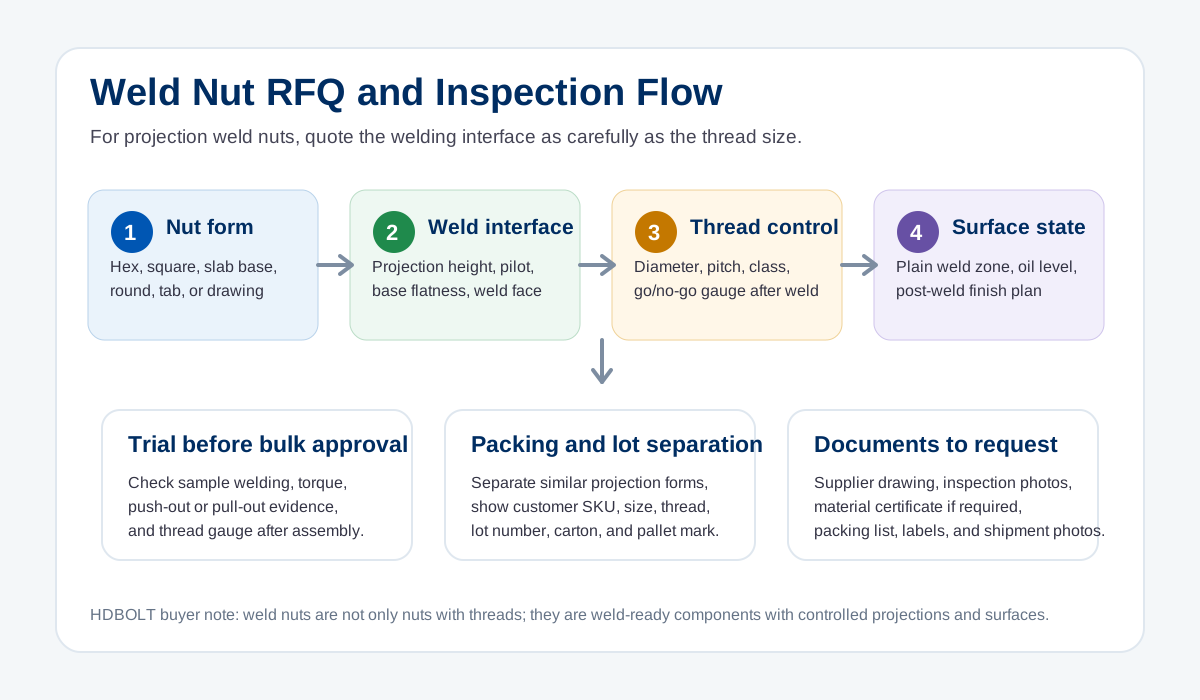
For weld nut sourcing, the direct answer is: choose a weld nut when a sheet-metal, bracket, tube, cabinet, appliance, vehicle, or HVAC assembly needs a permanent threaded point created by welding the nut to the parent part. Do not quote it only as "M8 nut". The buyer should specify the weld nut form, projection style, pilot or locating feature, thread, material, surface condition, welding trial requirement, inspection method, packing labels, and destination.
Short answer for buyers
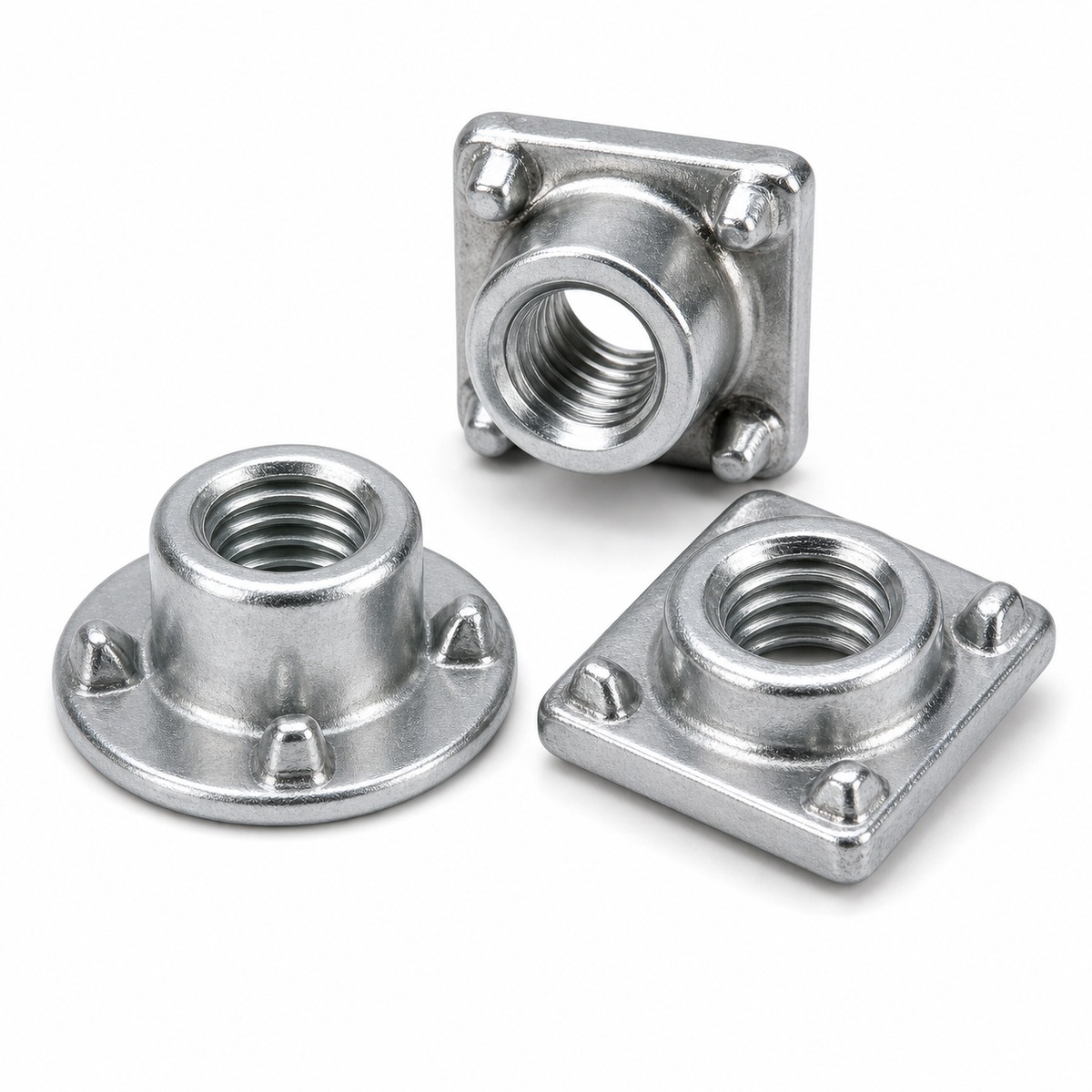
A weld nut is a nut designed to be welded to another component, most often by resistance projection welding. Common forms include hex weld nuts, square weld nuts, round projection weld nuts, slab-base weld nuts, and tab or long-base weld nuts. The finished assembly gives the buyer a fixed threaded location without needing rear-side wrench access during final assembly.
The main sourcing risk is simple: a supplier may quote the correct thread but the wrong weld geometry. If the projections are too low, too high, poorly formed, oily, plated in the weld zone, or mismatched to the buyer's sheet thickness, the nut can weld poorly, spin during tightening, damage threads, or fail push-out requirements.
Weld nut types and buying use cases
| Weld nut type | Common use | Main RFQ point |
|---|---|---|
| Hex weld nut | General brackets, frames, cabinets, and moderate-load sheet-metal assemblies | Define across-flats size, projection count, pilot, thread, and base flatness |
| Square weld nut | Sheet metal panels and enclosures where a broad weld base is useful | Confirm square size, projection layout, thread position, and orientation marks if needed |
| Round projection weld nut | Automotive, appliance, and stamped-part assemblies using automated welding fixtures | Control projection height, pilot diameter, thread class, and welding trial evidence |
| Slab-base or tab weld nut | Longer bearing base, thin sheet, slots, or assemblies needing better positioning | Attach drawing for base length, tab shape, hole position, and fixture clearance |
What to include in a weld nut RFQ
A weak inquiry says "weld nut M6 plain". A quote-ready inquiry explains how the nut will be welded and checked. If the buyer does not know the exact standard, a drawing, sample photo, and mating sheet thickness are more useful than a generic name.
| RFQ field | What to define | Inspection evidence to request |
|---|---|---|
| Nut form | Hex, square, round, slab base, tab, long base, or buyer drawing | Supplier drawing or marked sample photo before production |
| Weld interface | Projection count, projection height, projection shape, pilot, base flatness, and weld-face cleanliness | Caliper photos, side-view projection photos, and weld-face visual check |
| Thread | Diameter, pitch, thread tolerance or class, thread depth, and go/no-go gauge requirement | Thread gauge result before shipment and after any sample welding where required |
| Material | Low-carbon weld-grade steel, stainless steel, or buyer-specified material | Material certificate when required by project or customer quality plan |
| Surface condition | Plain, lightly oiled, degreased, no coating in weld zone, or post-weld coating plan | Surface photos and confirmation that coating will not interfere with welding |
| Packing | Pieces per bag/carton, similar-SKU separation, customer part number, lot label, and pallet mark | Inner labels, carton labels, pallet marks, packing list, and shipment photos |
Projection weld nut inspection checklist
For weld nuts, ordinary nut inspection is not enough. Thread size matters, but the welding features determine whether the part will survive installation and service. Buyers should agree on inspection points before production starts, especially for automotive, appliance, electrical cabinet, and repeat production programs.
- Check overall form: hex, square, round, slab base, tab, pilot, and orientation.
- Measure projection height, projection count, projection spacing, and base flatness.
- Confirm the nut sits correctly on the mating sheet without rocking before welding.
- Use go/no-go thread gauges, especially after sample welding or post-weld coating.
- Keep the weld zone free from unsuitable plating, heavy oil, burrs, and contamination.
- Request a welding trial, push-out, pull-out, or torque check when the application is critical.
- Separate visually similar weld nuts by drawing number, projection form, and customer SKU.
- Confirm labels show size, thread, material, drawing number, finish state, lot, and quantity.
Weld nuts vs rivet nuts and cage nuts
| Fastener | Best use | Main sourcing note |
|---|---|---|
| Weld nut | Permanent threaded point on sheet metal or stamped parts where welding is part of production | Projection geometry, weld face, thread, and welding trial are critical |
| Rivet nut | Blind installation where welding is not available or heat would damage the assembly | See rivet nuts when the buyer needs a mechanical clinch or blind threaded insert |
| Cage nut | Rack systems, panels, and serviceable assemblies needing float and easy replacement | Use cage nuts where square hole fit and removable threaded hardware matter more than permanent welding |
| Standard hex nut | General bolted joints where the nut remains accessible for wrenching | Use hex nuts when no welded threaded point is needed |
Surface finish and welding concerns
Many weld nuts are supplied plain or with controlled light oil because the weld zone needs reliable electrical contact. Heavy oil, unsuitable plating, paint, burrs, or dirt can interfere with resistance projection welding. If corrosion protection is needed, buyers often specify coating after welding or define a surface condition that the welding process can accept.
Do not assume that a bright plated weld nut is better. For weld-ready parts, the correct question is whether the surface condition supports the buyer's welding process, storage time, and post-weld finish plan. If the assembly will later be zinc plated, painted, e-coated, or passivated, state that sequence in the inquiry.
Handan Yongnian sourcing context
Weld nuts require control of the welding projections, base geometry and sample approval in addition to the thread. HDBOLT reviews forming requirements, sample fit, inspection points and packing separation before confirming a weld nut order.
This matters for mixed export orders. A buyer may need weld nuts together with self-tapping screws, hex flange bolts, flat washers, brackets, or other assembly hardware. HDBOLT can consolidate suitable line items, keep drawing-based SKUs separated, and verify the practical control points before export. Availability and lead time should still be confirmed at inquiry time because tooling, samples, welding trials, surface condition, and packing format can change the schedule.
RFQ wording buyers can copy
Weld nut for projection welding, form [hex/square/round/slab base/tab], size M[diameter] x pitch [value], material [low-carbon steel/stainless/drawing material], projection count and height per drawing, pilot [yes/no and dimension], mating sheet thickness [value], surface condition [plain/light oil/degreased/no coating in weld zone], quantity [value]. Please confirm drawing, sample availability, projection measurements, thread go/no-go gauge, weld-face condition, welding trial evidence if available, packing labels, pallet marks, inspection photos, and shipment destination [country/port].
What HDBOLT recommends
Start weld nut sourcing from the assembly process, then confirm the nut. The safest purchasing sequence is drawing or sample, nut form, projection geometry, material, thread, surface condition, welding trial, inspection record, packing label, and export documents. To build a complete inquiry, review the HDBOLT weld nut page, the nut category, and the HDBOLT supply and quality guide. For a quote, send your drawing, size list, sample photos, sheet thickness, welding process, quantity, packing rule, and destination through the HDBOLT contact page.