
For DIN 580 eye bolt sourcing, the direct answer is: treat lifting eye bolts as safety-critical hardware, not as ordinary threaded fasteners. A correct RFQ should define DIN 580 or drawing reference, lifting or non-lifting use, straight-pull or other load direction, size and thread pitch, forged body requirement, material, finish, marking, working load evidence, inspection scope, documents, packing labels, and destination. This prevents unsafe substitutions, bent-wire lookalikes, wrong thread fit, missing markings, coating mismatch, and mixed export cartons.
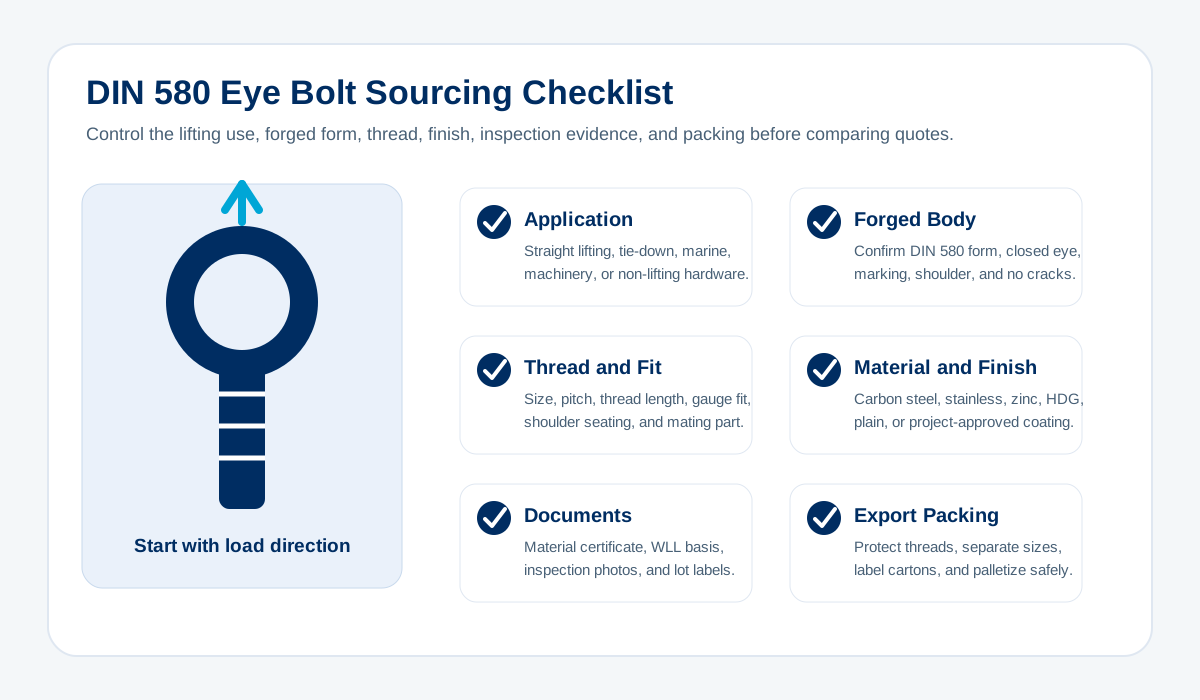
Short answer for eye bolt buyers
A DIN 580 eye bolt is a forged lifting eye with a threaded shank. It is commonly used to attach a hook, sling, or lifting point to a machine, mold, motor, panel, or fabricated part. The eye, shoulder, thread, material, marking, and working load basis all matter because the part may carry suspended loads.
Many sourcing problems start when the RFQ says only "M12 eye bolt" or "zinc plated eye screw." That wording does not tell the supplier whether the buyer needs a forged lifting eye bolt, a bent wire eye screw, a marine eye bolt, a tie-down point, or a decorative hardware item. Before price comparison, define whether the eye bolt is used for lifting people or loads, temporary positioning, lashing, marine hardware, machinery maintenance, or non-critical fastening.
| Buying question | What to define | Why it matters |
|---|---|---|
| Application | Rated lifting, straight pull, tie-down, marine, machinery, or non-lifting hardware | Controls the standard, inspection level, document requirement, and supplier selection |
| Standard or drawing | DIN 580, DIN 582 eye nut, custom forged part, or buyer drawing | Prevents substitution with a visually similar but weaker eye screw |
| Load direction | Straight axial lifting, angular pull, side pull, or no lifting rating required | Standard eye bolts are not universal multi-direction lifting points |
| Thread | Metric size, pitch, thread length, tolerance, and mating tapped hole depth | Wrong pitch or short engagement can make the part unsafe or unusable |
| Material and finish | Carbon steel, stainless steel, zinc plated, hot-dip galvanized, plain, or project finish | Material and coating affect strength, corrosion behavior, appearance, and thread fit |
| Documents | Material certificate, inspection report, marking photos, and packing list | Lifting hardware often needs traceability beyond ordinary commodity bolts |
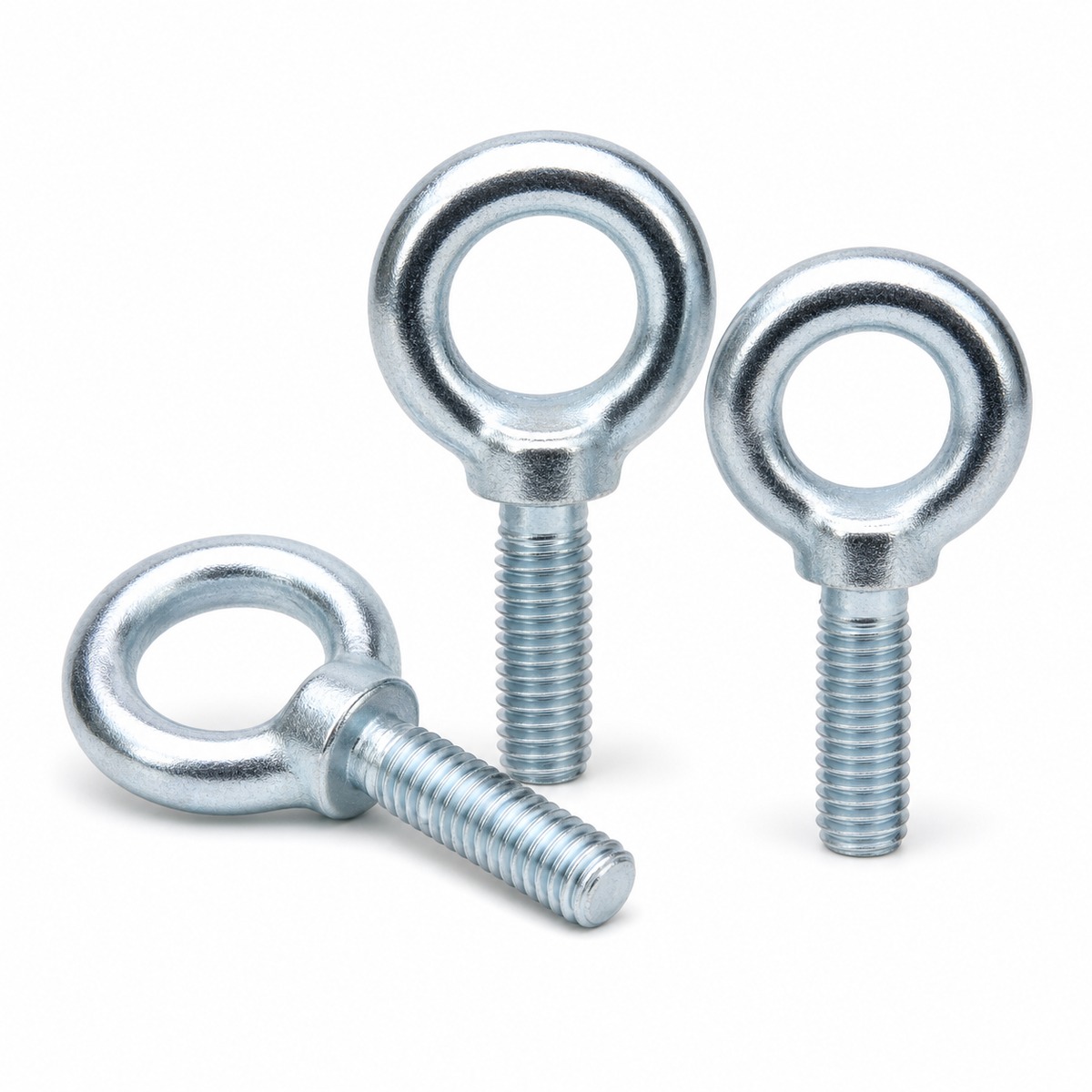
Lifting eye bolt vs general tie-down eye bolt
The most important buyer distinction is whether the part will be used as lifting hardware. A lifting eye bolt needs a known standard, forged construction, suitable material, controlled markings, and working load information. A general tie-down eye bolt may still need good dimensions and corrosion protection, but it should not be represented as rated lifting hardware unless the supplier can support that claim with the correct product and documents.
| Feature | DIN 580 forged lifting eye bolt | General tie-down or non-lifting eye bolt |
|---|---|---|
| Typical use | Machine lifting point, hoist attachment, maintenance lifting, mold handling | Lashing point, light fixture, fence, marine hardware, cable guide, positioning point |
| Body form | Forged closed eye with controlled shoulder and thread | May be forged, cast, welded, or bent depending on application |
| Load basis | Requires working load information and correct pull direction | May be sold by size and finish without lifting rating |
| Main sourcing risk | Unsafe substitution, missing marking, wrong material, angular loading misuse | Over-specifying cost or under-specifying corrosion and thread fit |
| Best RFQ input | Standard, size, thread, load direction, material, finish, marking, documents | Drawing, size, thread, finish, environment, packing, and whether lifting is excluded |
Load direction must be stated clearly
DIN 580 eye bolts are commonly treated as straight-pull lifting points. If the load is angled, side-loaded, rotated, or connected to a moving sling, the buyer should not assume that a standard eye bolt remains suitable. In many projects the safer answer is to have the engineer approve a swivel hoist ring, a rated multi-direction lifting point, or a different lifting design.
For sourcing, do not ask HDBOLT to choose the lifting method from a photo alone. Tell us the application, load direction, tapped hole position, assembly surface, whether the shoulder can seat flat, and whether the end customer requires a specific standard, marking, or certificate. HDBOLT can then quote the correct eye bolt category or explain when the RFQ needs engineering confirmation before purchasing.
Material and finish choices
Carbon steel forged eye bolts are common for DIN 580 lifting hardware. Stainless steel is selected when corrosion resistance or clean appearance matters, especially for outdoor, food-equipment-adjacent, marine, or exposed hardware programs. Buyers should not assume stainless and carbon steel versions have the same load behavior. If the product is lifting-rated, ask for the applicable load table or supplier evidence for the exact material and size.
Finish choices include self-color with rust prevention, electro-zinc plating, hot-dip galvanizing, and stainless self-finish. For broader corrosion planning, compare the environment with HDBOLT's stainless steel A2 vs A4 fastener guide and the zinc plated vs hot-dip galvanized fastener guide. If hot-dip galvanizing is requested, thread fit and coating buildup should be confirmed before approval.
| Material or finish | Typical buyer reason | RFQ note |
|---|---|---|
| Carbon steel forged | Common DIN 580 lifting eye bolt programs | Confirm forged body, marking, thread fit, finish, and load evidence |
| Stainless steel | Corrosion resistance, clean appearance, exposed hardware | Define grade and do not assume the same WLL as carbon steel |
| Zinc plated | Indoor or light outdoor distribution hardware | Confirm color, coating coverage, thread gauge fit, and rust prevention |
| Hot-dip galvanized | Outdoor steelwork or harsher storage conditions | Confirm coating, thread fit, appearance tolerance, and whether the standard allows it |
Handan Yongnian sourcing context
Eye bolts fit the mixed-item side of Handan Yongnian fastener sourcing. Overseas buyers may order eye bolts together with U-bolts, anchor bolts, threaded rods, hex nuts, washers, and other project hardware. The practical advantage is consolidation: HDBOLT can coordinate several related fastener lines, check item labels, and arrange one export shipment with one packing list and delivery plan.
Lifting hardware requires more than the checks used for general-purpose bolts. Forged form, markings, certificates and the agreed inspection requirements must be reviewed for the intended application. For safety-related eye bolts, HDBOLT treats specification review, sample photos, document checks, and packing labels as part of the quote process, not as afterthoughts.
Inspection checklist before shipment
Eye bolt inspection should cover visual form and functional fit. Buyers should request photos of the eye, shoulder, thread, marking, surface finish, and packing labels. For lifting-rated orders, material certificates, working load basis, and any required third-party inspection should be agreed before production or stock release.
| Inspection item | What to check | Evidence to request |
|---|---|---|
| Forged form | Closed eye shape, shoulder seating face, no cracks, folds, or obvious deformation | Front, side, and close-up photos from sampled pieces |
| Thread | Diameter, pitch, length, gauge fit, chamfer, and clean start | Thread gauge photos and caliper photos where useful |
| Marking | Standard-required or buyer-required size, material, or manufacturer marking | Marking photos from multiple samples |
| Finish | Coverage, color, rust, coating buildup, exposed defects, and thread assembly fit | Surface photos and mating thread confirmation |
| Documents | Material certificate, inspection report, WLL reference if required | PDF documents matched to lot or order number |
| Packing | Thread protection, bag count, carton labels, size separation, pallet condition | Inner box, carton, label, and pallet photos before shipment |
Common RFQ mistakes
- Writing "eye bolt" without saying whether it is for lifting or non-lifting use.
- Accepting a bent eye screw when the drawing or application requires a forged lifting eye bolt.
- Leaving out load direction, especially when the pull may be angled or side-loaded.
- Assuming stainless steel and carbon steel versions have identical working loads.
- Approving a finish without checking thread fit, shoulder seating, and coating defects.
- Mixing similar M8, M10, and M12 sizes in export cartons without clear labels.
RFQ wording buyers can copy
DIN 580 forged eye bolt, M16 metric coarse thread, carbon steel, zinc plated white, for straight-pull machinery lifting point. Confirm forged closed eye form, shoulder seating face, thread gauge fit, marking, material certificate, working load basis, finish photos, and packing photos before shipment. Pack by size in labeled export cartons with thread protection and pallet labels. Destination: [country and port].
Stainless steel eye bolt, M10, for outdoor non-lifting tie-down hardware. Drawing and sample photo attached. Quote stainless grade, thread length, eye inside diameter, shank length, finish, corrosion protection during transport, carton labels, and quantity per carton. State clearly if the part is not supplied as rated lifting hardware.
What HDBOLT recommends
Start by separating lifting hardware from general eye hardware. Then define the standard or drawing, load direction, thread, material, finish, marking, inspection, documents, packing, and destination. For a quotation, send your size list, application notes, drawing or photo, quantity, required documents, and destination through the HDBOLT contact page. For broader buying process details, review the HDBOLT supply and quality guide and HDBOLT's bolt product range.