
For DIN 6334 coupling nut sourcing, the direct answer is: specify the standard, thread size and pitch, nut length, property class or stainless grade, finish, matching threaded rod or bolt, engagement requirement, inspection scope, documents, and export packing in the same RFQ. A coupling nut is simple to recognize, but a vague quote can still hide wrong length, wrong thread fit, mixed property class, or weak packing for export.
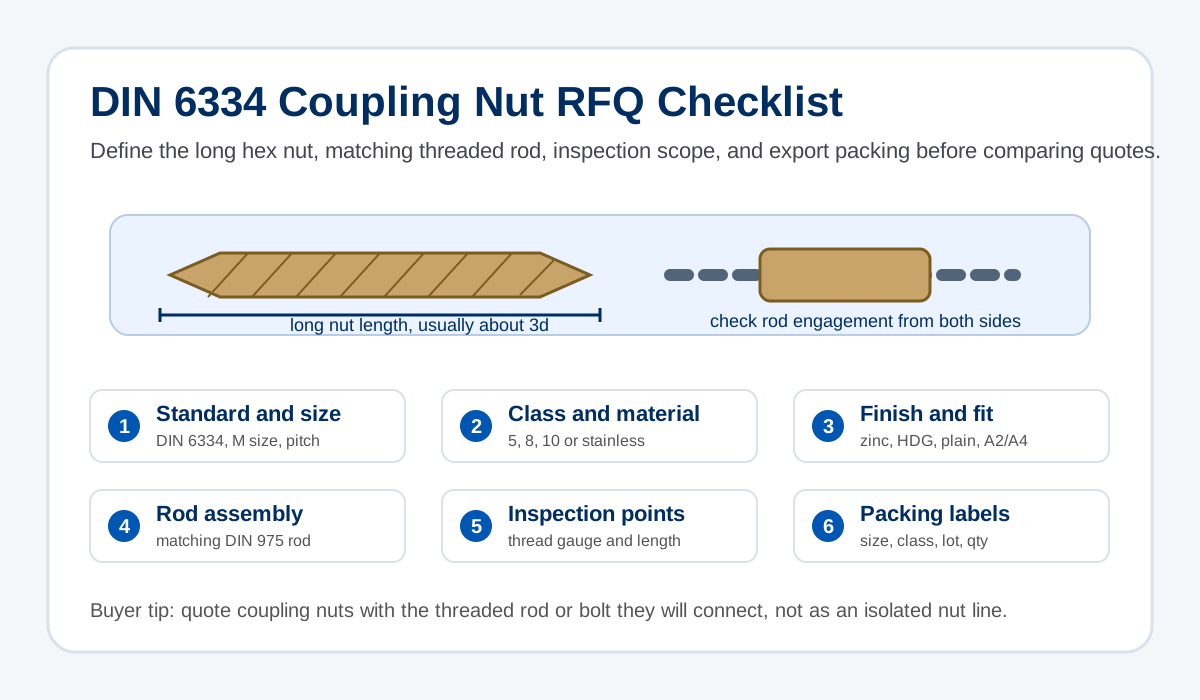
Short answer for coupling nut buyers
A DIN 6334 coupling nut, also called a long hex nut or extension nut, is used to connect two male threaded parts end-to-end. Buyers commonly order it with DIN 975 threaded rod, hanger rod, pipe support hardware, suspended ceiling systems, electrical support frames, and maintenance assemblies.
The sourcing risk is that "M12 coupling nut" is not enough for a controlled purchase. One supplier may quote DIN 6334 length, another may quote a shorter local pattern, and another may quote the right length but an unclear property class. A serious RFQ should make the nut, the connected rod, and the required inspection package comparable before unit prices are reviewed.
| RFQ field | What to specify | Why it matters |
|---|---|---|
| Standard | DIN 6334, buyer drawing, or approved equivalent | Controls the long hex nut length and dimensional expectation |
| Thread | M size, pitch, tolerance if required, right-hand or special thread | Prevents assembly problems with threaded rod or bolts |
| Length | DIN 6334 length or exact drawing length | Short coupling nuts may reduce engagement or fail receiving checks |
| Property class | Class 5, 8, 10, stainless A2/A4, or project-specified grade | Nut strength must match the rod, bolt, and application |
| Finish | Plain, zinc plated, hot-dip galvanized, black, stainless, or approved coating | Finish affects corrosion resistance, thread fit, appearance, and cost |
| Packing | Bulk carton, small box, pallet, private label, or kit packing | Long nuts are dense; poor cartons split during export handling |
DIN 6334 vs ordinary hex nuts
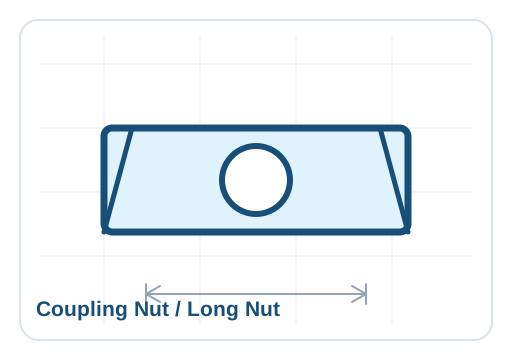
A coupling nut is not just a taller version of a normal hex nut. It is intended to receive threaded parts from two sides and provide enough internal thread engagement for the assembly. In many metric buying contexts, DIN 6334 length is approximately three times the nominal diameter, but buyers should still specify the standard or drawing instead of relying on a nickname such as "long nut."
| Buying point | DIN 6334 coupling nut | Standard hex nut |
|---|---|---|
| Main use | Joining two threaded rods or extending a bolt/rod assembly | Clamping one bolted joint |
| Body length | Long body for two-sided thread engagement | Shorter standard nut height |
| RFQ risk | Wrong length, thread fit, property class, or rod compatibility | Wrong standard, class, finish, or packaging |
| Common linked item | DIN 975 threaded rod, hanger rod, stud bolt, support hardware | Hex bolt, washer, anchor, machine screw |
How to match coupling nuts with threaded rod
Most coupling nut problems appear during assembly, not when the parts are counted. The nut may pass a visual check but fail because the threaded rod has a different pitch, rough coating buildup, damaged threads, or a property class mismatch. For export orders, the safest approach is to quote the coupling nut together with the rod or bolt that will connect to it.
If the order includes zinc plated rod and zinc plated coupling nuts, request thread-fit checks after coating. If the order includes hot-dip galvanized parts, confirm whether the nut thread must be tapped oversize after galvanizing and whether the matching rod will assemble smoothly. For stainless assemblies, state A2 or A4 and the strength class where the project requires it.
Inspection checklist before shipment
- Confirm the PO, packing list, carton labels, and inspection report use the same size, standard, class, finish, and buyer item number.
- Measure across flats, overall length, thread diameter, pitch, and sample weight where required.
- Run a thread-fit check with the matching threaded rod, stud, or bolt from the same shipment.
- Check surface finish for rust, coating buildup, bare spots, burrs, dents, and mixed sizes.
- Review MTCs, coating reports, hardness records, or third-party inspection documents when the purchase order requires them.
- Photograph samples, inner packing, master cartons, pallet labels, and loaded goods before shipment release.
Handan Yongnian sourcing notes
In the Handan Yongnian fastener cluster, coupling nut sourcing often connects nut production, threaded rod supply, surface finishing, and final export packing. This is useful for overseas buyers because coupling nuts are rarely purchased alone. They usually ship with rods, washers, anchors, hanger hardware, or mixed maintenance fasteners.
The practical step is to separate the line items by specialization while keeping one assembly check. HDBOLT supplies coupling nuts with matching rods or related hardware, and consolidate cartons by size and finish. That reduces the chance that the receiving warehouse gets correct nuts that do not assemble with the rods in the same shipment.
Common RFQ mistakes
| Mistake | Likely result | Better wording |
|---|---|---|
| Writing only "M10 long nut" | Supplier may quote non-DIN length or unclear grade | DIN 6334 M10 coupling nut, class 8, zinc plated |
| Ignoring the matching rod | Parts pass separate checks but fail assembly at installation | Quote with DIN 975 M10 threaded rod and perform thread-fit inspection |
| Leaving finish as "galvanized" | Supplier may quote zinc plated when the project expects hot-dip galvanized | State zinc plated, hot-dip galvanized, stainless A2/A4, or plain finish |
| Using weak cartons for dense nuts | Cartons split, labels detach, and mixed sizes become hard to receive | Specify carton weight limits, reinforced cartons, pallets, and clear labels |
RFQ wording buyers can copy
DIN 6334 M12 coupling nut, metric coarse thread, class 8 carbon steel, zinc plated, standard DIN length, assembled thread-fit check with M12 DIN 975 threaded rod required, packed in labeled export cartons on pallets. Carton labels to show product name, standard, size, class, finish, quantity, lot code, and buyer item number. Inspection photos and packing list required before shipment.
For stainless orders: DIN 6334 M10 coupling nut, stainless A4, metric coarse thread, standard long hex nut length, clean thread and burr-free finish, packed by size in moisture-protected cartons with pallet labels and inspection photos before shipment.
What HDBOLT recommends
Buy coupling nuts as part of a connected assembly, not as an isolated nut line. Define DIN 6334 or the drawing, thread, class, material, finish, matching rod or bolt, inspection scope, documents, and packing before comparing prices. To request a quote, send your size list, quantities, finish, matching rod requirement, destination port, and packing preference through the HDBOLT contact page. For related planning, review the nuts category, threaded rods category, and the export fastener packaging guide.