
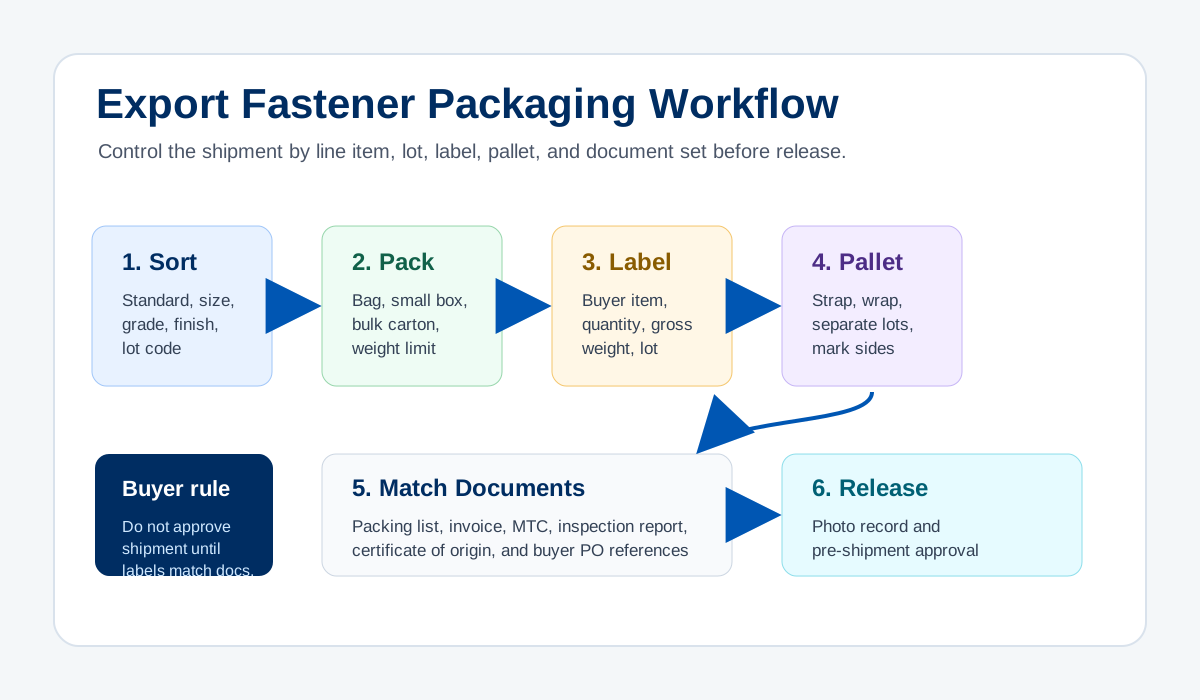
For export fastener orders, the direct answer is: specify carton weight limits, inner packing, pallet method, label fields, lot separation, inspection photos, and required documents before production is released. Good packaging keeps bolts, nuts, screws, anchors, washers, and threaded rods traceable and usable when the shipment arrives.
Direct answer for import buyers
Fasteners are dense, small, and easy to mix. A buyer may spend weeks confirming the right standard, grade, finish, and price, then lose control at the last step because cartons are too heavy, labels are vague, pallets are unstable, or the packing list does not match the goods. Packaging is not a warehouse detail; it is part of the sourcing specification.
A quote-ready packing instruction should read like this: bulk cartons under agreed gross weight, inner bags if needed, export pallets with strapping and stretch wrap, carton labels showing product, standard, size, grade, finish, quantity, lot code, buyer item number, net weight, gross weight, and carton number, with packing list, commercial invoice, MTC where required, and pre-shipment inspection photos.
| Packing item | What to specify | Why it matters |
|---|---|---|
| Carton weight | Maximum gross weight per carton, agreed by product type | Prevents torn cartons and unsafe manual handling |
| Inner packing | Bulk, inner bag, small box, customer box, or kit packing | Controls counting, presentation, and corrosion protection |
| Lot separation | Keep sizes, grades, finishes, and heat lots separate | Protects traceability and simplifies receiving |
| Carton label | Product, standard, size, grade, finish, quantity, lot, weight, buyer item | Lets warehouse teams identify goods without opening every carton |
| Pallet method | Export pallet, strapping, stretch wrap, side labels, moisture protection | Reduces transit damage and unloading disputes |
| Documents | Packing list, invoice, MTC, inspection report, certificate of origin if needed | Supports customs, receiving approval, and project traceability |
Cartons: do not let weight become the hidden risk
Fasteners can make a small carton very heavy. Hex nuts, structural washers, threaded rods, wedge anchors, and stud bolts each need a different packing plan. A carton that works for light self-drilling screws may fail when used for ASTM F436 structural washers or heavy hex nuts.
For import buyers, the safest approach is to set a maximum carton gross weight, ask for reinforced cartons for dense items, and require carton photos before shipment. If the warehouse needs small boxes, barcode labels, or private label cartons, define that at RFQ stage because it affects cost, lead time, and minimum order quantity.
Carton label fields buyers should require
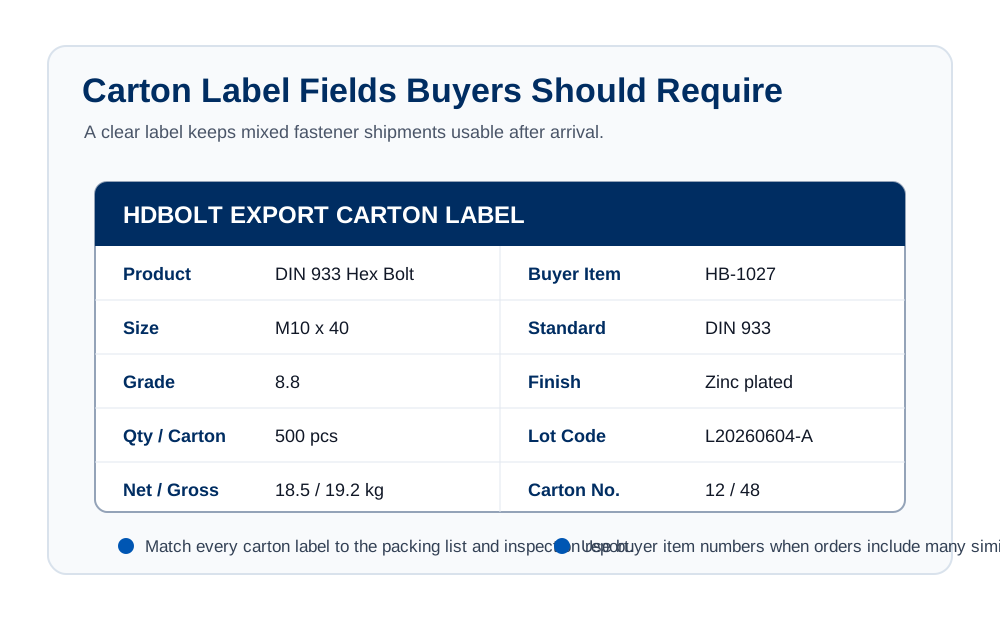
A carton label that says only "bolts" is not enough. The label should let a warehouse worker identify the line item without opening the carton or guessing from the packing list. This is especially important when one shipment includes similar sizes, such as M10 x 30, M10 x 35, and M10 x 40 hex bolts.
| Label field | Example | Buyer reason |
|---|---|---|
| Product and standard | DIN 933 hex bolt | Separates similar fastener forms |
| Size | M10 x 40 | Prevents mixed-size receiving errors |
| Grade or material | 8.8, A2-70, ASTM A193 B7 | Connects cartons to quality documents |
| Finish | Zinc plated, HDG, plain, stainless | Avoids coating mix-ups |
| Quantity | 500 pcs per carton | Supports inventory count |
| Lot code | Supplier batch or heat lot reference | Supports traceability and claims handling |
| Buyer item number | Distributor SKU or project line number | Makes receiving faster for repeat orders |
| Net and gross weight | 18.5 kg / 19.2 kg | Helps warehouse and freight checks |
Pallets and mixed-item consolidation
Export pallets should be stable, labeled on more than one side, protected against moisture where needed, and grouped by product risk. Do not put fragile retail small boxes under heavy cartons of threaded rod or washers. Do not mix different line items on one pallet unless the pallet label and packing list make the split clear.
Mixed shipments are common for distributors and project buyers. One container may include DIN 933 hex bolts, hex nuts, wedge anchors, DIN 975 threaded rods, and washers. Consolidation is useful, but only when labels and documents preserve the detail of each line item.
Documents that should match the packing
The packing list should not be treated as a rough summary. It should match carton counts, pallet counts, quantities, weights, product descriptions, and buyer item numbers. For controlled fasteners such as ASTM A193 B7 stud bolts, ASTM F1554 anchor rods, and structural bolt assemblies, Mill Test Certificates and inspection records should connect to heat lots or batch references.
- Packing list: carton count, pallet count, product lines, net weight, gross weight, and buyer references.
- Commercial invoice: seller, buyer, product description, quantity, value, trade term, and currency.
- MTC or certificate: required for specification-grade fasteners, structural items, and project-controlled orders.
- Inspection report: dimensions, thread fit, finish, packaging, label photos, and sample photos.
- Certificate of origin: used when the buyer, customs broker, or destination rules require it.
Practical Yongnian and Handan sourcing context
A mixed fastener order needs a clear packing plan from the start. HDBOLT prepares bolts, nuts, anchors and washers against the approved item list, with separate lot identification, labels and packing records to keep receiving checks straightforward.
HDBOLT manages production and stock supply, inspection, packing checks, label requirements and document matching before the shipment leaves China. This matters most when the order includes many SKUs, private labels, project documents, or several product categories under one purchase order.
Pre-shipment photo checklist
| Photo | What it should show | Why buyers ask for it |
|---|---|---|
| Product sample | Representative fastener, head mark, thread, finish | Confirms goods look like the approved item |
| Carton label | Readable label with item, size, grade, quantity, lot, weight | Confirms label content before shipment |
| Open carton | Inner bags, small boxes, separators, moisture protection | Verifies packing method |
| Pallet view | Carton stacking, straps, wrap, side labels | Checks transit readiness |
| Container loading | Pallet placement, bracing if used, container number | Supports shipment record and claims prevention |
RFQ wording buyers can copy
Please quote fasteners with export packing as follows: reinforced cartons, maximum carton gross weight agreed by product type, inner bags for small parts, export pallets with strapping and stretch wrap, carton labels showing product, standard, size, grade, finish, quantity, lot code, buyer item number, net weight, gross weight, and carton number. Packing list, commercial invoice, inspection report with product and packing photos, and MTC for controlled items required before shipment release.
What HDBOLT recommends
Put packaging, labels, and documents into the RFQ instead of treating them as last-minute shipping details. For repeat distributor orders, standardize label fields and carton weight limits. For project orders, connect the packing list, MTCs, inspection photos, and buyer line items before approving shipment.
To request a quote, send your fastener list, packaging requirements, label format, document needs, and destination through our contact page. For broader procurement planning, review the HDBOLT supply and quality guide and our fastener product categories.