
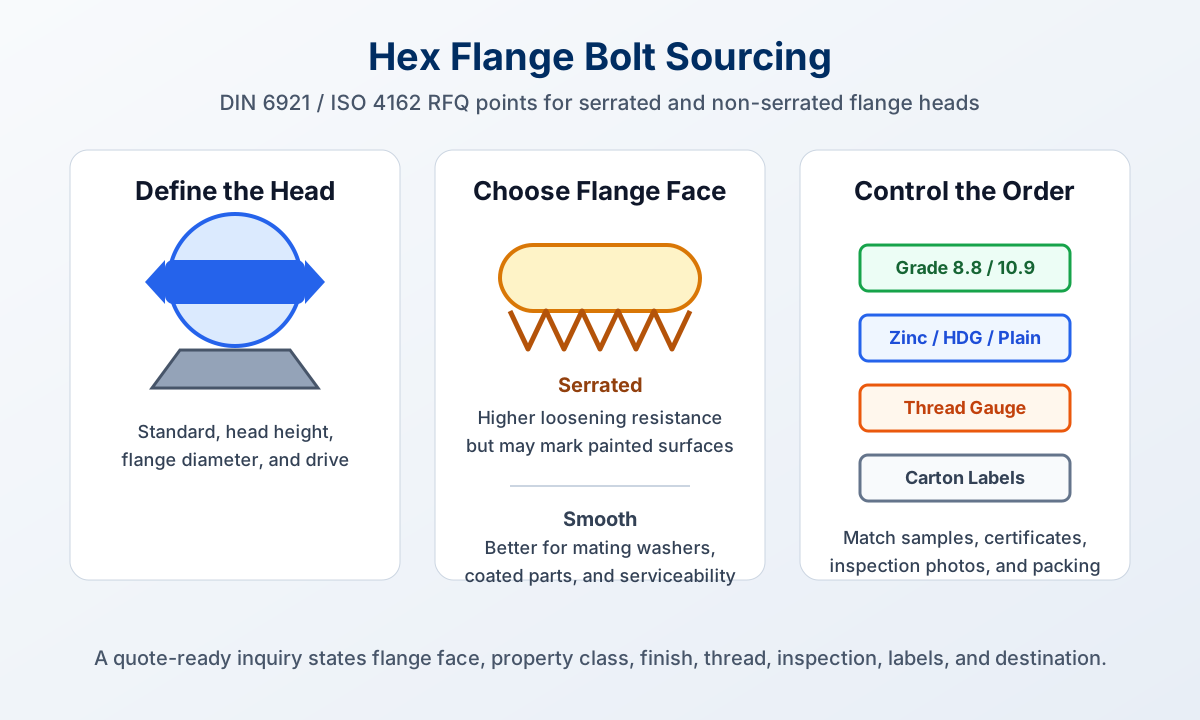
For DIN 6921 / ISO 4162 hex flange bolt sourcing, the direct answer is: use a hex flange bolt when the joint needs an integrated washer-style bearing surface, faster assembly, or better load distribution than a standard hex bolt. Before comparing quotes, buyers should define the active standard, serrated or smooth flange face, property class, finish, thread length, flange diameter, mating surface, inspection evidence, packing labels, and destination.
Short answer for buyers
A hex flange bolt combines a hex head with a wide circular flange under the head. The flange spreads bearing load over a larger area and can reduce the need for a separate washer in many equipment, bracket, frame, enclosure, automotive, machinery, and general assembly applications. DIN 6921 and ISO 4162 are common metric references for this product family, but buyers should still state which standard, drawing, or approved sample controls the order.
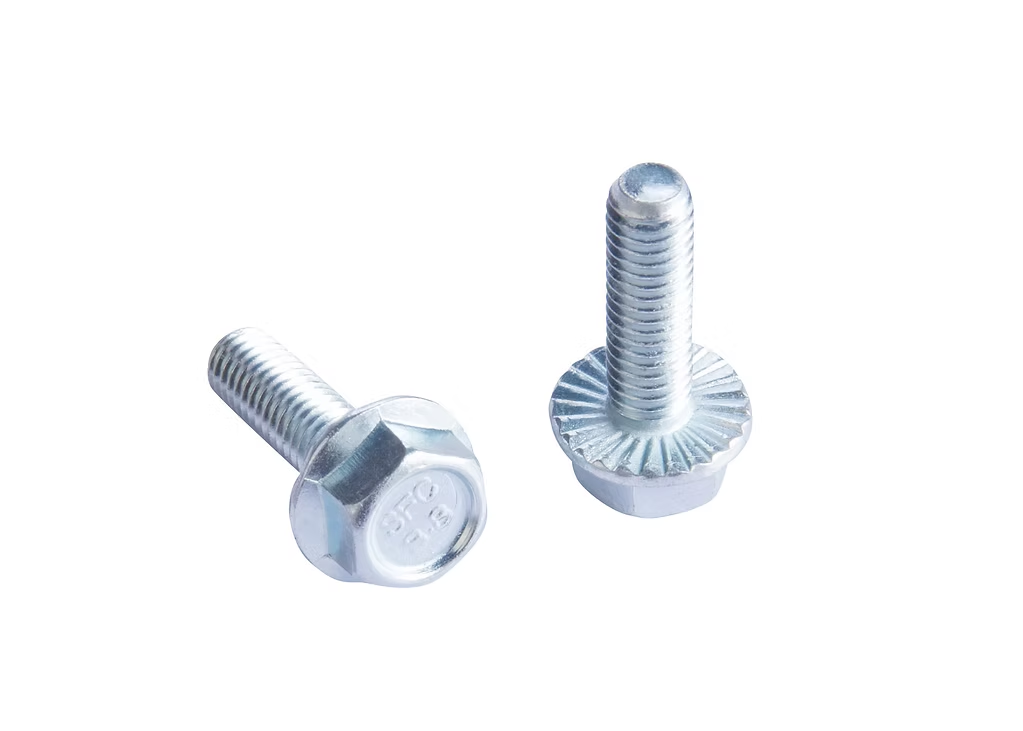
The most common sourcing mistake is asking only for "M8 flange bolt zinc" without saying whether the flange is serrated. A serrated flange can help resist loosening on suitable mating surfaces, but it can also damage paint, plating, aluminum, soft material, or finished panels. A smooth flange is usually better when the buyer needs less surface marking, a mating washer, predictable bearing, or easier service removal.
DIN 6921 and ISO 4162 sourcing comparison
| Buying point | DIN 6921 | ISO 4162 |
|---|---|---|
| Typical RFQ wording | DIN 6921 hex flange bolt, size, property class, finish, serrated or smooth | ISO 4162 hexagon bolt with flange, size, property class, finish, serrated or smooth |
| Head style | Metric hex head with integrated flange under the head | Metric hex head with integrated flange under the head |
| Main buyer decision | Use when the customer drawing, legacy part, or purchasing spec calls for DIN 6921 | Use when the project, OEM spec, or market requires the ISO designation |
| Common property classes | Often requested in 8.8 or 10.9, with other classes only when confirmed by drawing and supply route | Often requested in 8.8 or 10.9, with other classes only when confirmed by drawing and supply route |
| Interchangeability | Do not approve substitution only by thread size. Check head height, across-flats size, flange diameter, serration, thread length, property class, coating thickness, and the mating part. | |
Serrated vs smooth flange bolts
| Flange face | Best use | Buyer risk to control |
|---|---|---|
| Serrated flange | Assemblies where the flange teeth can bite into the mating surface to improve resistance to loosening | Can scratch paint, zinc, powder coating, aluminum, soft materials, and finished panels; may be unsuitable with separate washers |
| Smooth flange | General load distribution, assemblies needing less surface damage, coated parts, and joints using a washer or controlled bearing face | Does not provide the same tooth-biting action; joint design may need a washer, threadlocker, prevailing-torque nut, or other locking method |
| Flange with washer assembly | Programs that still need a separate washer for slot coverage, surface protection, sealing, or drawing compliance | Washer outside diameter, hardness, finish, and stack height must be specified, not assumed |
If the mating part is painted, plated, powder coated, or made from softer material, ask the supplier to confirm whether serrations are acceptable. When surface damage is a concern, compare a smooth flange bolt with a flat washer, fender washer, or a locking nut solution such as a nylon insert lock nut or all-metal lock nut.
RFQ fields buyers should define
A quote-ready hex flange bolt inquiry should remove ambiguity from the head and flange. If the order replaces an existing part, send the drawing, sample photo, or measured head dimensions. If the bolt is for a new assembly, define the mating surface and whether a washer, nut, slot, painted part, or soft material is involved.
| RFQ field | What to write | Why it matters |
|---|---|---|
| Standard | DIN 6921, ISO 4162, buyer drawing, or approved sample | Controls the dimensional target and avoids loose substitutions |
| Size and thread | Diameter, pitch, length, full or partial thread, and quantity per size | Prevents mixed pitches, wrong grip length, and incomplete line items |
| Flange face | Serrated, non-serrated, smooth, or drawing-controlled | Controls locking behavior, surface marking, washer use, and customer acceptance |
| Head dimensions | Across flats, head height, flange diameter, and flange thickness where critical | Important for socket access, clearance, bearing area, and replacement fit |
| Material and grade | Carbon steel 4.8/8.8/10.9, stainless A2/A4, or project material | Strength, corrosion behavior, marking, and certificate scope depend on this |
| Finish | Plain, black, zinc plated, yellow zinc, hot-dip galvanized, Geomet-type coating, or stainless/passivated | Finish affects corrosion resistance, thread fit, flange appearance, and assembly behavior |
| Packing | Pieces per bag or carton, mixed-size separation, customer SKU, barcode, lot label, and pallet mark | Similar flange bolts are easy to mix by size, finish, grade, or serration if labels are weak |
Inspection checklist before shipment
Hex flange bolts need ordinary bolt inspection plus flange-specific checks. Buyers should agree on the control points before production, especially for repeat assembly lines, automotive-style brackets, equipment frames, and private-label cartons.
- Confirm the quotation, invoice, carton labels, and inspection photos all show the same standard and part description.
- Measure diameter, pitch, length, thread length, across-flats size, head height, flange diameter, and flange thickness.
- Check whether the flange face is serrated or smooth and compare it with the approved sample.
- Inspect serrations for incomplete forming, clogged coating, flattening, burrs, or uneven teeth.
- Use thread go/no-go gauges after plating or hot-dip galvanizing where applicable.
- Check property class marking, surface finish consistency, coating coverage, and visible damage.
- Verify matching nuts and washers if the order is supplied as an assembly set.
- Review inner labels, carton labels, pallet marks, packing list, and shipment photos before release.
Finish and coating choices
Zinc plated flange bolts are common for indoor and general hardware applications. Yellow zinc is often requested for visual identification or legacy purchasing specs. Black finish can suit machinery or indoor assemblies when corrosion exposure is limited. Hot-dip galvanizing is used for heavier outdoor corrosion protection, but the buyer should confirm thread fit, nut compatibility, and coating appearance before ordering. Stainless A2 or A4 is useful where corrosion resistance is more important than high carbon-steel strength.
For outdoor or coated-panel applications, finish selection should be reviewed with the mating material. Serrations can cut through paint or coating at the contact area. That may improve bite in some joints, but it may also create corrosion or appearance concerns. For broader coating decisions, compare this article with HDBOLT's zinc plated vs hot-dip galvanized fastener guide and stainless steel A2 vs A4 fastener guide.
When to choose a different fastener
Use a standard hex bolt or hex cap screw when the drawing requires a separate washer, a smaller bearing face, or a standard head profile. Use a heavy hex bolt when larger wrenching dimensions and higher bearing area are required. Use hex flange bolts when assembly speed, integrated bearing area, and reduced loose washers are more important.
For vibration-sensitive joints, do not rely only on the word "flange". Decide whether the joint needs serrations, a prevailing-torque nut, a lock nut, a locking washer, threadlocker, a specific tightening method, or a full joint design review. The right answer depends on the mating material, clamp load, service environment, and maintenance plan.
RFQ wording buyers can copy
DIN 6921 / ISO 4162 hex flange bolt, size M[diameter] x [length], pitch [coarse/fine], thread [full/partial], flange face [serrated/smooth], property class [8.8/10.9/other], finish [zinc plated/yellow zinc/black/plain/hot-dip galvanized/stainless], quantity [pieces], mating surface [steel/painted panel/aluminum/slot/washer used]. Please confirm head dimensions, flange diameter, serration style, thread gauge after finish, property class marking, sample availability, inspection photos, inner labels, carton labels, pallet marks, export documents, and shipment destination [country/port].
What HDBOLT recommends
Start with the joint surface, then choose the flange face. The safest purchasing sequence is application, standard or drawing, serrated vs smooth flange, size and thread, property class, finish, inspection, packing labels, and export documents. To build a complete inquiry, review the HDBOLT hex flange bolt page, the bolt category, and the HDBOLT supply and quality guide. For a quote, send your drawing, size list, flange-face requirement, finish, quantity, packing rule, and destination through the HDBOLT contact page.