
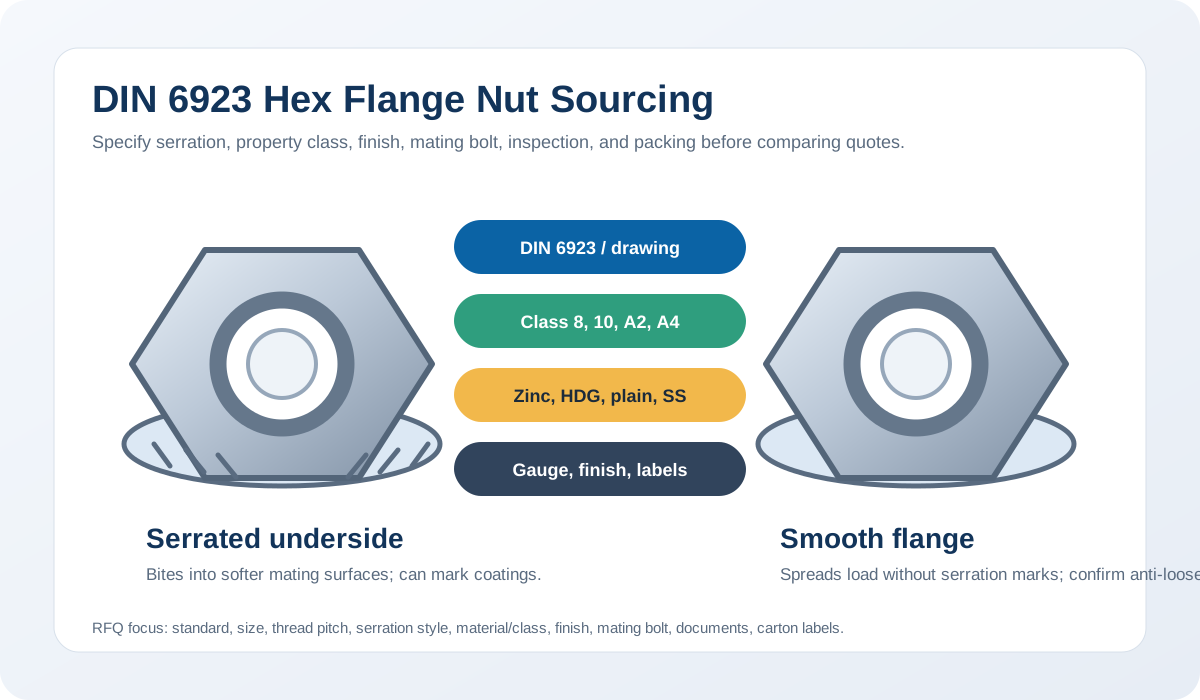
For DIN 6923 hex flange nut sourcing, the direct answer is: specify whether the flange underside is serrated or smooth, then state the size, thread pitch, property class or stainless grade, finish, mating bolt grade, inspection documents, and packing labels. Do not treat every flange nut quote as interchangeable, because serration, coating, and matching assembly details change both performance and cost.
Direct answer for import buyers
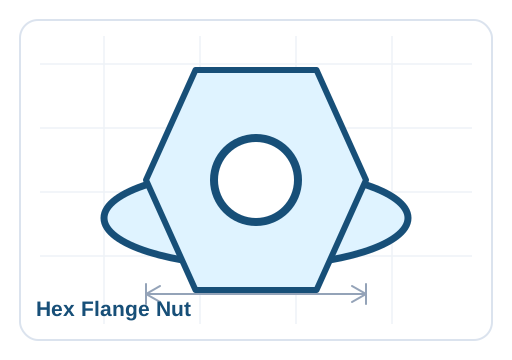
DIN 6923 hex flange nuts combine a hex nut with an integrated washer-like flange. The flange spreads bearing load and can reduce the need for a separate flat washer in some assemblies. Serrated flange nuts add teeth under the flange to resist loosening on suitable mating surfaces, while smooth flange nuts spread load without biting into the surface.
A quote-ready RFQ line should read like this: DIN 6923 hex flange nut, M10 coarse thread, serrated underside, property class 8, zinc plated white, matched with class 8.8 hex bolts, go/no-go thread gauge inspection, coating appearance check, MTC if required, export cartons on pallets with labels showing standard, size, class, finish, quantity, lot code, and buyer item number.
| Decision | What to specify | Why buyers care |
|---|---|---|
| Underside | Serrated flange or smooth flange | Affects grip, surface marking, coating damage, and price comparison |
| Standard | DIN 6923, ISO equivalent if accepted, or buyer drawing | Prevents mixed geometry and wrench-size assumptions |
| Thread | Metric diameter and pitch, coarse or fine | Controls fit with the bolt or stud |
| Class/material | Class 8, class 10, A2 stainless, A4 stainless, or drawing requirement | Must match the mechanical and corrosion requirement |
| Finish | Zinc plated, hot-dip galvanized, plain, black, Geomet-type coating, stainless | Changes thread fit, corrosion resistance, and inspection scope |
| Packing | Carton quantity, gross weight, pallet, label fields, lot separation | Prevents mixed-size receiving problems in export shipments |
Serrated flange nut vs smooth flange nut
The main purchasing question is not only "DIN 6923 or not?" It is whether the underside must be serrated. Serrations can help resist rotation by biting into the mating surface, but they can also mark painted parts, soft materials, plated surfaces, and some finished assemblies. Smooth flange nuts distribute load more gently, but they may need a separate anti-loosening method if vibration is a concern.
| Type | Best-fit use | Sourcing caution |
|---|---|---|
| Serrated flange nut | General machinery, brackets, automotive-style assemblies, sheet metal supports where bite is acceptable | Confirm the mating surface can accept serration marks and coating disturbance |
| Smooth flange nut | Assemblies where load spreading is needed but surface marking should be limited | Do not assume it provides the same anti-loosening behavior as serrated style |
| Flange nut with separate washer | When drawing still requires a washer, special bearing surface, or coating protection | Check stack height, washer standard, and bolt length before substitution |
When DIN 6923 can replace a hex nut and washer
A flange nut may replace a standard hex nut and flat washer in some non-critical assemblies, but buyers should not make that substitution without drawing approval. The integrated flange changes the bearing area, stack height, and contact behavior. If the project drawing calls for a DIN 934 or ISO 4032 hex nut plus a washer, ask the engineer or customer before switching to a DIN 6923 flange nut.
Property class, stainless grade, and matching bolts
DIN 6923 carbon steel flange nuts are often sourced in property class 8 or class 10, depending on the application and mating bolt. A flange nut used with a high-tensile full-thread hex bolt or partial-thread hex bolt should be matched to the bolt grade and project specification. Stainless flange nuts should be quoted by grade, such as A2 or A4, and by strength class where required.
If the order is for assemblies, define the complete set: bolt standard, bolt property class, flange nut style, washer requirement if any, finish, and packing. This avoids a common problem where the buyer receives correct nuts but they do not match the bolt grade, thread pitch, or coating plan.
Finish choices and coating cautions
Zinc plated DIN 6923 flange nuts are common for general commercial use. Hot-dip galvanized flange nuts need more careful thread and fit planning because coating thickness can affect assembly. Stainless A2 or A4 flange nuts are better for corrosion environments, but the buyer should still define whether the flange is serrated and whether galling risk needs attention during installation.
For serrated flange nuts, coating is not only a corrosion question. The teeth under the flange may disturb paint, zinc, or other coatings on the mating surface. If the assembly is visible, painted, or corrosion-sensitive, ask for samples or confirm whether a smooth flange nut, flat washer, spring lock washer, or wedge-lock washer is the better anti-loosening route.
Inspection checklist before shipment
| Checkpoint | What to verify | Buyer reason |
|---|---|---|
| Underside style | Serrated or smooth, matching the PO and approved sample | Prevents functional and surface-finish disputes |
| Dimensions | Thread diameter, pitch, across flats, height, flange diameter | Confirms fit with tools and mating parts |
| Thread fit | Go/no-go gauge or bolt run-on test | Reduces installation delays |
| Class/material | Nut marking, certificate, or material confirmation as required | Supports project approval and receiving checks |
| Finish | Coating type, appearance, rust, burrs, plating buildup, damaged serrations | Prevents corrosion and assembly complaints |
| Packing | Separate cartons by size, class, finish, and lot code | Makes mixed orders easier to receive and trace |
Practical Yongnian and Handan sourcing context
HDBOLT supplies flange nuts alongside hex bolts, washers, anchors and other nut types. Flange geometry, thread quality, finish compatibility and item identification are controlled for each line so mixed sizes remain traceable through packing and shipment.
HDBOLT can coordinate DIN 6923 flange nuts with other nuts, bolts, washers, and project fasteners under one inspection and export packing plan. That matters when one shipment includes similar M8, M10, and M12 items that are easy to mix if cartons and labels are weak.
RFQ template buyers can copy
DIN 6923 hex flange nut, M10 coarse thread, serrated underside, property class 8, zinc plated white, matched with class 8.8 hex bolt, thread gauge inspection required, coating appearance check required, MTC if available or material certificate required, export cartons under agreed gross weight, carton labels to show standard, size, class, finish, quantity, lot code, buyer item number, and carton number.
What HDBOLT recommends
Do not ask only for "flange nuts" and compare the lowest price. State DIN 6923 or the drawing number, underside style, size, thread pitch, class or stainless grade, finish, matching bolt, inspection level, and packing label fields. For mixed orders, send the full size list and destination through the HDBOLT contact page. For broader planning, review the HDBOLT supply and quality guide and the hex flange nut product page.