
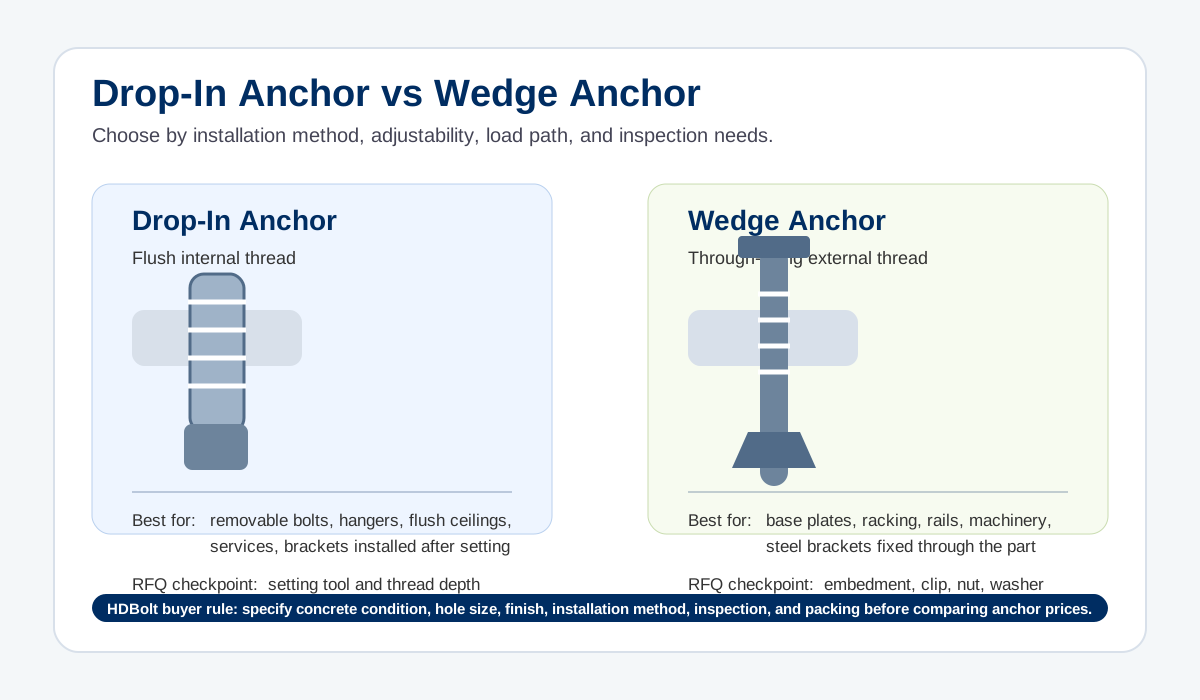
For drop-in anchor vs wedge anchor sourcing, the direct answer is: choose a drop-in anchor when you need a flush, internally threaded anchor that accepts a removable bolt or threaded rod; choose a wedge anchor when you need through-fixing with an external threaded stud, nut, and washer. Do not compare prices until the concrete condition, anchor size, embedment, finish, setting method, inspection scope, and packaging are all defined.
Short answer for purchasing teams
A drop-in anchor is an internally threaded expansion anchor installed into a pre-drilled hole in concrete. After it is set with the correct setting tool, the buyer installs a bolt, threaded rod, hanger, or bracket into the internal thread. It is useful when the fixing point should remain flush or when the bolt may be removed later.
A wedge anchor is an external-thread expansion anchor. It is normally inserted through the fixture into concrete, then tightened with a nut and washer. It is common for base plates, racks, rails, machinery feet, steel brackets, guardrails, and construction hardware where the fastener stays with the fixture.
| Buying question | Drop-in anchor | Wedge anchor |
|---|---|---|
| Thread style | Internal thread accepts a bolt or rod | External threaded stud with nut and washer |
| Installation style | Set first, then attach the fixture | Through-fixing through the fixture |
| Typical use | Ceiling hangers, services, removable brackets, flush fixing points | Base plates, racking, rails, equipment, steel-to-concrete fixing |
| Key tool risk | Wrong or missing setting tool causes poor expansion | Wrong hole depth, edge distance, or torque reduces performance |
| RFQ priority | Thread size, body length, setting depth, anchor material | Diameter, length, embedment, clip design, nut, washer, finish |
When to choose a drop-in anchor
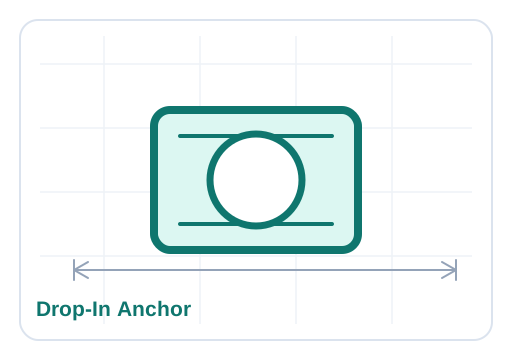
Use drop-in anchors when the buyer wants a clean threaded socket in concrete. They are often selected for suspended pipework, cable trays, threaded rod hangers, HVAC supports, removable fixtures, and applications where the exposed bolt or rod may change during installation.
The main sourcing risk is incomplete specification. A drop-in anchor RFQ should not say only "M10 anchor." It should state the anchor type, internal thread, outside body size, length, material, finish, setting tool requirement, and whether the supplied part must match a buyer drawing or local approval system.
When to choose a wedge anchor
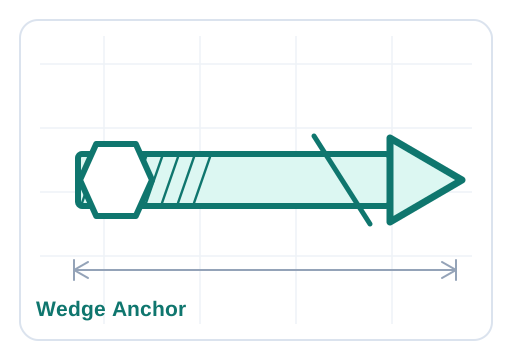
Use wedge anchors when the fixture can be placed first and drilled through, or when a projecting stud with a nut and washer is the expected construction detail. Wedge anchors are easier for many buyers to inspect visually because the nut, washer, thread projection, and installed fixture remain visible after tightening.
A wedge anchor RFQ should define the diameter, total length, thread length, minimum embedment where relevant, nut and washer pairing, material, finish, and packing. If the project has approved-anchor requirements, the buyer should provide the approval document or drawing instead of relying on a generic catalog name.
Specification table: what to put in the RFQ
| RFQ field | What to specify | Why it matters |
|---|---|---|
| Anchor type | Drop-in anchor, wedge anchor, sleeve anchor, concrete screw, or buyer drawing | Prevents suppliers from quoting the wrong concrete anchor family |
| Size | Metric or inch thread, anchor diameter, length, drill hole size if required | Controls fit with the fixture and concrete hole |
| Concrete condition | Cracked or uncracked concrete, concrete strength, edge distance, indoor or outdoor use if known | Affects design approval and whether a generic anchor is acceptable |
| Material and finish | Carbon steel zinc plated, hot-dip galvanized, stainless steel A2/A4, or drawing-defined coating | Changes corrosion resistance, thread fit, appearance, and cost |
| Components | Setting tool for drop-in anchors; nut and washer for wedge anchors | Missing accessories can stop installation even when anchors are correct |
| Inspection | Dimensions, thread gauges, expansion part, coating, assembly fit, labels, and carton strength | Visual product photos alone do not prove the shipment matches the order |
Finish selection: zinc plated, HDG, or stainless
For indoor dry concrete fixing, zinc plated carbon steel anchors are common and economical. For outdoor construction or wet environments, buyers often compare hot-dip galvanized and stainless steel options. Hot-dip galvanizing can improve corrosion protection but may affect thread fit and appearance. Stainless steel A2 or A4 may be preferred for exposed, coastal, chemical, or hygiene-sensitive applications.
Do not use the word "galvanized" by itself. In international RFQs, "galvanized anchor" may be interpreted as electro-zinc plated or hot-dip galvanized depending on the supplier. Use the exact finish wording and review the zinc plated vs hot-dip galvanized fastener guide or the A2 vs A4 stainless fastener guide if corrosion resistance is a key requirement.
Inspection checklist before shipment
- Check that the carton label, purchase order, and inspection report use the same anchor type, size, material, finish, and item number.
- Measure body diameter, length, thread size, thread depth or thread length, clip or expansion part, nut, and washer dimensions.
- Use thread gauges and sample assembly checks for internal-thread drop-in anchors and external-thread wedge anchors.
- Confirm setting tools are included when ordered, and that the tool matches the drop-in anchor size.
- Inspect zinc plating, hot-dip galvanizing, or stainless surface condition for rust, bare spots, rough coating, oil, and contamination.
- Review carton strength, inner bags, mixed-size separation, pallet wrapping, moisture protection, and shipping marks.
- Request photos of product samples, measurement results, carton labels, inner packing, outer cartons, and loaded pallets.
Common RFQ mistakes
| Mistake | Likely result | Better wording |
|---|---|---|
| Writing only "concrete anchor" | Supplier quotes wedge, sleeve, drop-in, or concrete screw based on stock | State drop-in anchor or wedge anchor, plus standard or drawing |
| Ignoring accessories | Drop-in anchors arrive without setting tools, or wedge anchors arrive without matching nuts and washers | List included accessories and packing method |
| Leaving finish unclear | Zinc plated and hot-dip galvanized prices are mixed in one comparison | Write zinc plated white, hot-dip galvanized, stainless A2, or stainless A4 |
| Not separating approved from commodity anchors | A low-cost stock anchor is quoted for a project that needs approved performance data | Attach the approval, drawing, standard, or project specification |
RFQ wording buyers can copy
Drop-in anchor, M10 internal thread, carbon steel, zinc plated white, body length and thread depth per drawing, matching setting tool required, quantity 50,000 pcs, packed in labeled export cartons with item number, size, finish, lot, and quantity on each carton.
Wedge anchor, M12 x 100 mm, carbon steel, hot-dip galvanized, supplied complete with nut and washer, clean thread fit required after coating, clip and expansion part inspected, quantity 20,000 sets, packed 20 kg maximum per carton on pallets for sea shipment.
What HDBOLT recommends
Do not treat drop-in anchors and wedge anchors as interchangeable commodity items. Choose the anchor family according to installation method first, then lock the size, material, finish, accessories, inspection points, and export packaging into the RFQ. For alternatives, compare sleeve anchors, concrete screws, and the full HDBOLT anchor range. To quote a project list, send drawings, sizes, finish, quantity, and destination details through the HDBOLT contact page or review the fastener ordering guide first.