
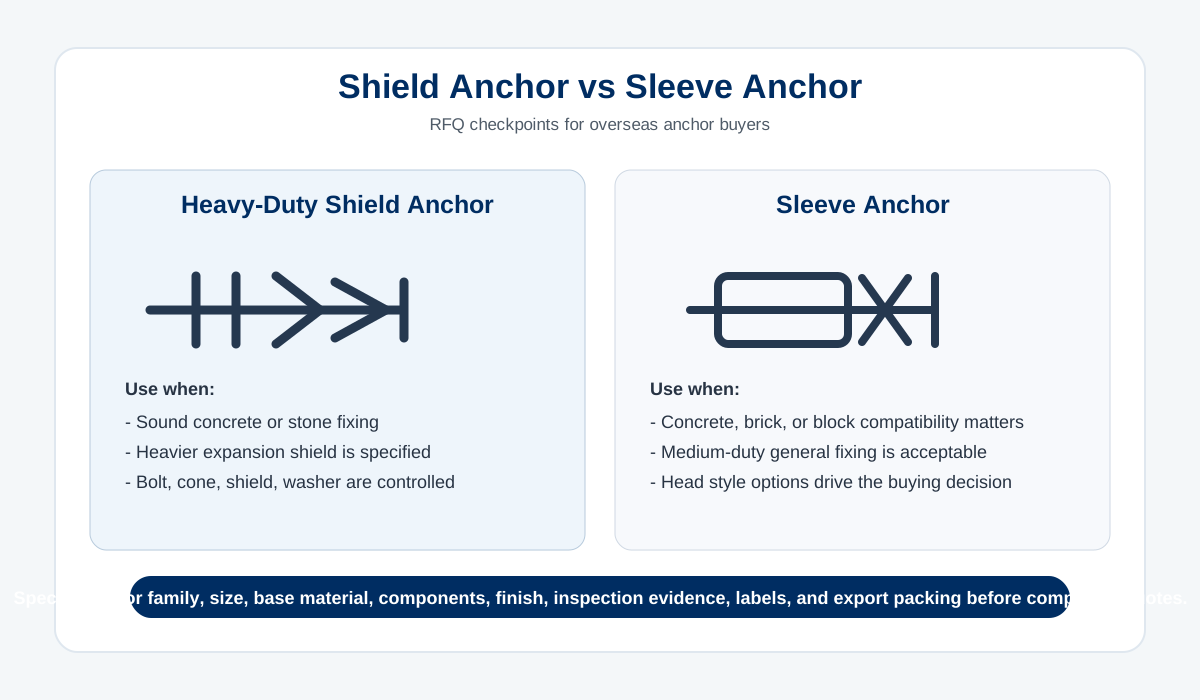
For heavy-duty shield anchor vs sleeve anchor sourcing, the direct answer is: choose a heavy-duty shield anchor when the project calls for a robust metal shield anchor for heavier concrete or stone fixing; choose a sleeve anchor when the buyer needs a more general expansion anchor for concrete, solid brick, or block with multiple head styles. Do not compare prices until the base material, anchor size, shield or sleeve design, bolt or head style, finish, inspection scope, and export packing are all defined.
Short answer for anchor buyers
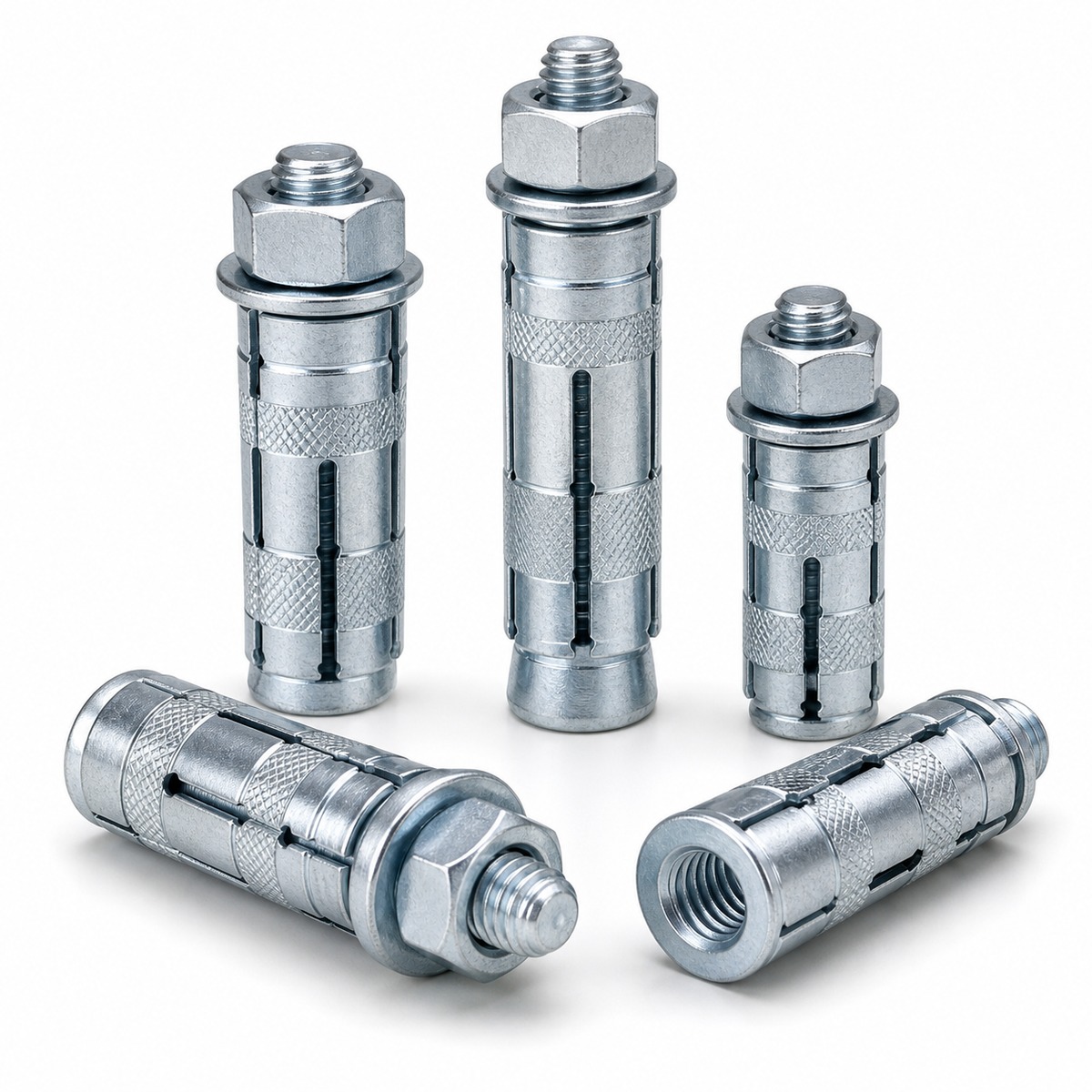
A heavy-duty shield anchor uses a stronger metal shield around a bolt, cone, or wedge mechanism. It is normally treated as a heavier mechanical expansion anchor for concrete or stone applications where the project specification expects a shield-style body and controlled components.
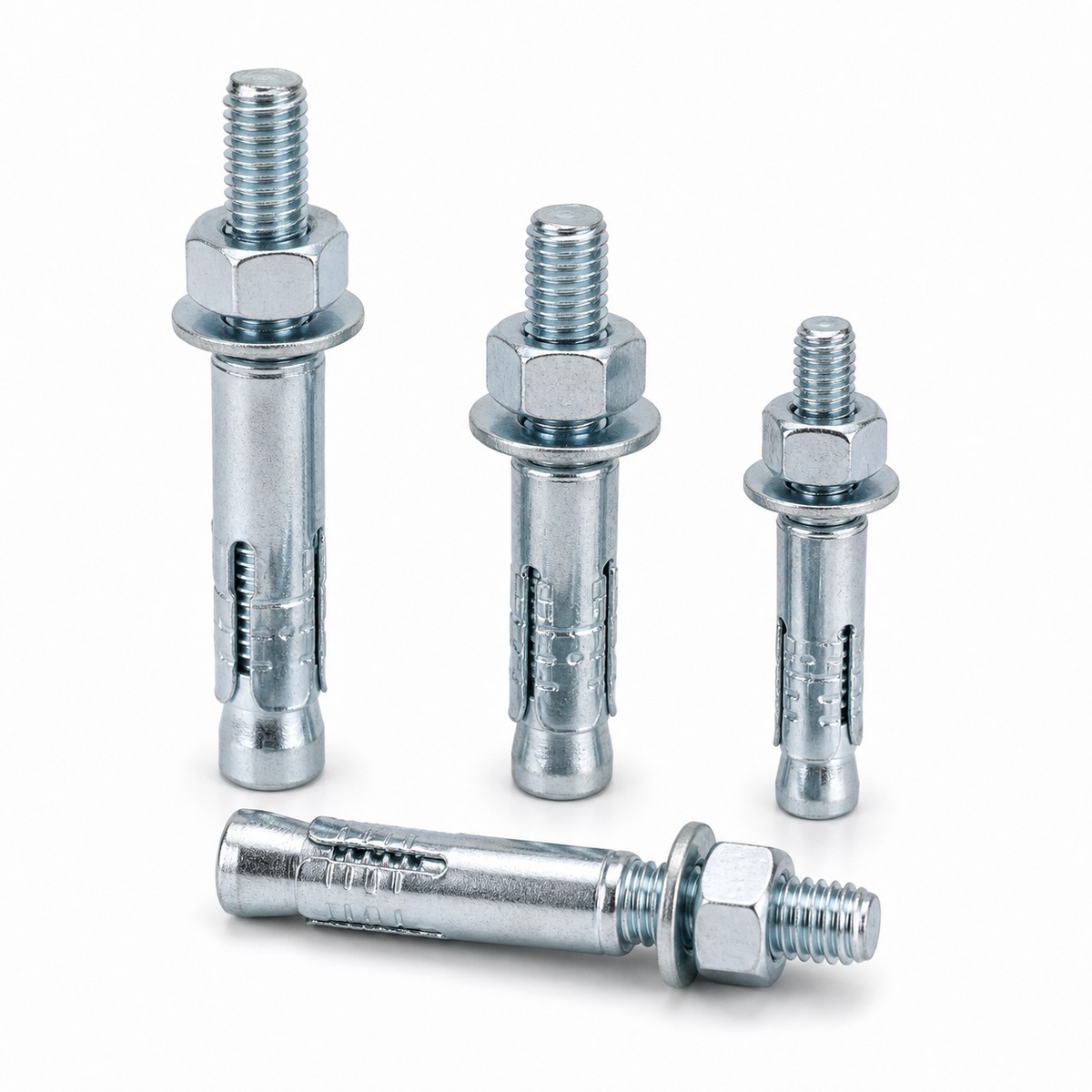
A sleeve anchor uses a threaded stud or screw head with an expanding sleeve. Sleeve anchors are often selected for medium-duty fixing and for projects where concrete, brick, or block compatibility and head style options matter. Common commercial styles include hex nut, hex flange, mushroom head, eye, hook, and C-hook versions.
| Buying question | Heavy-duty shield anchor | Sleeve anchor |
|---|---|---|
| How it expands | Bolt or cone expands a heavier metal shield against the hole wall | Sleeve compresses and expands as the nut or head is tightened |
| Typical base material | Sound concrete or stone when the project allows shield anchors | Concrete, solid brick, and some block applications when suitable for the load |
| Common buying reason | Heavier-duty fixing, shield-style specification, or project drawing match | General expansion anchor stock, head-style flexibility, and mixed substrate jobs |
| Components to control | Shield segments, bolt, cone or wedge, washer, thread, and assembled length | Stud or screw, sleeve, nut or head, washer, hook or eye if supplied |
| Main sourcing risk | Wrong shield body, cone fit, bolt length, finish, or component assembly | Wrong head style, sleeve length, base-material assumption, or mixed packing |
When to choose a heavy-duty shield anchor
Choose a heavy-duty shield anchor when the drawing, installer, or project specification asks for a shield anchor rather than a standard sleeve anchor. Buyers often request this product for heavier concrete and stone fixing, bracket installation, equipment support, and repair work where a robust shield body is preferred.
The RFQ should not say only "shield anchor." State the anchor type, thread size, total length, shield outside diameter if controlled, bolt head or nut style, washer requirement, material, finish, and whether the product must match a sample or drawing. If the order is safety-related, ask the project engineer to define performance approval, installation torque, embedment, edge distance, and concrete condition.
When to choose a sleeve anchor
Choose a sleeve anchor when the project needs a versatile mechanical expansion anchor across common masonry substrates and the load class is suitable. Sleeve anchors are practical for handrails, signage, light brackets, fixtures, temporary works, and distributor stock where multiple head styles are needed in one product family.
The commercial risk is head-style substitution. A hex nut sleeve anchor, mushroom-head sleeve anchor, eye sleeve anchor, and hook sleeve anchor may all be called "sleeve anchor" in casual RFQs, but they solve different installation problems. The quote should lock the head style, diameter, length, sleeve material, nut or washer inclusion, finish, and packing label before order release.
RFQ checklist before comparing quotes
| RFQ field | What to specify | Why it matters |
|---|---|---|
| Anchor family | Heavy-duty shield anchor, sleeve anchor, wedge anchor, drop-in anchor, or drawing part | Prevents suppliers from quoting a different concrete anchor family |
| Size and length | Metric or inch size, total length, thread length, shield or sleeve dimensions if controlled | Controls fixture thickness, embedment, and product interchangeability |
| Base material | Concrete, stone, solid brick, grouted block, hollow block, or buyer-approved substrate | Expansion anchors depend on the hole wall and base-material condition |
| Head or bolt style | Hex bolt, hex nut, countersunk, mushroom, eye, hook, C-hook, or drawing head | Installers need the correct visible hardware and drive method |
| Finish | Zinc plated, mechanical galvanized, hot-dip galvanized where suitable, stainless, or coating spec | Coating affects corrosion resistance, thread fit, and assembly behavior |
| Inspection evidence | Dimensions, assembly photos, thread fit, coating appearance, component count, packing photos | Anchors can fail receiving checks when one small component is wrong |
| Export packing | Inner boxes, carton weight, item labels, lot separation, pallets, and mixed-item consolidation | Anchor cartons are heavy and similar sizes are easy to mix |
Inspection points buyers should request
Mechanical anchors should be inspected as assemblies, not just as individual metal parts. For a shield anchor, check the shield segment condition, cone or wedge fit, bolt length, thread, washer, coating coverage, and free assembly. For a sleeve anchor, check sleeve position, head style, nut run-on where applicable, washer inclusion, thread quality, and whether the sleeve expands smoothly during sample installation.
| Checkpoint | Heavy-duty shield anchor | Sleeve anchor |
|---|---|---|
| Visual assembly | Shield, cone, bolt, washer, and thread are complete and correctly oriented | Sleeve, stud or head, nut, washer, hook, or eye match the ordered style |
| Dimensional check | Thread size, total length, shield length, outside diameter, washer size | Diameter, length, sleeve length, head height, thread length, accessory fit |
| Function check | Sample tightening confirms cone pulls into shield without obvious binding | Sample tightening confirms sleeve expansion and nut or head operation |
| Finish check | Coating on shield and bolt without blocked threads or stuck components | Coating on sleeve, head, nut, washer, and thread without seizure |
| Packing check | Separate by size, length, finish, and assembled component set | Separate by head style, size, length, finish, and lot number |
Finish and material notes
Zinc plated carbon steel is common for indoor distribution and general hardware stock. Mechanical galvanizing or other heavier corrosion-protection systems may be requested for outdoor work, but buyers should confirm suitability for the specific anchor design because coating thickness can affect threads, sleeves, shields, nuts, and installation behavior. Stainless steel may be preferred where corrosion resistance or appearance is more important than the lowest unit price.
If a project lists multiple anchor types, do not automatically use one finish for every item. A visible sleeve anchor in a brick facade, a shield anchor in concrete, and a stainless fixture package may need different materials or coating controls. For broader coating decisions, review HDBOLT's zinc plated vs hot-dip galvanized fastener guide and stainless steel A2 vs A4 fastener guide.
Handan Yongnian sourcing context
In the Handan Yongnian fastener market, anchor sourcing often involves more than one production specialty. A buyer's order may combine heavy-duty shield anchors, sleeve anchors, wedge anchors, drop-in anchors, chemical anchor studs, screws, washers, carton labels, and pallet requirements in one export shipment.
The practical value for overseas buyers is consolidation and line-item control. HDBOLT can help separate anchor types by family, head style, size, length, finish, and lot, then request photos or inspection evidence before the cartons are mixed onto export pallets. The practical risk is treating all "expansion anchors" as interchangeable stock. Shield anchors and sleeve anchors should have separate approval samples, packing labels, and receiving checkpoints.
Common RFQ mistakes
| Mistake | Likely result | Better wording |
|---|---|---|
| Writing only "expansion anchor" | Supplier quotes wedge, sleeve, shield, drop-in, or local stock based on habit | State heavy-duty shield anchor or sleeve anchor, then add size, length, finish, and drawing |
| No base-material note | Anchor is quoted without knowing concrete, stone, brick, or block condition | State the substrate and ask the project engineer to approve final anchor selection |
| No head-style detail | Hex nut, bolt head, mushroom, hook, or eye styles get substituted | Define the head or bolt style and include photos if matching existing stock |
| No component list | Washers, nuts, cones, hooks, or setting accessories may be missing | List every supplied component and require assembled sample photos |
| Mixed labels by diameter only | Receiving team must sort similar cartons by length and head style | Use labels with item number, anchor family, size, length, finish, quantity, and lot |
RFQ wording buyers can copy
Heavy-duty shield anchor, M12 x 100, carbon steel zinc plated, shield-style expansion anchor with bolt, cone, and washer assembled. Quote with dimensional inspection, component photos, thread fit check, coating appearance photos, inner box labels by item number, and export pallet packing photos before shipment.
Sleeve anchor, M10 x 80, hex nut type, carbon steel zinc plated, supplied with sleeve, stud, nut, and washer assembled. Confirm base-material application range, sleeve length, nut run-on, coating coverage, carton weight, buyer item labels, and mixed-pallet separation from other anchor types.
What HDBOLT recommends
Choose the anchor family by installation method and base material first, then quote the product as a complete assembly. Heavy-duty shield anchors are better when the buyer specifically needs a robust shield-style anchor for heavier concrete or stone fixing. Sleeve anchors are better when the job needs general expansion anchors with head-style flexibility across common masonry substrates. To quote a mixed anchor list, send drawings, photos, sizes, finish, quantities, packing rules, and destination through the HDBOLT contact page. For related products, review the heavy-duty shield anchor page, sleeve anchor page, full anchors category, and the HDBOLT supply and quality guide.