
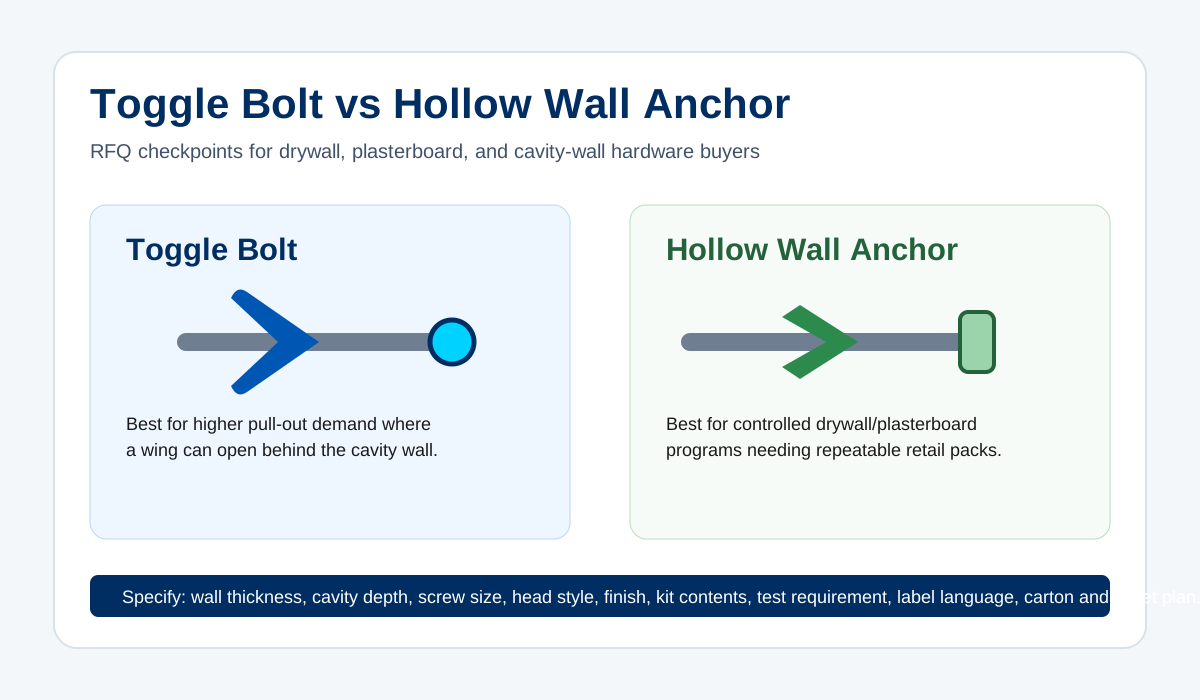
For toggle bolt vs hollow wall anchor sourcing, the direct answer is: choose toggle bolts when the buyer needs stronger backing behind a hollow wall and enough cavity depth for the wing to open; choose hollow wall anchors when the program needs repeatable drywall or plasterboard installation, removable screws, retail kits, or lighter-duty hardware. A correct RFQ should define wall thickness, cavity depth, load direction, screw size, head style, material, finish, anchor body type, kit contents, labels, inspection evidence, carton strength, and destination.
Short answer for drywall anchor buyers
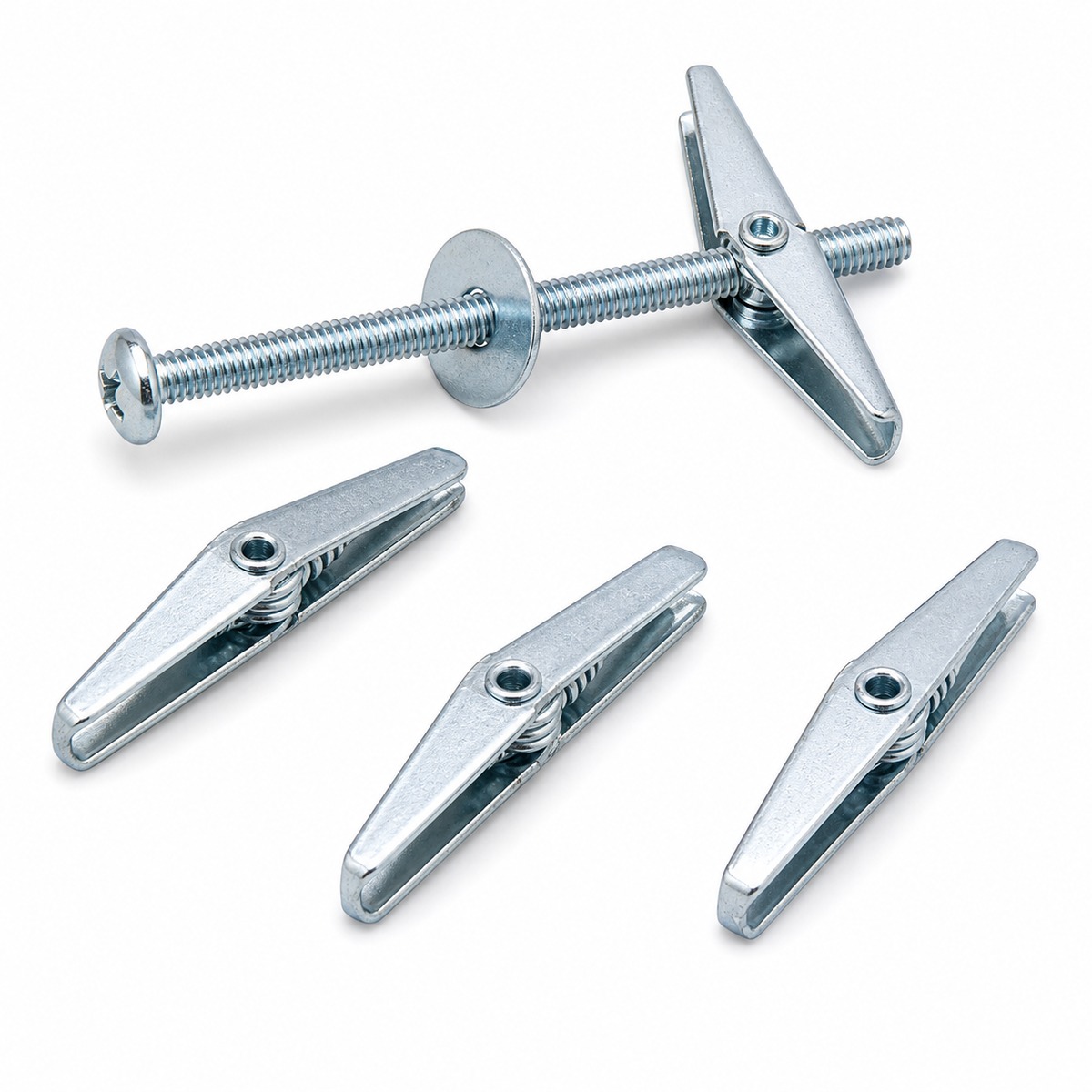
A toggle bolt uses a spring wing or channel that opens behind a hollow wall. It is usually selected when the buyer needs higher pull-out resistance from drywall, plasterboard, hollow block, or a cavity panel and the installation has enough space for the wing to deploy.
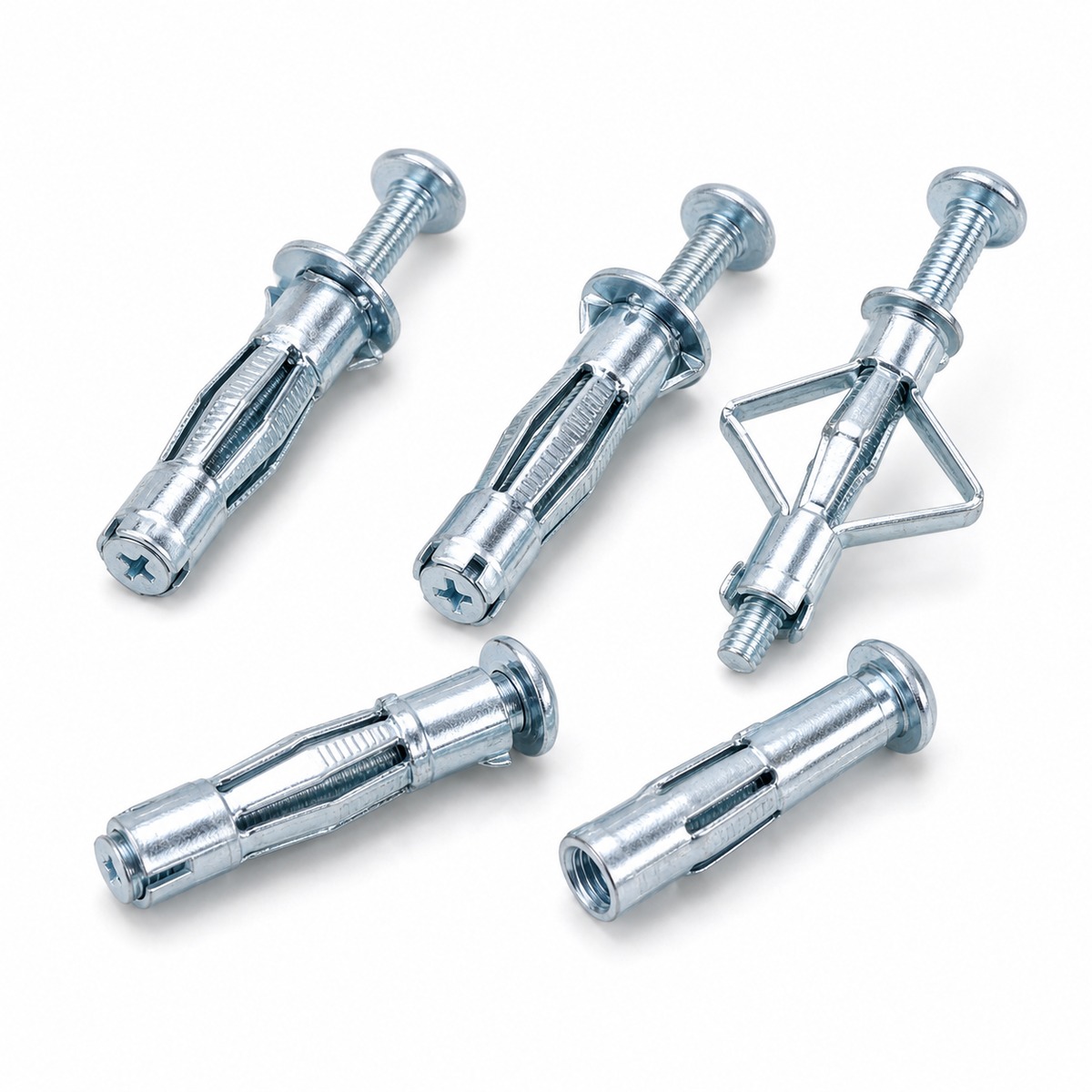
A hollow wall anchor is a broader category that includes molly bolts, self-drilling drywall anchors, expansion anchors, and other cavity-wall fasteners. It is often easier to package as a retail kit and can be more convenient where the screw may need to be removed and reinstalled.
Toggle bolt vs hollow wall anchor comparison
| Buying point | Toggle bolt | Hollow wall anchor |
|---|---|---|
| Best use | Heavier hollow-wall fixing where a wing or channel can bear behind the panel | Drywall, plasterboard, hollow panel, and retail hardware programs with varied load levels |
| Installation behavior | Wing folds for insertion, then opens behind the wall cavity | Body expands, folds, drills, or grips depending on molly, plastic, or metal anchor design |
| Screw removal | Standard spring toggles may drop into the cavity when the bolt is removed | Molly and some hollow wall anchors can keep the body in place after screw removal |
| Key RFQ dimensions | Bolt diameter, bolt length, wing width, folded width, required hole size, cavity depth | Anchor body diameter, grip range, wall thickness range, screw size, head style, hole size |
| Main sourcing risk | Wing cannot open, bolt is too short, or pack lacks matching screws and hole-size guidance | Wrong grip range, weak body material, inconsistent screw fit, or unclear retail kit contents |
Specify the wall condition before price comparison
The same anchor can perform very differently in 9.5 mm drywall, 12.5 mm plasterboard, double-layer board, hollow block, thin metal panel, or unknown renovation walls. HDBOLT does not recommend treating published load claims as universal. Wall material, board thickness, cavity depth, installation hole quality, screw engagement, and load direction all affect real performance.
For export buying, the RFQ should state the wall type and expected installation condition. If the order is for distribution rather than one project, define the target use clearly: light home hardware packs, cabinet mounting kits, TV bracket accessory packs, sanitary hardware kits, or contractor bulk cartons.
| RFQ field | What buyers should write | Why it matters |
|---|---|---|
| Wall type | Drywall, plasterboard, hollow block, gypsum board, thin panel, or customer drawing | Controls anchor type and whether toggle, molly, or self-drilling style is suitable |
| Wall thickness | Single board, double board, or measured thickness range | Controls grip range, bolt length, and expansion position |
| Cavity depth | Minimum free space behind wall if known | Toggle wings and channels need room to deploy |
| Screw details | Diameter, length, head style, drive, thread type, and supplied quantity | Prevents missing or mismatched screws in kits |
| Finish | Zinc plated, yellow zinc, white zinc, black finish, stainless, or custom coating | Affects appearance, corrosion resistance, and retail presentation |
| Packing | Bulk carton, small box, blister card, bag kit, barcode label, language, and carton weight | Packaging often decides whether the product works for retail, distributor, or project use |
When a toggle bolt is the better choice
Choose a toggle bolt when the fixing point must spread load behind a cavity wall and there is enough behind-wall clearance for the wing. Toggle bolts are common for brackets, shelves, signs, rails, light fixtures, and hardware mounted to hollow walls where simple plastic expansion plugs are not enough.
The most common buying mistake is specifying only "M6 toggle bolt" without confirming wing size, folded width, bolt length, wall thickness range, and whether the order includes screws, washers, or installation instructions. For retail packs, hole size and installation sequence should be printed or labeled clearly to reduce returns.
When a hollow wall anchor is the better choice
Choose a hollow wall anchor when the application needs a defined grip range and a body that remains in the wall. Molly-style anchors are useful when the screw may be removed and reinstalled. Self-drilling drywall anchors are often used for light-duty hardware packs where fast installation matters more than maximum load.
Inspection checklist before shipment
| Inspection item | What to check | Evidence to request |
|---|---|---|
| Anchor dimensions | Body diameter, length, wing width, folded width, grip range, hole-size match | Sample photos with calipers and product drawing confirmation |
| Screw fit | Screw diameter, length, head style, drive recess, thread engagement, washer fit if included | Assembly photos and count photos for each kit |
| Opening or expansion | Toggle wing opens freely or hollow wall body expands consistently | Functional test photos in sample board or fixture |
| Finish | Plating coverage, rust, burrs, sharp edges, appearance consistency | Close-up surface photos and plating report if required |
| Retail or bulk packing | Bag quantity, blister card contents, label text, barcode, carton quantity, carton strength | Final pack photos, carton label photos, and packing list |
| Mixed shipment control | Separate sizes, colors, kit types, and customer part numbers clearly | Pallet photos and line-item carton labels before loading |
Handan Yongnian sourcing context
HDBOLT supplies cavity-wall fixing assemblies with the specified metal parts, sleeves, screws and washers, packed in bulk or labelled kits. These products have different installation requirements from wedge anchors and sleeve anchors, so every order is checked by anchor family and application.
For overseas buyers, this matters most when the order is a mixed anchor program. HDBOLT can help keep toggle bolts, hollow wall anchors, plastic wall plugs, concrete anchors, screws, and packaging lines separated by SKU while consolidating them into one export shipment. The focus is on clear specifications, sample approval, packing control, and inspection photos rather than claims about current market price.
Common RFQ mistakes
- Using "drywall anchor" as a generic name without defining toggle, molly, expansion, or self-drilling type.
- Ignoring wall thickness and cavity depth, especially for toggle bolts.
- Quoting anchor bodies without the matching screws, washers, or installation accessories.
- Mixing retail kits and bulk contractor cartons in one RFQ without separate packing rules.
- Comparing zinc plated, yellow zinc, black, and stainless versions as if finish does not affect cost or lead time.
- Approving samples without checking carton labels, barcode placement, and customer part numbers.
RFQ wording buyers can copy
Toggle bolt for drywall, zinc plated steel, M6 bolt x 75 mm, spring wing type, suitable for 12.5 mm plasterboard with sufficient cavity depth, supplied with matching screw and washer if required. Confirm folded wing width, required hole size, functional opening test, bag quantity, carton label, inspection photos, and export pallet packing. Destination: [country and port].
Hollow wall anchor kit, metal molly type, suitable for 10-16 mm wall thickness, supplied with matching pan head screws, white zinc finish, retail bag with barcode label and customer part number. Quote by kit quantity, carton quantity, label artwork requirement, sample approval timing, inspection scope, and destination.
What HDBOLT recommends
Start with the wall condition, then choose the anchor type. For toggle bolts, verify wing deployment and bolt length. For hollow wall anchors, verify grip range and screw retention. For both, define finish, supplied accessories, kit contents, labels, carton strength, and inspection evidence. For a quote, send drawings, photos, target wall thickness, quantity, packaging requirement, and destination through the HDBOLT contact page. For broader purchasing support, review the HDBOLT supply and quality guide and HDBOLT's anchor product range.