
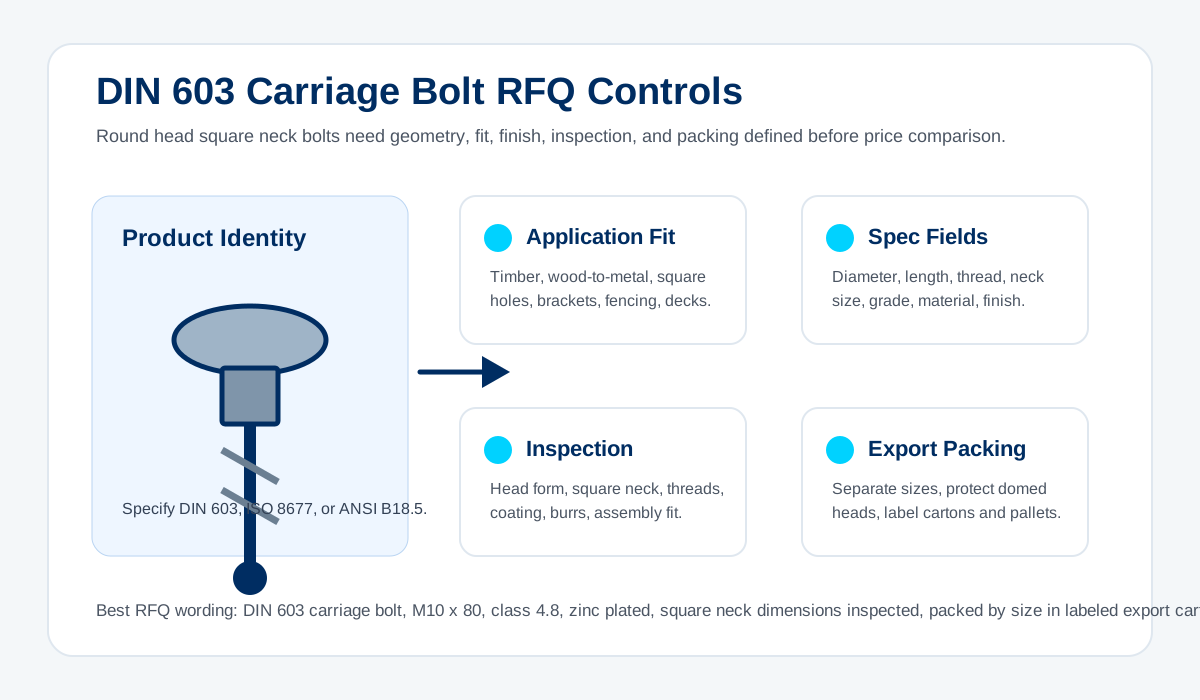
For DIN 603 carriage bolt sourcing, the direct answer is: specify the round head square neck standard, diameter, length, property class, material, finish, nut and washer pairing, square-neck fit, inspection scope, and export packaging. Do not buy only by the phrase "carriage bolt" because DIN 603, ISO 8677, and ANSI B18.5 can point to different market expectations.
Direct answer for import buyers
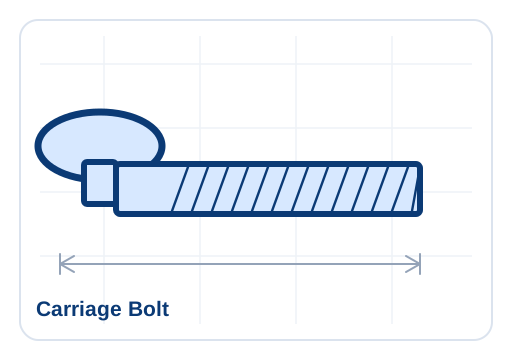
A DIN 603 carriage bolt has a smooth domed round head and a square section under the head. When tightened, the square neck bites into timber or sits in a matching square hole in metal, helping prevent the bolt from rotating while the nut is tightened from the other side.
A quote-ready line should read like this: DIN 603 carriage bolt, M10 x 80 mm, class 4.8, carbon steel, zinc plated white, supplied with matching hex nuts and flat washers, head and square-neck dimensions inspected, packed by size in labeled export cartons on pallets.
| Buying question | What to specify | Why it matters |
|---|---|---|
| Standard | DIN 603, ISO 8677, ANSI B18.5, or buyer drawing | Controls head form, square-neck style, and market acceptance |
| Size | Diameter, length under head, thread pitch, and thread length | Prevents wrong grip length or nut engagement |
| Neck fit | Square neck size and application material when critical | Determines whether the bolt resists spinning during tightening |
| Grade and material | Class 4.6, 4.8, selected 8.8, stainless A2/A4, or drawing material | Aligns strength and corrosion resistance with the joint |
| Finish | Zinc plated, hot-dip galvanized, plain, black, or stainless | Affects corrosion protection, thread fit, appearance, and cost |
| Packing | Carton weight, inner bags, pallet, labels, and mixed-item rules | Reduces receiving errors and head damage in export transit |
DIN 603 vs hex bolts: when should buyers choose carriage bolts?
Choose a carriage bolt when the visible side needs a low-profile rounded head, when the nut side is easier to access, or when timber or a square punched hole can hold the square neck. Common purchasing uses include timber construction, fencing, decking, agricultural hardware, outdoor furniture, playground hardware, brackets, and wood-to-metal assemblies.
Choose a full-thread hex bolt or partial-thread hex bolt when the assembly needs normal wrenching on the head side, controlled shank length, stronger shear-bearing behavior, or a standard machine bolt appearance. Do not substitute a carriage bolt into a structural or safety-critical joint unless the drawing approves the head and square-neck design.
| Comparison point | DIN 603 carriage bolt | Standard hex bolt |
|---|---|---|
| Head access | Usually tightened from the nut side | Can be held or tightened from the head side |
| Head shape | Smooth domed round head | Hex head for wrenching |
| Anti-rotation feature | Square neck under the head | None; wrench holds the head |
| Best fit | Timber, square holes, visible rounded heads | General machinery, steelwork, tapped holes, bolt sets |
| Common RFQ risk | Square neck not checked against material or hole | Thread length or head standard left unclear |
Size, thread, and square-neck details
For metric DIN 603 orders, buyers usually state diameter and length, such as M8 x 60 or M10 x 80. The length is measured under the head. If the bolt must pass through a specific timber thickness, bracket stack, washer, and nut, calculate the total grip and leave enough thread engagement after tightening.
The square neck deserves special attention. In soft timber, the neck may bite into the surface. In metal brackets, the receiving hole should normally be square or shaped to match the neck. If the order is for a stamped bracket, furniture fitting, or OEM assembly, include the mating hole drawing or ask the supplier to confirm neck dimensions in the inspection report.
Material, grade, and finish choices
| Option | Typical sourcing use | Buyer checkpoint |
|---|---|---|
| Class 4.6 or 4.8 carbon steel | General timber, fencing, furniture, and hardware | State the class and matching nut grade instead of accepting ungraded stock |
| Class 8.8 carbon steel | Higher-strength metric applications where the design approves carriage bolts | Confirm availability by size and whether the head/neck design is approved |
| Zinc plated | Indoor or moderate-duty hardware with clean appearance | Specify white, blue-white, or yellow zinc if appearance matters |
| Hot-dip galvanized | Outdoor timber and construction hardware | Check coating buildup, nut fit, and surface appearance acceptance |
| Stainless steel A2 or A4 | Outdoor, decorative, coastal, or corrosion-sensitive assemblies | Do not allow A2/A4 substitution without buyer approval |
For finish selection, compare the environment and assembly method. Zinc plated carriage bolts are common for indoor hardware and dry storage. Hot-dip galvanized carriage bolts can suit outdoor timber work, but the thicker coating can affect thread fit and appearance. Stainless carriage bolts are useful when corrosion resistance and exposed-head appearance are more important than the lowest unit price. For more detail, see the zinc plated vs hot-dip galvanized fastener guide and the A2 vs A4 stainless fastener guide.
Handan Yongnian sourcing context
In the Yongnian and Handan fastener cluster, carriage bolts are usually sourced alongside other bolt, nut, washer, and timber hardware lines rather than as an isolated specialty item. That can help overseas buyers consolidate a mixed order: DIN 603 carriage bolts, hex nuts, flat washers, screws, anchors, and other related fasteners can be checked, labeled, and packed under one shipment plan.
Carriage bolt supply requires a consistent domed head, square neck, finish and thread, together with the specified packing. HDBOLT confirms these requirements before stock allocation or production, including orders that combine DIN metric items, ANSI inch items and customer-branded labels.
Pre-shipment inspection checklist
- Confirm the purchase order, carton label, and inspection report use the same standard, size, grade, finish, and item number.
- Measure diameter, length under head, thread pitch, thread length, head diameter, head height, and square-neck dimensions.
- Test thread fit with the matching nut and washer, especially for hot-dip galvanized orders.
- Check the domed head for dents, flat spots, cracks, rough trimming, or coating defects.
- Inspect the square neck for rounded corners, poor forming, or burrs that prevent seating.
- Review coating appearance, rust prevention, carton strength, pallet condition, and moisture protection.
- Photograph product samples, labels, inner packing, cartons, pallets, and any nonconforming parts before shipment.
Common RFQ mistakes
| Mistake | Purchasing consequence | Better wording |
|---|---|---|
| Writing only "round head bolt" | The supplier may quote a bolt without a square neck | DIN 603 round head square neck carriage bolt |
| Leaving finish as "galvanized" | Zinc plated and hot-dip galvanized quotes get mixed | State zinc plated white or hot-dip galvanized |
| Ignoring the mating hole | The neck may spin in metal or damage the assembly | Provide bracket or hole drawing when neck fit matters |
| Mixing sizes in weak cartons | Receiving errors and damaged heads increase | Separate cartons by size with clear labels and pallet plan |
RFQ wording buyers can copy
DIN 603 carriage bolt, M8 x 60 mm, class 4.8 carbon steel, zinc plated white, supplied with matching DIN 934 hex nuts and DIN 125 flat washers, head and square-neck dimensions inspected, clean threads required, quantity 30,000 sets, packed 25 kg maximum per export carton with size, standard, finish, lot, quantity, and buyer item number on labels.
ANSI B18.5 carriage bolt, 3/8-16 x 3 in, carbon steel, hot-dip galvanized, matching HDG nuts and washers, square neck checked against buyer bracket drawing, coating and thread-fit inspection required, packed in moisture-protected cartons on fumigation-compliant pallets for ocean shipment.
What HDBOLT recommends
Buy carriage bolts by full specification, not by a loose product name. State the standard, size, property class, material, finish, square-neck fit, mating nut and washer, inspection scope, and packaging labels. Review the HDBOLT carriage bolt page, browse the bolt range, or send your size list and drawing through the HDBOLT contact page. For mixed orders from China, the HDBOLT supply guide explains how to prepare a complete RFQ.