
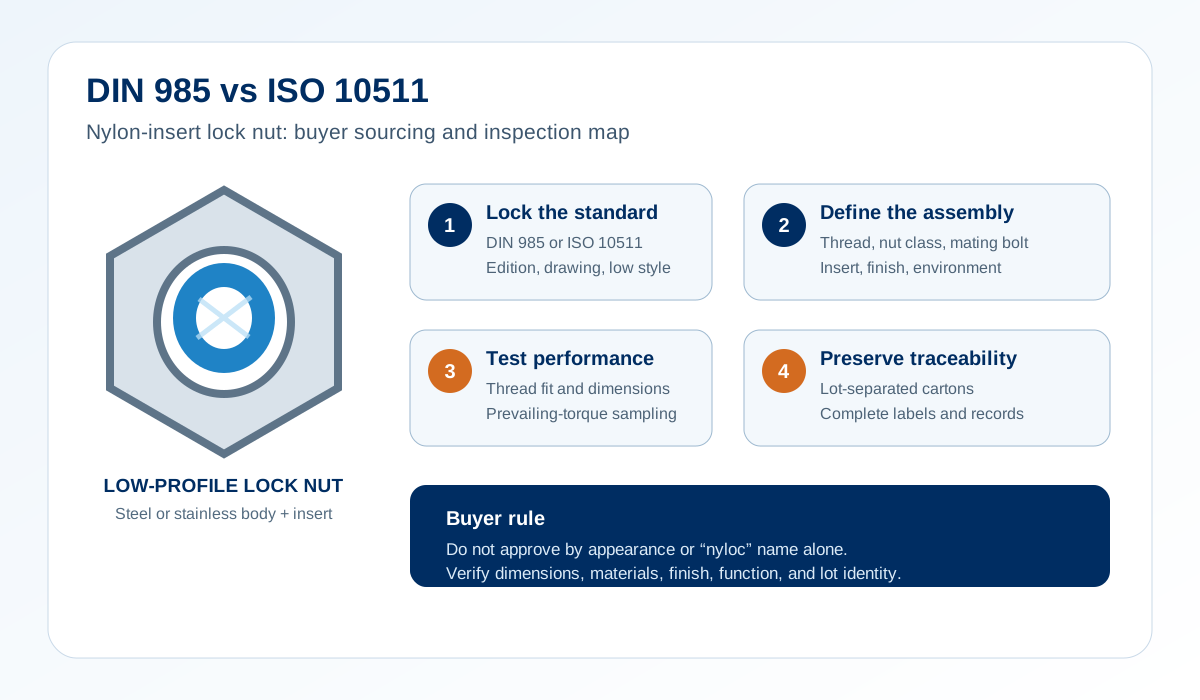
For DIN 985 vs ISO 10511 nylon insert lock nut sourcing, the direct answer is: both callouts are used for low-profile prevailing-torque hex nuts with a non-metallic insert, but they are not a license for an unchecked substitution. State the required standard and edition, thread size and pitch, nut property class, insert material, finish, mating bolt, prevailing-torque test requirement, and packaging before comparing quotations.
Direct answer for purchasing teams
DIN 985 is the familiar legacy DIN designation for a low-style nylon-insert lock nut. ISO 10511 is the international designation commonly used for a prevailing-torque-type hexagon thin nut with a non-metallic insert. Suppliers may cross-reference the two, but a buyer should compare the applicable dimensional and performance requirements before accepting an alternative, especially when the part must match an approved drawing, existing assembly, or customer label.
| Buying question | DIN 985 | ISO 10511 |
|---|---|---|
| Product form | Low-style hex lock nut with nylon insert | Prevailing-torque hexagon thin nut with non-metallic insert |
| Best RFQ wording | DIN 985 plus size, class, insert, and finish | ISO 10511 plus size, class, insert, and finish |
| Substitution rule | Approve only after dimensional, mechanical, functional, marking, and drawing requirements are compared | |
| Performance checkpoint | First-installation and, when required, reuse prevailing torque tested with the specified mating bolt and method | |
| Common sourcing risk | A nut that looks correct but has the wrong height, class, insert, plating, thread fit, or torque performance | |
What the nylon insert actually does
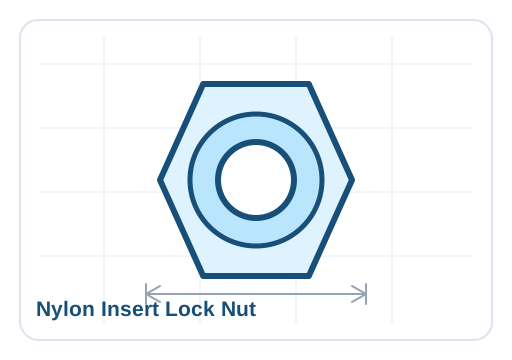
The bolt thread displaces the polymer insert as the nut is installed. That interference creates prevailing torque: resistance to rotation that exists independently of clamp load. It helps resist loosening in vibration-prone general machinery, enclosures, furniture, automotive accessories, agricultural equipment, and maintenance assemblies.
A nylon-insert nut is not automatically suitable for every safety-critical, high-temperature, chemical, or repeated-service application. The assembly engineer should decide whether a nylon insert, an all-metal lock nut, a wedge-lock washer, or another locking method is required.
DIN 985, DIN 982, ISO 10511, and ISO 7040 are not one line item
Low and high nut styles are frequently mixed in informal descriptions. DIN 985 and ISO 10511 are commonly associated with the low or thin form. DIN 982 and ISO 7040 are commonly associated with the taller regular form. The taller style provides a different nut height and thread engagement envelope, so buyers should not let a supplier choose between low and high patterns based only on stock availability.
| RFQ field | What to specify | Why it matters |
|---|---|---|
| Standard and style | DIN 985 or ISO 10511; do not write only “nyloc nut” | Controls the intended low-profile product form |
| Thread | Metric diameter, coarse or fine pitch, tolerance where required | Prevents pitch and assembly-fit errors |
| Nut class | Required property class compatible with the bolt and joint design | A generic material description does not establish mechanical performance |
| Insert | Approved polymer, color if identification matters, and service limits | Insert material affects temperature, chemicals, identification, and torque |
| Finish | Plain, zinc plated, flake coating, stainless, or drawing-defined coating | Coating changes corrosion resistance, friction, and thread fit |
| Functional test | Applicable prevailing-torque method, sample plan, and acceptance record | Visual inspection cannot verify locking performance |
Property class and mating bolt selection
Buy the lock nut as part of a bolted assembly. State the mating bolt standard, property class, thread pitch, finish, and any lubrication condition used for functional testing. A nut may run freely on one bolt lot but produce different torque on another because thread geometry, coating thickness, surface condition, and test setup all affect the result.
Do not assume the insert color proves the nut class or material. Color can be a buyer identification feature, but the purchase order, package labels, inspection record, and required product marking must carry the technical identity. If stainless steel is required, specify the stainless family and property class rather than writing “silver nyloc nut.” The A2 vs A4 fastener guide explains the corrosion-selection issue.
Temperature, chemicals, and reuse
The allowable service temperature and chemical exposure depend on the insert polymer and the approved application. Do not copy a generic temperature value from a catalog into a project specification. Ask the supplier to identify the insert material and provide supporting data when heat, fuel, oils, cleaners, UV exposure, or chemicals are relevant.
Reuse should also be an engineering decision. Prevailing torque normally changes over installation cycles, so a used nut should not be accepted for a critical assembly merely because the insert still looks intact. Where reuse performance is required, define the installation and removal cycles, mating bolt, test speed, lubrication condition, and acceptance limits in the inspection plan. For safety-critical maintenance, many buyers specify a new nut at each installation.
Finish and corrosion choices
| Option | Typical buying use | Buyer checkpoint |
|---|---|---|
| Carbon steel, zinc plated | General machinery and indoor hardware | State coating system, color, thickness requirement if contractual, and matching bolt finish |
| Carbon steel, zinc-flake coating | Higher corrosion targets or OEM-controlled assemblies | Define coating specification, topcoat, friction requirement, and torque validation |
| Stainless steel A2 | General corrosion-resistant assemblies | Confirm A2 property class, insert compatibility, and galling controls |
| Stainless steel A4 | More demanding coastal or chemical exposure | Do not accept A2 without buyer approval; verify the complete assembly material |
| Special insert or coating | Temperature, chemical, color-code, or OEM requirements | Provide the drawing and approved material or coating specification |
For coated steel, compare lock nuts only after the finish and functional test conditions match. The zinc plated vs hot-dip galvanized fastener guide covers broader coating selection, although nylon-insert lock nuts still require assembly-specific approval.
Prevailing-torque and incoming inspection checklist
- Match the purchase order, approved drawing, supplier declaration, inspection report, and carton label to one complete standard designation.
- Measure width across flats, nut height, thread, and other drawing-controlled dimensions with calibrated equipment.
- Verify property class, base material, finish, insert material, and required markings against the order.
- Inspect the insert for missing rings, cuts, contamination, looseness, incomplete seating, heat damage, and inconsistent color.
- Check thread fit and coating buildup using the specified gauges and approved mating bolt.
- Run prevailing-torque tests using the contractually specified method, sample plan, mating bolt, installation cycles, and acceptance criteria.
- Keep production and inspection lots traceable; do not combine rejected or reworked inserts with accepted stock.
- Photograph product samples, markings, gauges or torque test setup, labels, cartons, and pallets before shipment.
Practical Yongnian and Handan sourcing context
In the Yongnian/Handan fastener cluster, the steel nut body, surface finish, nylon-ring supply, insert assembly, functional testing, and export packing may involve different specialist operations. The commercial advantage is access to many nut sizes and finishes for mixed orders. The quality risk is assuming that a visually complete nut has also passed controlled torque testing.
For overseas buyers, split the order by technical risk. Standard zinc-plated resale items can follow a defined sampling plan, while fine threads, high property classes, stainless materials, special insert colors, and OEM coatings should receive separate lot control and functional checks. Consolidation is useful only when labels, inspection records, and cartons preserve each line item's identity.
Packaging and labels for export orders
Nylon-insert nuts should stay dry, clean, and separated by standard, size, pitch, class, material, finish, and lot. Heavy cartons can damage during handling, while mixed low and high patterns are difficult to identify at receiving. Specify inner bags or boxes where needed, carton weight limits, pallet protection, moisture control, and a label template before production.
Each label should show the buyer item number, complete product designation, quantity, lot or batch code, gross and net weight where required, carton number, and country-of-origin wording agreed for the destination. See the export fastener packaging and documents guide for a fuller shipment checklist.
RFQ wording buyers can copy
DIN 985 nylon-insert prevailing-torque hex nut, M10 x 1.5, property class 8, carbon steel, zinc plated white, blue insert, for class 8.8 zinc-plated bolts, dimensions and marking to the specified DIN edition, prevailing-torque testing to buyer-approved method and sampling plan, packed by lot in labeled cartons on export pallets, quantity 50,000 pcs.
ISO 10511 prevailing-torque-type hexagon thin nut with non-metallic insert, M8 coarse thread, stainless steel A4 property class as drawing, approved insert material, clean passivated finish, dimensional and functional inspection records required, buyer item and lot labels on every inner box and carton, quantity 20,000 pcs.
What HDBOLT recommends
Buy nylon-insert lock nuts by complete specification and verified function, not by appearance or the nickname “nyloc.” Confirm the standard and style, thread, property class, insert, finish, mating bolt, service environment, torque test plan, traceability, and export packing before approving the quote.
Review the HDBOLT nylon insert lock nut page, browse the nut range, or send your size list, drawings, test requirements, packing plan, and destination through the HDBOLT contact page. For mixed fastener orders, use the HDBOLT supply and quality guide to prepare a quote-ready RFQ.