
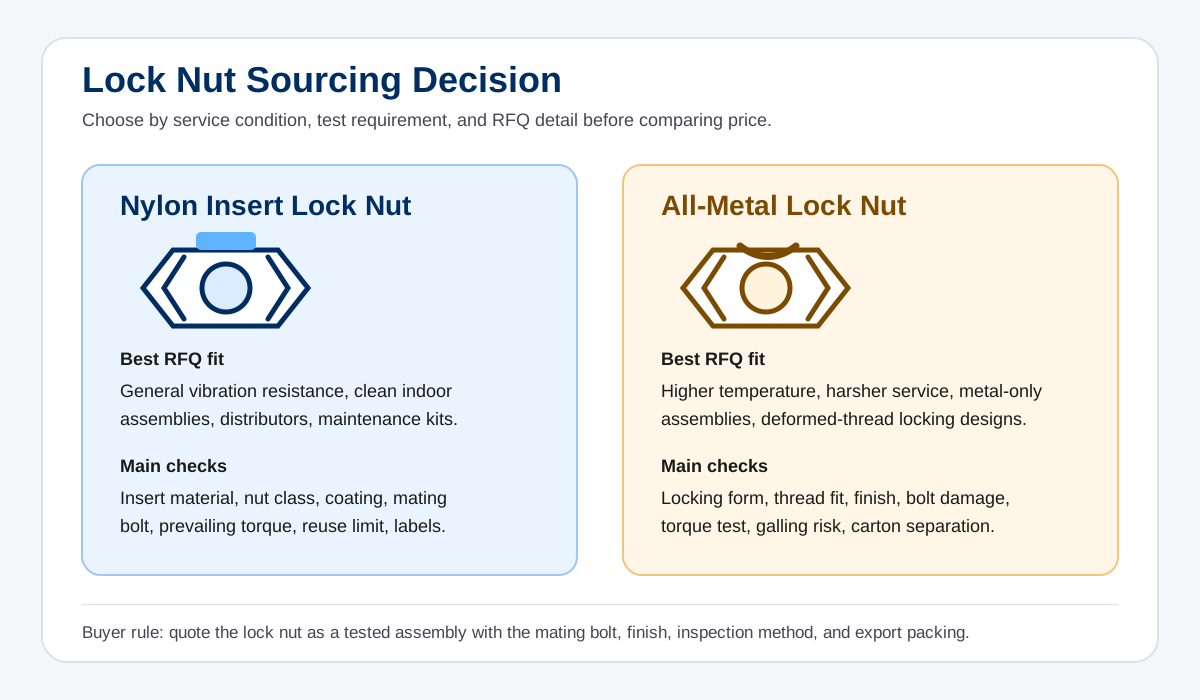
For nylon insert vs all-metal lock nut sourcing, the direct answer is: choose a nylon insert lock nut for many general vibration-resistant assemblies where temperature and chemical exposure stay within the insert material limit; choose an all-metal lock nut when the application needs a metal-only prevailing-torque nut for higher temperature, harsher service, or a drawing that calls for deformed-thread locking. Do not compare prices until the nut standard, style, property class, thread pitch, mating bolt, finish, torque test method, reuse rule, and export packing are all defined.
Short answer for lock nut buyers
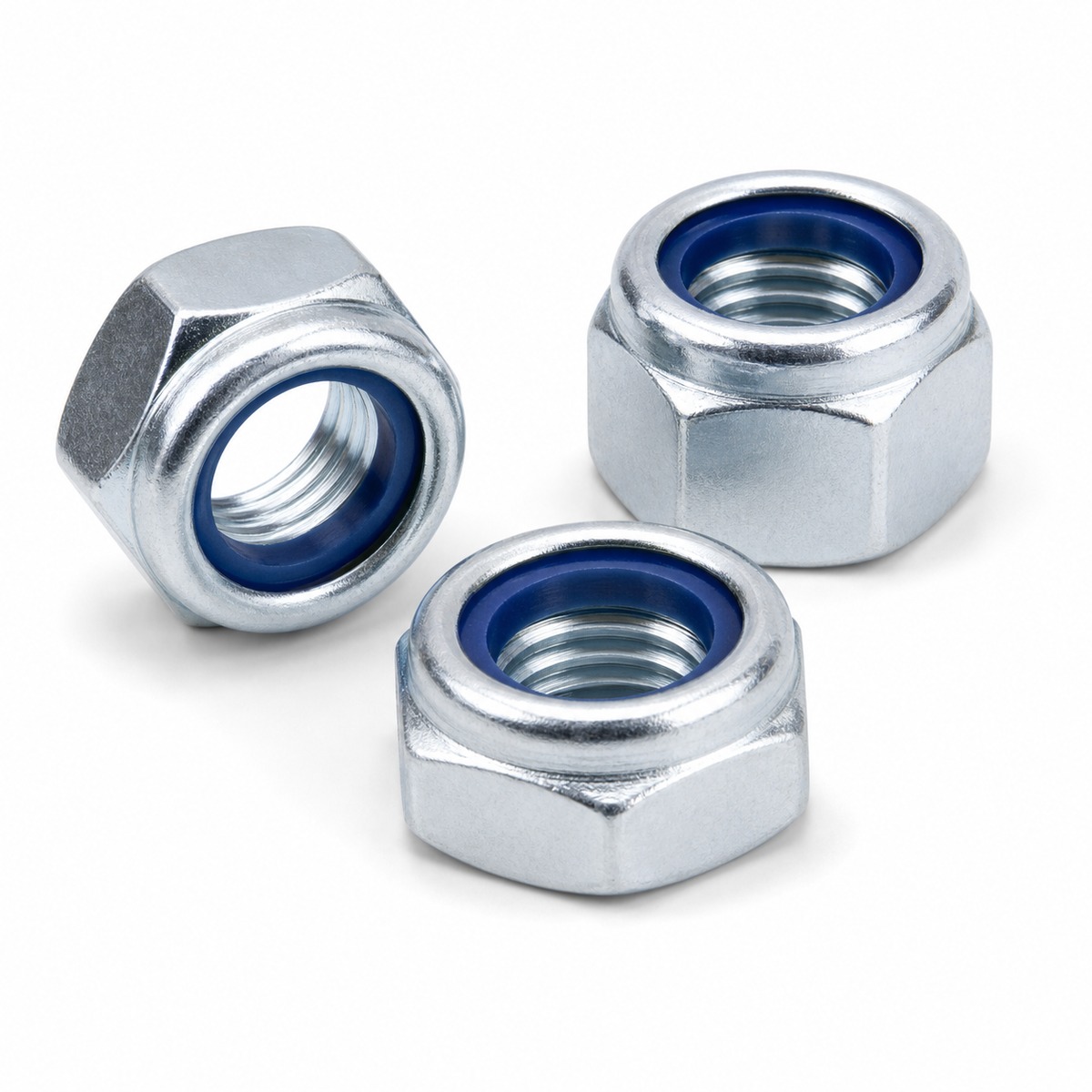
A nylon insert lock nut uses a polymer ring at one end of the nut. As the bolt thread enters the insert, the insert creates friction against the male thread. It is widely used for general machinery, enclosures, furniture hardware, agricultural equipment, maintenance kits, and distribution stock where the application engineer accepts the insert material and service condition.
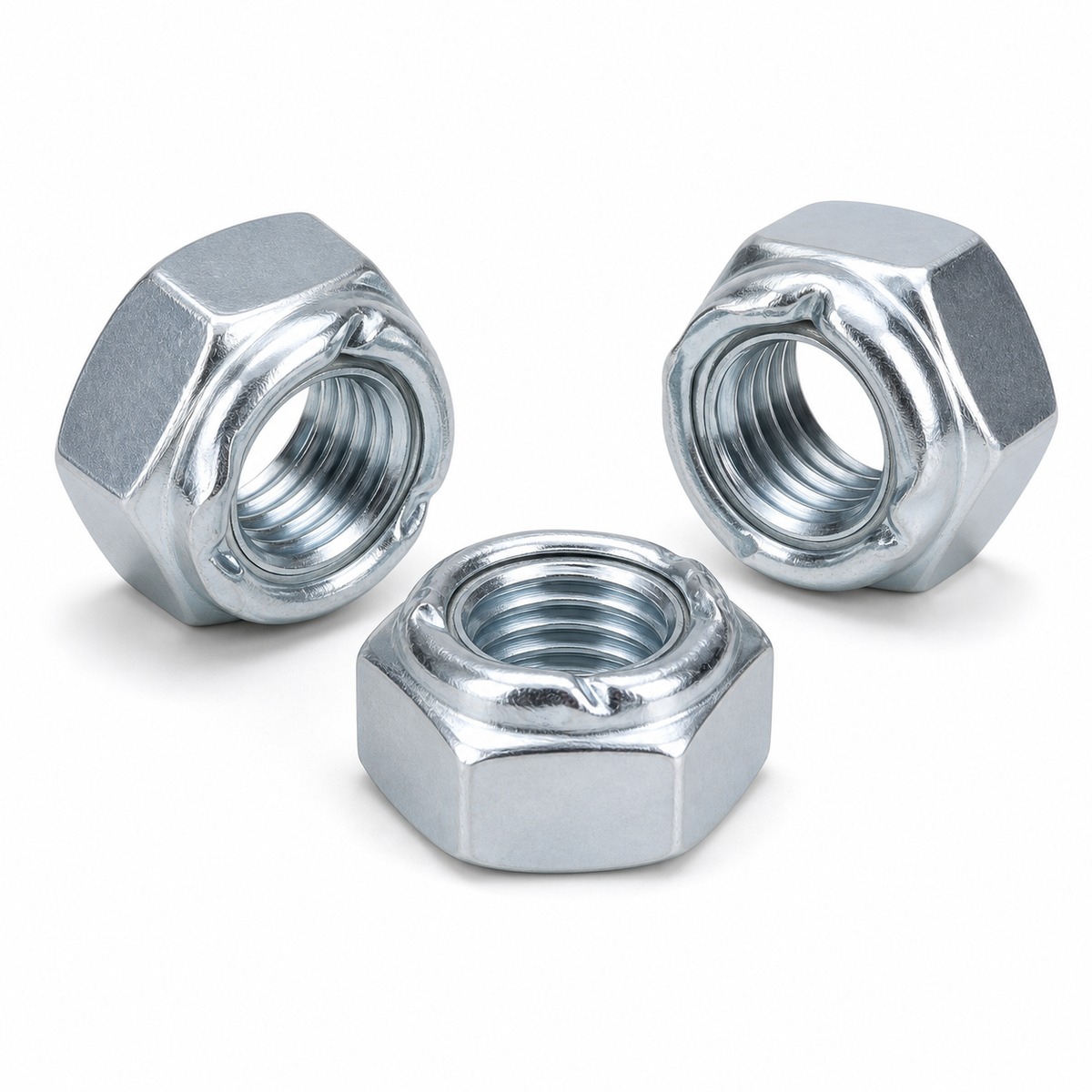
An all-metal lock nut creates prevailing torque without a plastic insert, commonly through a deformed top thread or other metal locking form. Buyers often request it when the joint needs a metal-only locking feature, when the assembly sees higher temperature than a nylon insert should handle, or when a drawing specifies DIN 980, DIN 980V, Stover-style, or another all-metal prevailing-torque nut.
| Buying question | Nylon insert lock nut | All-metal lock nut |
|---|---|---|
| Locking method | Polymer insert grips the mating thread | Deformed or controlled metal thread creates friction |
| Typical standards to clarify | DIN 985, DIN 982, ISO 10511, ISO 7040, drawing, or sample | DIN 980, DIN 980V, ISO prevailing-torque nut callout, drawing, or sample |
| Temperature concern | Insert material sets the practical service limit | Better for applications where a plastic insert is not acceptable |
| Reuse concern | Prevailing torque can drop after installation cycles | Prevailing torque can also change; thread damage and galling must be checked |
| Main sourcing risk | Wrong insert, style, nut height, class, torque value, or coating | Wrong locking form, poor thread fit, excessive torque, coating interference, or bolt damage |
When nylon insert lock nuts are the better choice
Nylon insert lock nuts are often the practical choice for distributors and OEM buyers who need a familiar, easy-to-identify prevailing-torque nut. The visible insert helps receiving teams confirm the product family quickly, and many standard sizes are commercially available in carbon steel, stainless steel, and common finishes.
The buyer still needs a complete specification. State whether the nut is low pattern or high pattern, the standard, thread size and pitch, property class, insert color or material if controlled, finish, mating bolt grade and finish, and any torque test requirement. If the product is replacing an approved part, send the drawing or sample photos rather than relying on the nickname "nyloc."
When all-metal lock nuts are the better choice
All-metal lock nuts are preferred when the buyer wants a locking nut without a non-metallic insert. Common reasons include higher-temperature service, exposure where a polymer insert is not approved, metal-only specifications, or a drawing that calls for a deformed-thread prevailing-torque nut. They are also used where a visible nylon insert is not wanted for appearance, service, or compliance reasons.
The RFQ should define the exact all-metal style. "All-metal lock nut" can refer to a top-lock nut, Stover-style nut, elliptical offset nut, flange lock nut, or drawing-specific prevailing-torque design. Ask suppliers to confirm the locking form, thread standard, property class, finish, mating bolt condition, and torque test evidence before production.
RFQ checklist before comparing quotations
| RFQ field | What to specify | Why it matters |
|---|---|---|
| Lock nut family | Nylon insert, all-metal top lock, flange lock, drawing part, or sample match | Prevents substitution between different locking mechanisms |
| Standard and style | DIN, ISO, ASTM/ASME, buyer drawing, low/high pattern, flange or non-flange | Controls dimensions, height, across flats, and market cross-reference |
| Thread | Metric or inch size, coarse/fine pitch, tolerance if required, right-hand or special thread | Prevailing torque depends on the nut and mating bolt together |
| Material/class | Carbon steel class 8/10, stainless A2/A4, brass, or drawing material | Strength and corrosion expectations differ by assembly |
| Finish | Plain, zinc plated, black, hot-dip galvanized where approved, stainless, or coating spec | Coating thickness and surface condition affect thread fit and torque |
| Functional test | First-installation torque, removal torque, reuse cycles, mating bolt, lubrication condition | A lock nut is a functional part, not only a dimensional part |
| Packing | Inner bags or boxes, carton weight, labels, lot separation, pallet protection | Mixed lock nut styles can look similar after export handling |
Torque testing and reuse: what to ask for
Both nut types should be treated as prevailing-torque fasteners. The locking feature creates resistance to rotation before clamp load is fully developed, so inspection should include more than visual checks. If the order requires functional evidence, define the test method, sample size, mating bolt grade, coating, test speed, lubrication condition, installation cycles, and acceptance range.
Reuse should not be assumed. Nylon inserts can lose locking performance after repeated installations, while all-metal lock nuts can also change torque behavior and may mark or damage mating threads. For safety-related assemblies, the buyer's engineering specification should decide whether reuse is allowed. For replacement kits and maintenance orders, carton labels and instructions should make the reuse rule clear.
| Inspection point | Nylon insert lock nut | All-metal lock nut |
|---|---|---|
| Visual check | Insert present, seated, clean, not cracked, correct color if specified | Locking deformation present, no cracks, correct shape, clean threads |
| Dimensional check | Nut height, across flats, chamfer, thread pitch, insert position | Nut height, across flats, top-lock form, thread pitch, deformation zone |
| Assembly check | Run-on with specified bolt, prevailing torque, removal torque if required | Run-on with specified bolt, torque range, bolt thread condition after test |
| Finish check | Coating coverage without insert contamination | Coating coverage without thread seizure or excessive torque |
| Packing check | Separate low/high pattern, size, pitch, class, finish, and insert type | Separate style, size, pitch, class, finish, and lot |
Finish and material notes
Zinc plated carbon steel is common for general distribution, while stainless steel may be requested for corrosion resistance or appearance. All-metal stainless lock nuts need extra attention because stainless thread friction and galling risk can affect installation behavior. Hot-dip galvanized lock nuts should only be quoted when the design and matching bolt system are approved for the coating thickness and thread fit.
For broader corrosion decisions, review the zinc plated vs hot-dip galvanized fastener guide and the stainless steel A2 vs A4 fastener guide. For nylon insert standard cross-references, see the DIN 985 vs ISO 10511 nylon insert lock nut guide.
Handan Yongnian lock nut sourcing context
In the Handan Yongnian fastener market, lock nuts are usually sourced as part of a wider nut and bolt program rather than as one isolated SKU. A buyer may need nylon insert lock nuts, all-metal lock nuts, standard hex nuts, full-thread hex bolts, washers, finishes, carton labels, and pallet consolidation in one export order.
The practical advantage for overseas buyers is coordination across specialist operations: nut forming, tapping, heat treatment where required, surface finish, insert assembly for nylon lock nuts, torque testing, and export packing. The practical risk is assuming that similar-looking lock nuts can be mixed in one carton. HDBOLT can help separate line items by standard, size, pitch, class, finish, and lot, then request functional checks and pre-shipment packing photos before consolidation.
Common RFQ mistakes
| Mistake | Likely result | Better wording |
|---|---|---|
| Writing only "lock nut" | Supplier quotes nylon insert, all-metal, flange lock, or jam nut based on stock | State the lock nut family, standard, size, pitch, class, finish, and drawing |
| No mating bolt detail | Torque test does not reflect the buyer's assembly | State bolt standard, grade, finish, pitch, and lubrication condition if controlled |
| No temperature or environment note | Nylon insert may be quoted for a service where it is not approved | State service environment and whether metal-only locking is required |
| No reuse requirement | Supplier cannot confirm torque after installation cycles | Define first-use only or the required installation/removal cycle test |
| Mixed carton labels | Warehouse receives similar nuts that are hard to sort | Use buyer item numbers, standard, size, pitch, class, finish, and lot on labels |
RFQ wording buyers can copy
Nylon insert lock nut, DIN 985 low pattern, M10 x 1.5, property class 8, carbon steel zinc plated white, blue nylon insert, for assembly with class 8.8 zinc-plated bolts. Quote with dimensional inspection, first-installation prevailing torque test using the specified mating bolt, carton labels with buyer item number, and export pallet photos before shipment.
All-metal lock nut, DIN 980V top-lock style, M12 x 1.75, property class 10, carbon steel zinc plated, for higher-temperature machinery assembly where non-metallic inserts are not approved. Confirm locking form, thread run-on, torque range using the specified mating bolt, coating appearance, carton weight, lot labels, and packing photos.
What HDBOLT recommends
Choose the locking method by service condition first, then quote the nut as a tested assembly. Nylon insert lock nuts are a good commercial answer for many general-purpose applications, while all-metal lock nuts are better when the application rejects plastic inserts or needs a specific metal prevailing-torque design. Send the size list, standards, mating bolt details, torque requirements, packing plan, and destination through the HDBOLT contact page. For related products, review the nylon insert lock nut page, all-metal lock nut page, full nuts category, and the HDBOLT supply and quality guide.