
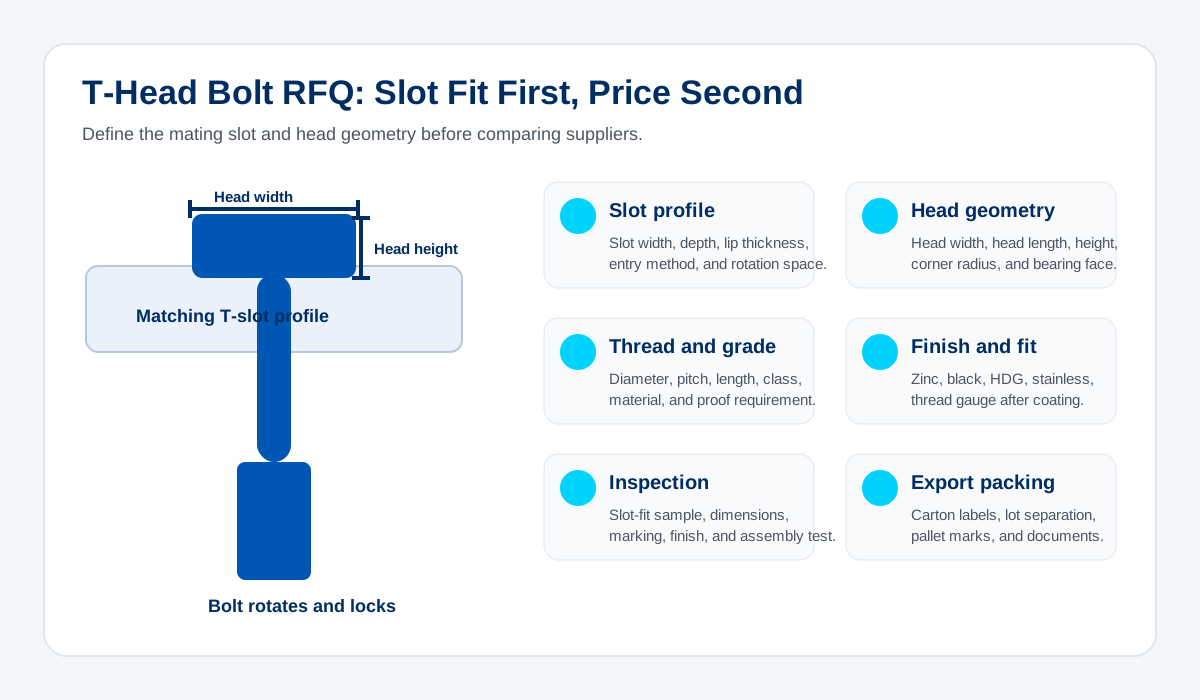
For T-head bolt sourcing, the direct answer is: choose a T-head bolt when the fastener must slide into a T-slot, channel, machine fixture, mounting rail, or adjustable frame and then lock under the slot lips after rotation or positioning. Do not quote it only as "M8 x 30 bolt" or "T bolt". The buyer should specify the mating slot profile, head width, head length, head height, corner radius, thread size, thread length, grade, finish, nut or washer match, inspection method, packing, and destination.
Short answer for buyers
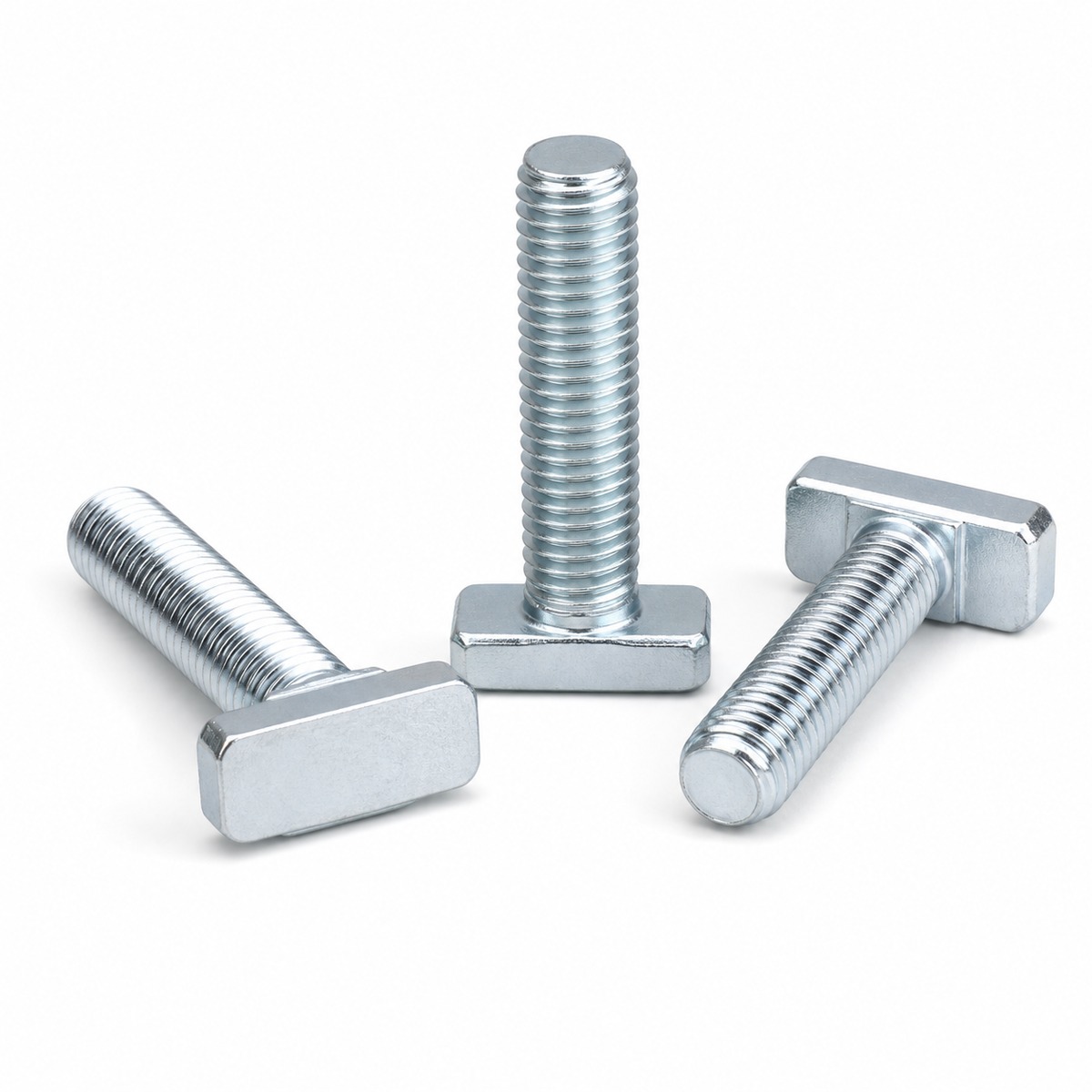
A T-head bolt, also called a T-bolt in many RFQs, has a rectangular or hammer-like head designed to engage with a slot. It is used in machine tool tables, fixture plates, adjustable brackets, channel framing, solar mounting hardware, rail systems, and modular industrial structures.
The key sourcing risk is simple: the thread may be correct while the head does not fit the slot. If the head is too wide, it cannot enter. If it is too narrow, it may pull through or twist under load. If it is too tall, it can jam. If the finish builds up on the head or thread, a previously good sample may fail assembly after coating.
T-head bolt buying decisions
| Buying point | What to define | Why it matters |
|---|---|---|
| Slot profile | Slot width, slot depth, lip thickness, entry opening, and whether the bolt slides from the end or rotates into position | Controls whether the head can enter, turn, and bear under the channel lips |
| Head geometry | Head width, head length, head height, radius, chamfer, and bearing face | Prevents loose fit, pull-through risk, jamming, or poor clamping contact |
| Thread | Diameter, pitch, total length, thread length, tolerance, and nut compatibility | Controls assembly with hex nuts, flange nuts, washers, knobs, or fixture hardware |
| Grade and material | Carbon steel property class, stainless grade, alloy requirement, or buyer drawing material | Strength, corrosion behavior, and certificate scope depend on the material family |
| Finish | Plain oiled, zinc plated, black oxide, hot-dip galvanized, stainless, or project coating | Coating can affect thread gauge fit and whether the head still moves inside the slot |
| Packing | Separated by slot system, size, finish, customer SKU, lot, carton label, and pallet mark | Mixed T-bolt programs are easy to confuse if labels only show thread size |
When T-head bolts are the right fastener
Use T-head bolts when the assembly is meant to be adjustable or repositioned along a slot. They are common where a standard hex bolt cannot be inserted from the back side, or where the head needs to be captured inside a rail or fixture. Typical examples include clamping fixtures, machine table slots, construction channels, solar racking channels, equipment bases, conveyor brackets, and modular frames.
Use a different fastener when the joint needs a fixed through-hole bolt, a structural heavy hex assembly, a welded stud, or a proprietary extrusion connector. For example, some aluminum extrusion systems use drop-in T-slot nuts rather than traditional rotated T-head bolts. The slot drawing or sample is the buying authority.
RFQ fields buyers should not skip
A weak inquiry says "T bolt M8 zinc plated". A quote-ready inquiry describes the slot and the bolt. If the buyer does not know the standard, a simple cross-section drawing with measured slot width, slot depth, lip thickness, and required bolt position is more useful than a generic product name.
| RFQ field | Example wording | Inspection evidence to request |
|---|---|---|
| Application | T-head bolts for steel channel mounting rail, adjustable fixture, or solar bracket channel | Application photo or drawing confirmation before production |
| Slot dimensions | Slot opening 10 mm, internal width 18 mm, slot depth 8 mm, lip thickness 3 mm, end-entry installation | Supplier drawing with head fit checked against the slot profile |
| Bolt dimensions | M8 x 30, thread pitch 1.25, full thread, head 16 x 8 x 5 mm, radius per drawing | Caliper photos for head width, head length, head height, length, and thread |
| Material and grade | Carbon steel class 8.8, stainless 304, or buyer drawing material | Grade marking where applicable, material certificate when required |
| Finish | White zinc plated, black oxide, plain oiled, or stainless passivated | Finish photos, thread gauge result, and slot-fit sample after coating |
| Packing | 500 pieces per carton, customer SKU label, size and finish label, palletized for export | Inner label, carton label, pallet mark, packing list, and shipment photos |
Slot-fit inspection before shipment
The best pre-shipment check is not only a thread gauge. It is a practical slot-fit sample check. If the buyer can provide a short sample channel or confirmed slot drawing, HDBOLT can verify that the head enters, rotates or slides as required, sits under the lips, and clamps without obvious rocking.
- Check head width, head length, head height, chamfer, radius, and bearing face against the drawing.
- Confirm the head can enter the slot by the intended method: end-entry, drop-in, or rotate-to-lock.
- Assemble sample bolts with the matching nut, washer, flange nut, or fixture knob.
- Use thread gauges after plating or blackening, especially for tight assemblies.
- Inspect finish coverage on the head corners and under-head bearing face.
- Separate similar SKUs by head size, not only by thread diameter.
- Confirm carton labels and pallet marks show slot system, bolt size, finish, and customer part number.
T-head bolts vs related fasteners
| Fastener | Best use | Main sourcing note |
|---|---|---|
| T-head bolt | Captured fastening inside T-slots, fixture tables, channels, rails, and adjustable mounting systems | Slot profile and head geometry are the critical dimensions |
| Carriage bolt | Timber, brackets, and square-hole assemblies where the square neck prevents rotation | Review DIN 603 carriage bolt sourcing when the anti-rotation feature is a square neck |
| Hex bolt | General through-hole bolting where the head remains accessible from outside the joint | Use full-thread hex bolts or partial-thread hex bolts when a slot-captured head is not needed |
| Channel nut or T-slot nut | Proprietary aluminum extrusion, strut channel, or drop-in slot systems | Confirm whether the system requires a nut plus ordinary bolt instead of a one-piece T-head bolt |
Finish and corrosion choices
For indoor fixture and machinery use, plain oiled, black oxide, and zinc plated T-head bolts are common choices. For outdoor channels, galvanized or stainless parts may be requested, but buyers should confirm whether the coating thickness still allows smooth slot movement. Stainless steel may be preferred where corrosion resistance and clean appearance matter more than the lowest unit price.
If the T-head bolt is part of a broader assembly, quote the matching hex nuts, flange nuts, and flat washers at the same time. Separate sourcing can create thread-fit, finish-color, and packing-label mismatches.
Handan Yongnian sourcing context
T-head bolt supply depends on the slot design as well as the thread. HDBOLT reviews head geometry, heading or machining requirements, sample confirmation, coating and item labels against the actual slot drawing before confirming the production plan.
This matters for mixed export orders. A buyer may need T-head bolts, hex flange bolts, channel nuts, washers, anchors, and small packing labels under one purchase order. HDBOLT can consolidate suitable line items, keep similar SKUs separated, and verify the practical fit points before export. Availability and lead time should still be confirmed at inquiry time because head tooling, sample approval, finish, and packing format affect the schedule.
RFQ wording buyers can copy
T-head bolt for [slot/channel/fixture system], size M[diameter] x [length], thread pitch [value], head width [value], head length [value], head height [value], material/grade [value], finish [plain/zinc/black/stainless/HDG], quantity [value]. Slot drawing or sample dimensions attached. Please confirm slot-fit method, head dimensions, thread gauge after finish, matching nut and washer, carton labels, pallet marks, inspection photos, and shipment destination [country/port].
What HDBOLT recommends
Start every T-head bolt RFQ with the slot. Then define the bolt. The safest purchasing sequence is slot drawing, head geometry, thread, grade, finish, sample fit, packing label, and export documents. To build a complete inquiry, review the HDBOLT T-head bolt page, the bolt category, and the HDBOLT supply and quality guide. For a quote, send your slot profile, drawing, size list, finish, quantity, packing rule, and destination through the HDBOLT contact page.